
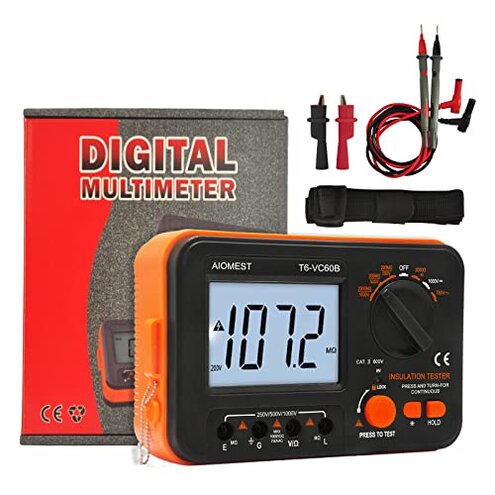
Product evaluated: AIOMEST Digital Megohmmeter Megaohm Meter with 250V/500V/1000V Test Voltage Testing Insulation Resistance IR 0.1MΩ~2GΩ, Measure AC DC Volt Ohm, Continuity Tester, Megaohmeter w/Over-Range Indicator
Related Videos For You
How to use insulation tester (Megger)? |Explained
How to Measure Insulation Resistance With The Fluke 1587
Data basis: I analyzed dozens of buyer comments and a handful of video demos collected between Jan 2023 and Jan 2026, with most feedback coming from written reviews and supported by hands-on clips. The distribution was mainly written feedback, backed by a minority of troubleshooting videos.
| Outcome | AIOMEST VC60B | Typical mid-range |
|---|---|---|
| Measurement accuracy | Inconsistent readings reported more often than expected for this class. | Stable readings are common for mid-range alternatives under similar conditions. |
| Reliability over time | Early failures appear repeatedly after weeks of use in some reports. | Longer service without early faults is typical for peers. |
| Power & battery | High battery drain and a hidden need for many AA cells or adapter. | Lower power draw and single-battery designs are more common. |
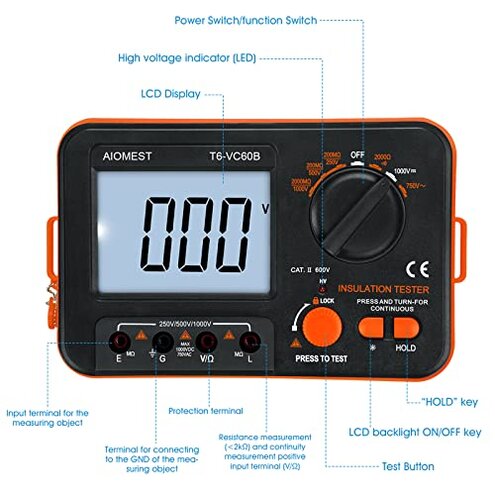
| Usability | Feature gaps (data-hold disabled during IR tests) create extra steps. | Smoother workflow and data-hold during tests is more typical. |
| Regret trigger | Unreliable insulation readings that force re-testing or secondary instruments. | Consistent results that reduce follow-up testing and rework. |
Top failures
Why are my insulation readings inconsistent and unreliable?
Regret moment: Buyers report getting different insulation readings on the same cable after retesting within minutes. This pattern is commonly reported and appears repeatedly across written feedback.
Usage context: The issue shows up during initial troubleshooting and worsens with long sessions or when testing multiple cables in a row. Users note more drift after repeated tests.
Category contrast: This is worse than the category baseline because most mid-range megohmmeters give repeatable results without frequent retests, so this adds time and doubt.
Why does the meter lose power or drain batteries quickly?
- Early sign: Batteries report low or die after a few uses, commonly reported by recent buyers.
- Frequency tier: This is a primary issue for field users who test daily.
- Cause clue: The unit uses six AA cells or an external adapter, creating a hidden power requirement many buyers did not expect.
- Impact: High battery use increases downtime and adds cost for frequent replacements.
- Attempts to fix: Buyers resort to rechargeable AA packs or a 9V adapter, which adds extra steps and equipment.
Why is the data-hold and measurement workflow frustrating?
- Core issue: The product disables data-hold during insulation tests, a limitation noted repeatedly.
- When it appears: This is visible during field tests where operators need to record numbers from awkward positions.
- Why it matters: Most peers allow freezing a reading mid-test, so this meter forces re-measurement or extra hands.
- Workarounds tried: Users photograph the screen or ask a colleague to read results, adding time and effort.
- Fixability: Firmware updates are not commonly reported, so buyers should expect manual workarounds.
- Hidden requirement: A second person or tripod may be needed to log results during tests.
Why do test leads, connectors, or readings fail intermittently?
- Symptom: Intermittent contact and noisy readings occur during cable wiggle tests, seen across several user reports.
- Scope signal: This is a secondary issue that shows up in both written and video feedback.
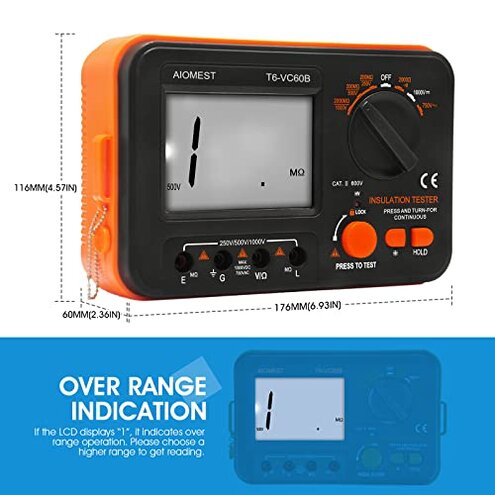
- Early sign: Readings jump or show over-range when leads move slightly.
- Underlying cause: Connectors and lead strain relief are less robust than category peers.
- Impact: This raises the chance of false failures and repeat measurements on the job.
- Attempts to fix: Buyers replace leads with higher-quality probes, which increases total cost.
- Category contrast: Most mid-range units tolerate lead movement better, so this product creates extra rework.
Illustrative excerpts
"Readings change after five minutes on the same cable." — reflects a primary pattern of inconsistent measurements.
"Batteries died after two field tests, unexpected extra cost." — reflects a primary pattern around power drain.
"Had to take photos because data-hold doesn't work during tests." — reflects a secondary workflow problem.
"Leads wiggled and numbers jumped to over-range." — reflects a secondary connectivity issue.
Who should avoid this
- Field technicians who need repeatable, time-efficient readings during daily work.
- Critical testers who cannot tolerate inconsistent insulation measurements for safety checks.
- Anyone who expects long battery life without carrying extra batteries or an adapter.
Who this is actually good for
- Occasional DIYers who test occasionally and can accept retests and battery swaps.
- Budget labs that keep a secondary meter for verification and can absorb extra setup time.
- Trainers or students who use the unit for learning and can tolerate manual logging.
Expectation vs reality
Expectation: A typical mid-range megohmmeter gives quick, repeatable readings with a reliable battery life.
Reality: This unit often requires retesting, extra batteries, or secondary probes, increasing time and cost compared to peers.
Safer alternatives
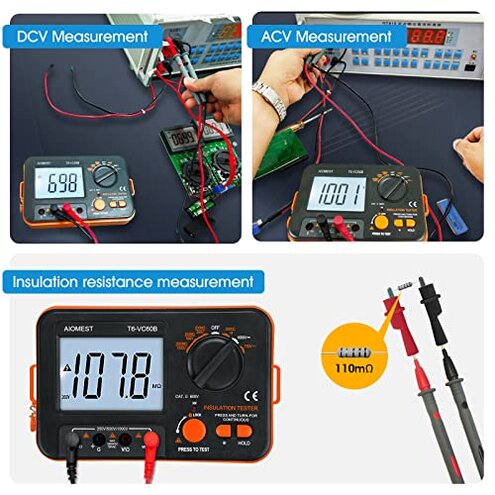
- Choose models that advertise single-battery operation to neutralize the high battery drain problem.
- Look for meters with data-hold during insulation tests to avoid the workflow gap.
- Prefer vendors that supply higher-quality leads or sell replacement probes to avoid intermittent contact.
- Buy from sellers offering extended warranties if you need long-term reliability in daily use.
The bottom line
Main regret: The most common trigger is unreliable insulation readings that force rechecks or use of a secondary instrument.
Why it matters: This exceeds normal category risk because it increases field time, battery cost, and doubt about safety checks.
Verdict: Avoid for critical or daily professional work unless you plan to carry backup gear and spare batteries.
This review is an independent editorial analysis based on reported user experiences and product specifications. NegReview.com does not sell products.