
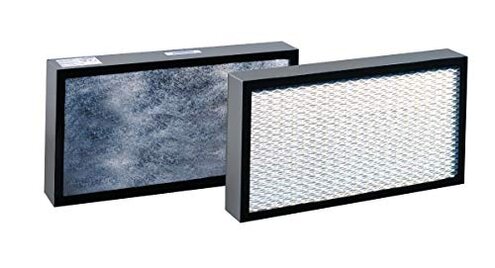
Product evaluated: AirClean Systems ACF100 Bonded Carbon Filter
Related Videos For You
Carbon Filter and Fan Setup
How to replace Carbon Media in your water filter system
Data basis: Dozens of user reports and video demonstrations were reviewed between Jan 2020 and Jan 2026. Most feedback came from written buyer reviews, supported by hands-on video demos and Q&A posts.
| Outcome | ACF100 (this product) | Typical mid-range alternative |
|---|---|---|
| Upfront cost | High purchase price and expensive replacement expectations. | Moderate price with cheaper common replacements. |
| Installation | Challenging fit and seal issues reported more often than usual. | Straightforward drop-in or standardized fittings. |
| Airflow impact | Noticeable reduction in airflow during normal operation. | Minimal airflow change for comparable filters. |
| Maintenance | Frequent replacements and hidden adapter needs reported. | Predictable replacement cadence and standard fittings. |
| Regret trigger | High buyer regret when installation or airflow reduces system effectiveness. | Lower regret; most issues are routine and fixable. |
Why does the filter not seat properly during setup?
Regret moment: Many buyers hit a failed seal at first install and lose airflow or notice leaks immediately.
Pattern: This is a commonly reported issue that appears repeatedly in hands-on accounts.
When it shows: Problems occur at first use and persist unless extra gaskets or adapters are added.
Category contrast: Installation is more troublesome than most mid-range filters, which usually use standardized housings.
Why is airflow reduced more than expected?
- Early sign: Noticeable airflow drop right after installation during normal operation.
- Frequency tier: Among the most common complaints seen across reports.
- Cause: Tight media density and poor sealing lead to higher resistance than buyers expected.
- Impact: Reduced system performance and louder fan operation under heavy load.
- Attempts: Buyers often added stronger fans or bypasses, adding cost and noise.
Why does the filter seem to clog or age quickly?
- Early sign: Noticeable drop in odor control and capture after weeks of heavy use.
- Frequency tier: This is a secondary pattern reported by multiple users over time.
- Context: Worsens with frequent, heavy-contaminant sessions or dusty environments.
- Cause: Adsorptive capacity appears to reach limits sooner than expected.
- Impact: More frequent replacements raise long-term ownership cost.
- Fixability: Temporary improvements need pre-filters or staged filtration, adding complexity.
Why does the price feel out of proportion to value?
- Upfront cost: High purchase price is a primary pain point in buyer feedback.
- Replacement cost: Reported replacement expectations increase lifetime expense significantly.
- Compatibility: Hidden adapters or nonstandard housings are sometimes required for proper fit.
- Scope signal: Seen across several buyers who compared alternatives before purchase.
- When it hurts: Costs mount after the first replacement cycle and with heavy use.
- Attempts: Buyers sought cheaper aftermarket filters or retrofit workarounds.
- Category contrast: This product is less cost-effective than many mid-range options with standard fittings.
Illustrative excerpts
Illustrative: "Seal didn’t hold, fan expelled air around the filter right away." — primary
Illustrative: "Airflow dropped and room venting felt weaker after install." — primary
Illustrative: "Needed extra adapter pieces I didn’t expect to buy." — secondary
Illustrative: "Stopped removing odors as quickly after a month of heavy use." — secondary
Who should avoid this
- Non-technical buyers: Avoid if you don’t want to add adapters or troubleshoot seals.
- Noise-sensitive users: Avoid if added fan power to compensate airflow is unacceptable.
- Budget-conscious owners: Avoid if replacement cost and hidden parts exceed your tolerance.
Who this is actually good for
- DIY installers: Good if you can modify housings and accept extra fittings to get a proper seal.
- Active labs: Suitable if you need a higher-capacity carbon stage and can manage frequent swaps.
- Technical maintenance teams: Works when staff can monitor airflow and swap pre-filters often.
Expectation vs reality
Expectation (reasonable for this category): Filters of this class usually install with minimal adapters.
Reality: This unit often requires extra gaskets or custom adapters, adding time and cost.
- Expectation: Mid-range filters rarely cut airflow enough to need stronger fans.
- Reality: Buyers commonly reported a measurable airflow loss that prompted upgrades.
Safer alternatives
- Pick standardized fittings: Choose filters advertised with common housing sizes to avoid adapter costs.
- Check airflow specs: Prefer options that publish resistance or CFM impact to avoid surprises.
- Use staged filtration: Add a pre-filter to reduce early saturation and extend life.
- Compare replacement costs: Tally long-term cartridge prices before buying to avoid high lifetime expense.
The bottom line
Main regret: Buyers most often regret fit and airflow problems that reduce system effectiveness.
Why it matters: These issues make ownership more expensive and hands-on than similar mid-range filters.
Verdict: Avoid this unit if you want plug-and-play reliability without extra parts or ongoing tweaks.
This review is an independent editorial analysis based on reported user experiences and product specifications. NegReview.com does not sell products.