
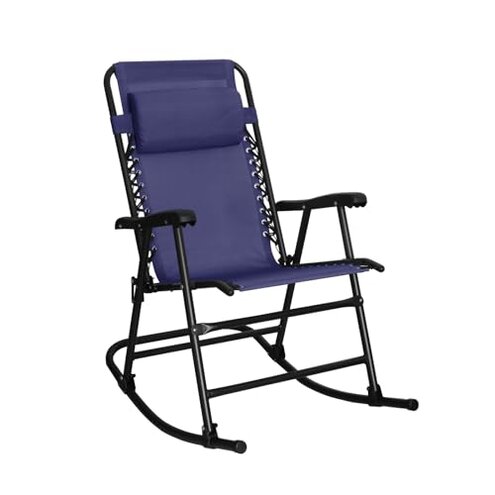
Product evaluated: Amazon Basics Foldable Rocking Chair - Blue
Related Videos For You
Compact Folding Rocking Chair for Camping and Bushcraft
GCI Outdoor Freestyle Rocker™
Data basis: This report summarizes dozens of buyer feedback items collected from late 2021 through early 2026, spanning written ratings and photo-backed comments, with some video-style demonstrations referenced in feedback. Most signals came from longer written notes, supported by shorter star-only ratings that still repeated the same themes.
| Buyer outcome | Amazon Basics foldable rocking chair | Typical mid-range alternative |
|---|---|---|
| Stability during rocking | Higher wobble/tip anxiety appears repeatedly, especially on uneven surfaces | Lower wobble reports, usually more forgiving on patios and lawns |
| Comfort after 20–40 minutes | Mixed: headrest helps, but pressure points and “leans back oddly” comes up persistently | More consistent seat support, fewer posture complaints in long sits |
| Durability over a season | Higher-than-normal risk: fabric tension/cording feel and frame play are recurring over time | More predictable wear, with fewer “loosened” complaints |
| Portability and storage | Good fold-down idea, but bulk and pinch points are mentioned during carrying | Similar folding, often lighter-feeling with clearer carry solutions |
| Regret trigger | Feeling unsafe rocking near edges, kids, or hard surfaces | Annoyance is more often about weight or size, not safety confidence |
“Why does it feel wobbly when I rock like normal?”
Regret moment shows up fast when you try the first real rocking session and the chair feels uneven or unpredictable. Severity is more disruptive than expected because rocking chairs should feel calming, not like you must brace.
Pattern is recurring but not universal, and it shows up most during first use on patios, decks, or grass where the surface is not perfectly flat. Category contrast: most mid-range outdoor rockers tolerate minor unevenness better, so this can feel less forgiving.
Hidden requirement appears repeatedly: you may need a flat pad or a very level surface to get the “smooth rocker” experience. Trade-off is extra setup steps each time you move it.
- Early sign: it rocks with a slight side-to-side “searching” feel instead of a smooth arc.
- Primary issue: instability is among the most common complaints during normal rocking.
- Worse conditions: uneven pavers, soft lawn, or sloped porches make the wobble more noticeable.
- Impact: buyers report staying tense, rocking less, or placing it where rocking is pointless.
- Mitigation: a mat or moving to level ground often helps, but adds an extra step.
- Fixability: if the frame feels uneven out of the box, swaps help some buyers, but not all.
- Comparison: typical mid-range options feel more stable with small surface imperfections.
Illustrative excerpt: “It rocks, but I’m always correcting to keep it straight.”
Pattern tag: This reflects a primary pattern tied to stability feel during use.
“Is the seat really comfortable, or just okay for short sits?”
Regret moment tends to hit after a longer coffee or reading session when the seat starts to feel like it “gives” in a way your back notices. Pattern is persistent in longer notes, especially for people doing 30+ minute sits.
- Time trigger: discomfort shows up more after you settle in, not in the first two minutes.
- Secondary issue: posture complaints appear repeatedly, but less than stability concerns.
- User-fit: taller or broader users mention the headrest and back angle feeling off.
- Pressure points: the seat edge and arm area are common “I kept shifting” hotspots.
- Expectation gap: many expect padded head support to mean all-day comfort, but the seat feel can still tire you out.
- Category contrast: mid-range loungers often have more consistent support across different body types.
- Workaround: extra cushioning helps some buyers, but can reduce the rocking feel.
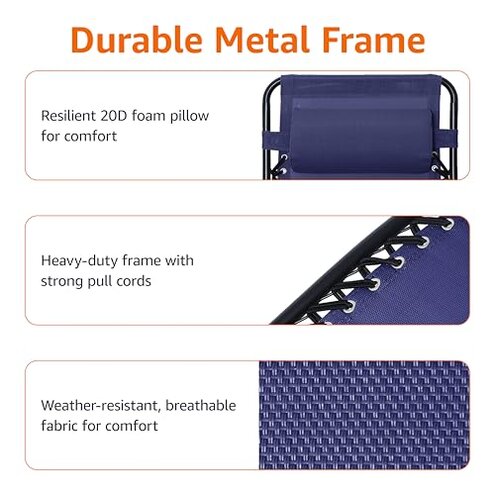
- Long-term: comfort tends to worsen if the seat tension feels looser over time.
Illustrative excerpt: “Great for 10 minutes, then my lower back starts complaining.”
Pattern tag: This reflects a secondary pattern tied to longer sitting sessions.
“Will it hold up, or does it get loose over time?”
Regret moment is when a chair that felt fine early starts to feel less tight and less confidence-inspiring after repeated use. Severity is higher than normal because rocking motion adds stress where small looseness becomes very noticeable.
- When it appears: complaints show up after repeated use, often after frequent folding or moving.
- Persistent theme: “loosening” or reduced tension appears repeatedly across longer feedback.
- Worse conditions: outdoor storage and regular carrying seem to accelerate the “less solid” feel.
- Buyer impact: people stop rocking fully, or reserve it as a backup chair.
- Category contrast: mid-range patio rockers often keep a steadier feel through a season.
- Fix attempts: tightening and careful handling help some, but not if the looseness is in the moving joints.
Illustrative excerpt: “After a few weeks it didn’t feel as sturdy as day one.”
Pattern tag: This reflects a secondary pattern tied to wear over time.
“Is it actually easy to fold and carry, or is it awkward?”
Regret moment shows up when you try to move it between storage and the patio and realize the folding part is only half the story. Pattern is less frequent than wobble, but it’s more frustrating when you expected grab-and-go.
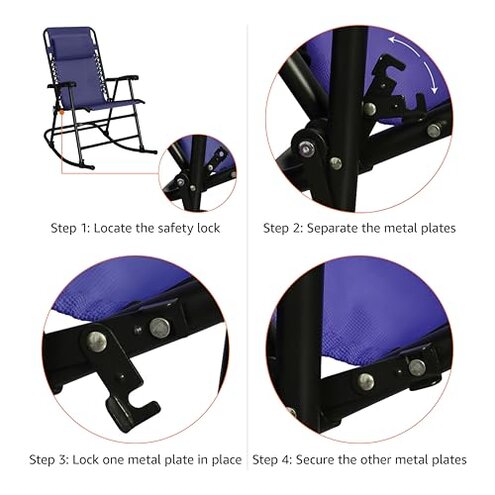
- Handling reality: folding is simple, but carrying can feel bulky for quick trips.
- Edge-case risk: pinch and finger-placement complaints show up occasionally during folding.
- Worse conditions: tight storage spaces make it harder to control the chair while collapsing it.
- Impact: buyers leave it out more often, which can increase outdoor wear.
- Category contrast: many mid-range folding loungers include clearer carry behavior and less awkward balance.
Illustrative excerpt: “It folds, but I wouldn’t call it convenient to haul around.”
Pattern tag: This reflects an edge-case pattern tied to portability expectations.
Illustrative excerpt: “On my deck it feels fine, on the yard it feels sketchy.”
Pattern tag: This reflects a primary pattern tied to surface sensitivity.
Who should avoid this
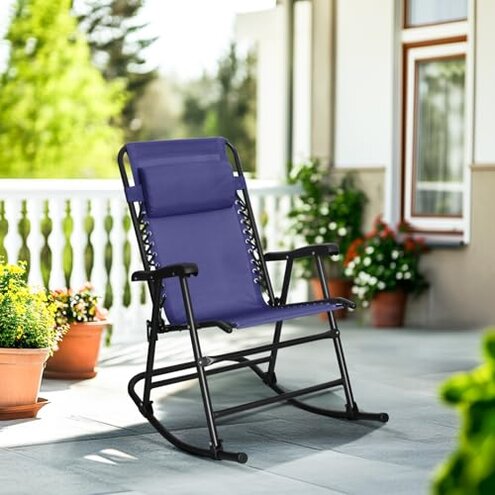
- Anxiety-prone rockers who hate wobble should avoid it, because stability concerns are a primary repeated complaint during use.
- Long-sit loungers should skip it, since comfort drop-off appears persistently after longer sessions.
- Uneven-surface users should avoid it, because the chair seems less forgiving than typical mid-range options on decks, pavers, and lawns.
- Move-it-daily households should pass, because repeated folding and carrying links to looseness and handling frustration over time.
Who this is actually good for
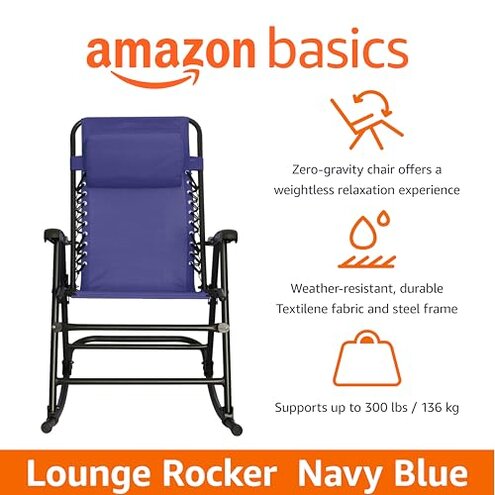
- Flat-patio users who will keep it on a level surface can tolerate the surface sensitivity and get a calmer rocking feel.
- Short-break sitters who use it for brief chats can accept the comfort limitations that show up in longer sessions.
- Occasional-use buyers who won’t fold it often may avoid the wear patterns that are reported after repeated handling.
- Backup-chair shoppers who want a stowable extra seat can accept some bulk in exchange for the folding design.
Expectation vs reality
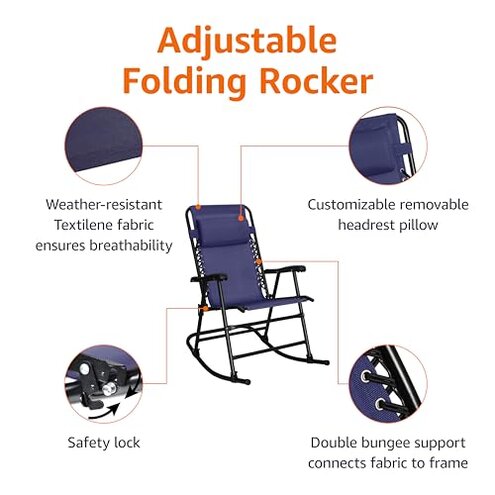
Expectation: A folding rocker should feel stable on a normal porch or patio.
Reality: Stability feels surface-sensitive more often than buyers expect, and the wobble is a primary regret trigger.
Expectation (reasonable for this category): Some comfort trade-offs are normal in portable seating.
Reality: The comfort drop-off feels faster than many mid-range alternatives, especially for longer sits.
- Expectation: Folding equals easy transport.
- Reality: Folding is easy, but carrying can still feel awkward in daily use.
Safer alternatives
- Choose a rocker with a wider, more forgiving base if you’ll sit on lawns or uneven pavers, to reduce the wobble trigger.
- Prioritize models known for long-session support if you read or lounge, to avoid the comfort drop-off pattern.
- Look for designs that stay rigid after repeated folding if you store it daily, to reduce looseness over time.
- Verify carry handling before buying if portability matters, since “folds” does not guarantee convenient transport.
The bottom line
Main regret is the stability feel, because wobble and surface sensitivity appear as a primary repeating complaint during real rocking. Why it exceeds normal category risk is that rocking chairs magnify small instability into constant attention and tension. Verdict: avoid it if you need predictable rocking on mixed outdoor surfaces or want long-session comfort.
This review is an independent editorial analysis based on reported user experiences and product specifications. NegReview.com does not sell products.