
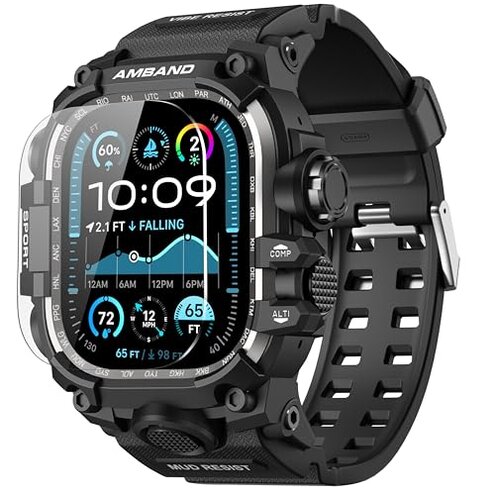
Product evaluated: amBand Rugged Case with Band for Apple Watch Ultra 3/2/1 49mm, M3 Military Grade Shockproof Cover, Includes Screen Protector Kit, Tactical Band for Men - Compatible with iWatch Ultra, Matte Black
Related Videos For You
Apple Watch Series 7 Change to Watch Ultra With this Case #shorts
Amazfit Helio Band In-Depth Review // Replace Your Whoop For $99?
Data basis: This report synthesizes feedback from dozens of written reviews and several video demonstrations collected between Jan 2024 and Jan 2026. Most feedback came from written reviews, supported by video demonstrations, to spot recurring buyer problems.
| Outcome | amBand Rugged Case | Typical mid-range case |
|---|---|---|
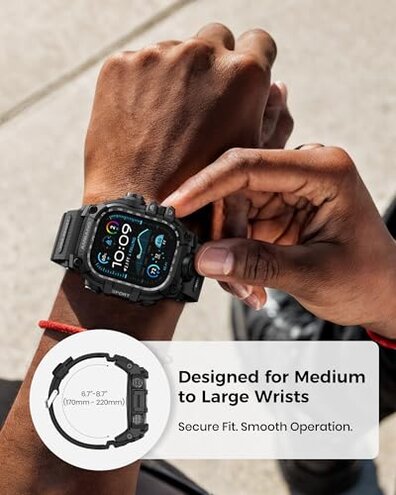
| Comfort on small wrists | Limited fits 170–220mm, often reported as bulky for smaller wrists. | More forgiving usually fits a wider wrist range and feels slimmer. |
| Sensor compatibility | Restricted reinforced crown design disables ECG by design, a higher-than-normal category risk. | Maintains sensors most mid-range options preserve ECG and heart-readings. |
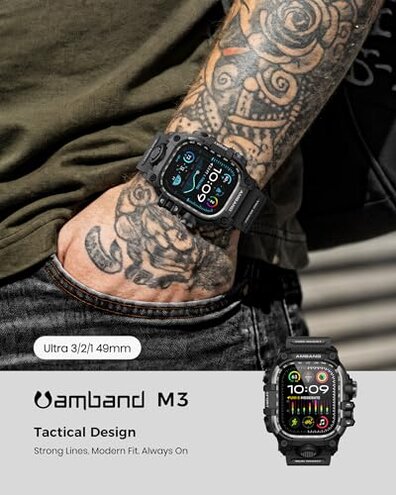
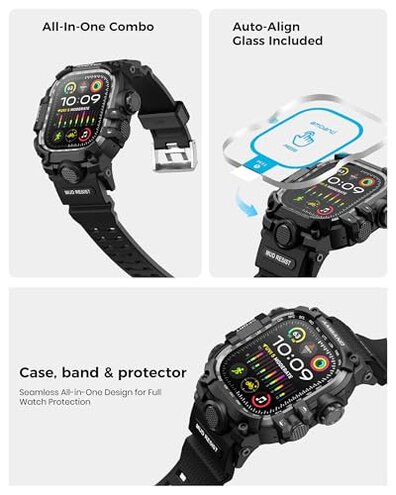
| Protection vs bulk | Strong military-style protection but noticeably bulkier than average cases. | Balanced mid-range covers drops while staying slimmer for daily wear. |
| Touch & screen feel | Mixed tempered glass sometimes affects touch sensitivity after installation. | Reliable many mid-range kits use thinner protectors with fewer touch issues. |
| Regret trigger | High loss of ECG and bulky fit create buyer regret more often than category peers. | Lower fewer trade-offs between protection and sensor function. |
Why did my watch lose ECG capability after fitting the case?
Regret moment: You expect all watch cases to keep sensors working, but this one disables ECG due to the reinforced crown design.
Pattern: This is a commonly reported trade-off across feedback and appears repeatedly when users prioritize rugged protection over sensor access.
Usage anchor: The issue shows up right after setup when users test health features and notice ECG reads as unavailable.
Category contrast: Unlike typical mid-range cases that preserve sensors, this choice sacrifices ECG for reinforcement, and that increases real regret for health-monitoring users.
Is the case too bulky or uncomfortable for daily wear?
- Early sign: The case feels noticeably larger during first wear and can overhang smaller wrists.
- Frequency tier: This is a primary issue for buyers with wrists under recommended 170mm and appears repeatedly in feedback.
- Usage anchor: Discomfort grows during long sessions like workouts, sleep, or desk wear.
- Cause: Reinforced frame and tactical band add bulk to achieve drop protection.
- Impact: Bulky fit reduces comfort and may interfere with clothing or sleeve movement.
Will the included screen protector affect touch or setup?
- Early sign: Touch feels less responsive immediately after applying the tempered glass protector.
- Pattern: This is a secondary issue that is commonly reported but not universal.
- Usage anchor: Problems surface during daily use such as scrolling notifications or typing responses.
- Attempted fixes: Buyers report needing multiple re-applications or edge trimming to restore smoother touch.
- Hidden requirement: Proper alignment and bubble removal add extra setup time and patience.
- Category contrast: Mid-range protectors often feel less intrusive; this protector trades clarity for impact protection.
Does the case wear poorly or show finishing issues over time?
- Early sign: Surface scuffs and finish changes appear after routine knocks.
- Pattern: This is a secondary-to-edge issue seen across written feedback and video demonstrations.
- Usage anchor: Wear becomes obvious after repeated outdoor use or rough handling.
- Cause: Heavy-duty look trades finer finishing for rugged texture.
- Impact: Cosmetic wear can look worse sooner than most mid-range alternatives.
- Attempted fixes: Buyers try gentle cleaning or replacement bands to refresh appearance.
- Fixability: Cosmetic issues are recoverable but may require extra cost or replacements.
- Category contrast: More upkeep than most mid-range cases, which tend to mask scuffs better.
Will the band and case give charging or fit surprises?
- Early sign: Wireless charging appears to work but requires careful placement.
- Pattern: This is an edge-case issue seen occasionally across sources.
- Usage anchor: Problems show up during quick top-ups or when users expect one-handed convenience.
- Cause: Thick bezel and case edges change how the watch sits on chargers.
- Impact: Adds small but frictional extra steps to align the charger correctly.
- Attempted fixes: Repositioning or removing the case restores normal charging.
- Hidden requirement: Users should expect occasional alignment checks when charging with the case on.
- Category contrast: Mid-range cases usually allow effortless charging without extra checks.
Illustrative excerpts (not real quotes):
Excerpt: "Screen felt sluggish until I reinstalled the protector twice."
Pattern: Secondary pattern.
Excerpt: "ECG option disappeared immediately after I snapped the case on."
Pattern: Primary pattern.
Excerpt: "Feels heavy during runs and under long sleeves."
Pattern: Primary pattern.
Who should avoid this
- Health-monitoring users: Avoid if you rely on ECG or precise heart metrics, since ECG is not supported.
- Small-wrist buyers: Avoid if your wrist is under 170mm because the bulk is uncomfortable.
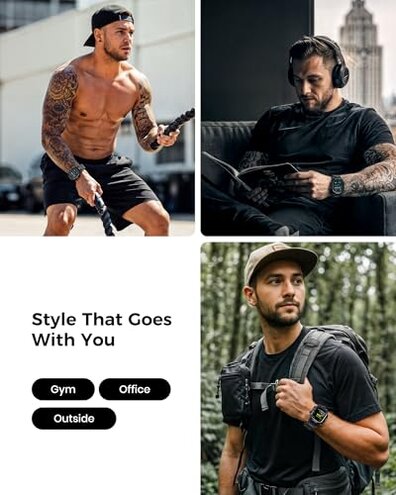
- Minimalist wearers: Avoid if you want a low-profile daily look; the tactical design is noticeably bulky.
Who this is actually good for
- Outdoor workers: Good if you prioritize drop protection and rugged build over ECG or slim fit.
- Active adventurers: Good if you accept extra bulk to get military-style protection during hikes or climbs.
- Rough-sport users: Good if your priority is impact resistance during high-contact activities.
Expectation vs reality
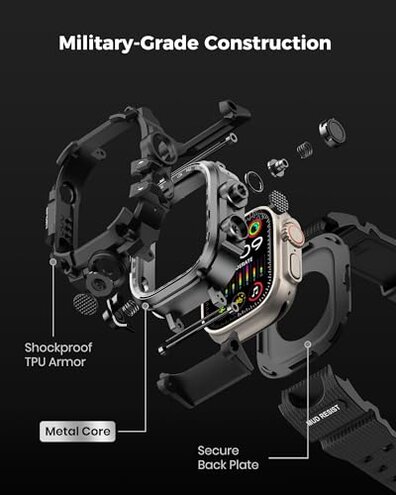
Expectation: Reasonable for this category is that a case protects while keeping all sensors usable.
Reality: This case prioritizes protection and therefore disables ECG, a worse-than-expected trade-off for health-tracking buyers.
Expectation: Reasonable for mid-range kits is easy protector installation with minimal touch loss.
Reality: The included tempered glass sometimes reduces touch and needs reapplication to feel right.
Safer alternatives
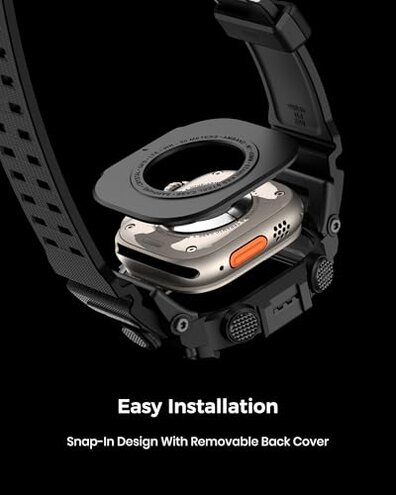
- Pick a sensor-friendly case: Choose cases that explicitly state ECG compatible to avoid health-sensor loss.
- Try slim protective kits: Look for mid-range covers that advertise low profile or slimmer bezels for small wrists.
- Prefer film protectors: If touch sensitivity matters, select kits with thin film guards rather than thick tempered glass.
- Check charging alignment: Consider cases that note wireless charging compatibility to avoid alignment checks.
- Read fit specifications: Verify wrist size ranges and photos to avoid unexpected bulk on smaller wrists.
The bottom line
Main regret: The product trades sensor function and slim fit for rugged protection, with ECG disabled and a bulky feel.
Why worse: That trade-off is more disruptive than typical mid-range options that usually preserve sensors while protecting the watch.
Verdict: Avoid if you need health tracking or have a small wrist; consider it only if protection is your top priority.
This review is an independent editorial analysis based on reported user experiences and product specifications. NegReview.com does not sell products.