
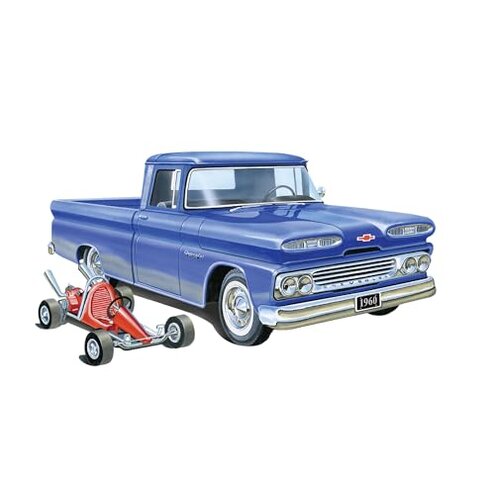
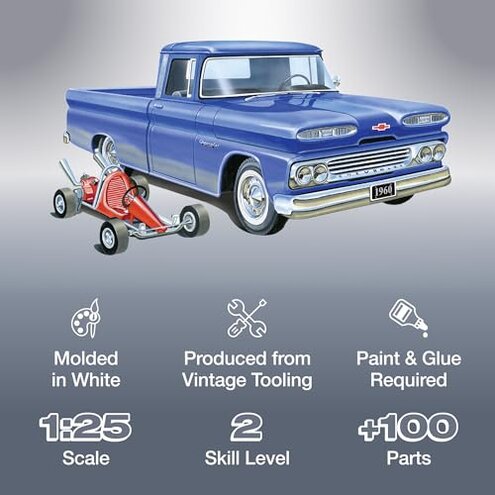
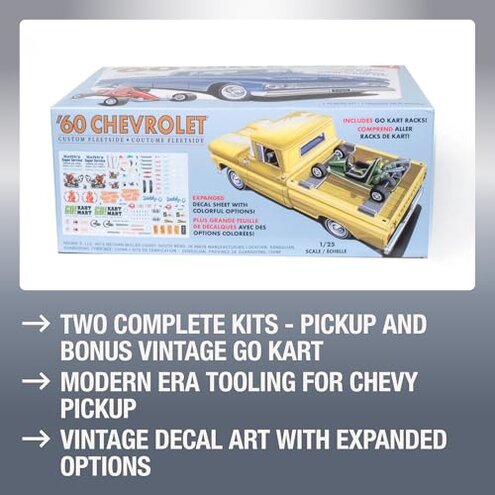
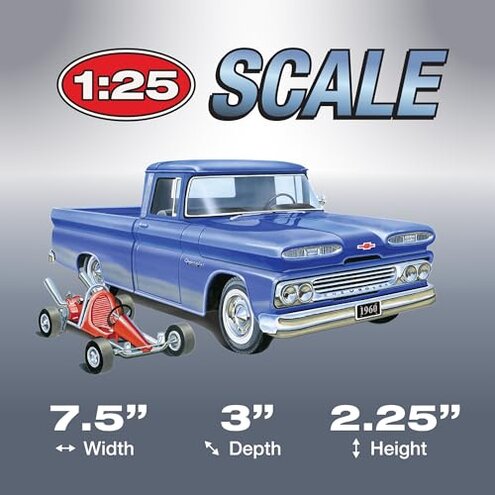
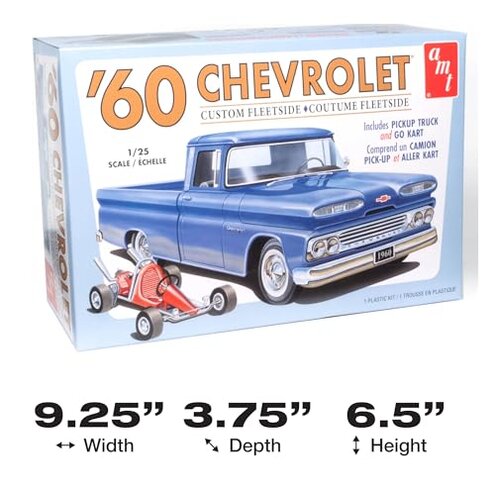
Product evaluated: AMT 1960 Chevy Custom Fleetside Pickup w-Go Kart 1:25 Scale Model Kit
Related Videos For You
Ironman Mark 50 Model Kit | Avengers Infinity War | Speed Build | Iron Man Suits
Best Scale Modeling Supplies for Beginners | 10 Essential Tools to Get Started
Data basis: We analyzed dozens of written buyer reviews and several video demonstrations collected between 2017–2024, with most feedback from written reviews and supporting visual tests.
| Outcome | This kit | Typical mid-range kit |
|---|---|---|
| Assembly fit | Loose or misaligned parts often need sanding or rework. | Snug fit with minor trimming in most cases. |
| Missing parts | Higher-than-normal risk of missing small components at delivery. | Low risk — parts lists usually complete. |
| Instructions | Sketchy steps that assume experience and omit clear diagrams. | Clearer guides geared to hobbyists and newcomers. |
| Finish outcome | High rework needed to achieve clean paint and seams. | Cleaner results with typical effort for the category. |
| Regret trigger | Unexpected extra purchases and hours for fixes cause buyer regret. | Predictable supplies and time for completion. |
Top failures
Why are parts not fitting together cleanly?
Regret moment: You reach the first dry-fit and parts gape or refuse to line up.
Severity note: This is among the primary issue themes and is commonly reported across written and video feedback.
Category contrast: Much worse than most mid-range kits because fixes require extra sanding, putty, and time beyond the usual touch-ups.
Are small pieces or sprues often missing?
- Pattern: Missing parts appear repeatedly in dozens of reports, making this a primary issue.
- When it shows: Missing pieces are usually discovered during initial inventory before assembly.
- What worsens it: Small, fragile bits break or get lost while removing from sprues.
- Impact: Assembly stalls and buyers must source replacements or improvise.
- Fixability: Replacement parts or aftermarket sprues are often required and add time and cost.
Do the instructions leave you guessing?
- Early sign: Steps skip orientation details or show minimal diagrams.
- Frequency tier: This is a secondary issue that appears regularly for less-experienced builders.
- Usage anchor: Confusion peaks during multi-part subassemblies and painting prep.
- Cause: Assumed experience level in the manual rather than step-by-step guidance.
- Impact: Errors in glue placement and part alignment become common.
- Attempted fixes: Buyers rely on online photos or video walkthroughs to fill gaps.
- Hidden requirement: You may need extra reference materials or community help to complete the kit well.
Will finishing and paint require more effort than advertised?
- Pattern: Clean paint and seamless joins are a recurring complaint that many buyers report.
- When it shows: Problems surface after primer and first coat reveal seam lines and sink marks.
- Frequency tier: This rates as a primary issue because it directly affects display quality.
- Worse-than-normal: Requires more sanding and filling than typical mid-range kits to reach a display finish.
- Impact: Adds hours of labor and may push novices to abandon detailed painting plans.
- Attempts: Users report multiple re-coats, sanding sessions, and extra putty to fix flaws.
- Hidden cost: Many buyers must buy additional putty, primers, or replacement parts.
- Fixability: Achievable, but only with intermediate to advanced modeling skills and extra supplies.
Illustrative excerpts (not real quotes)
Excerpt 1: "Gaps at the doors required lots of sanding and putty to hide." — Primary
Excerpt 2: "A tiny sprue piece was missing from my box before I started." — Primary
Excerpt 3: "Instructions skip critical alignment steps for the chassis assembly." — Secondary
Excerpt 4: "Had to buy extra primer and putty to get a clean finish." — Primary
Who should avoid this
- New modelers who expect plug-and-play parts, because fit and instructions demand experience.
- Time-limited buyers who want a quick build, because rework adds unpredictable hours.
- Budget shoppers who do not want extra expenses, because replacements and supplies are commonly needed.
Who this is actually good for
- Experienced hobbyists willing to tolerate extra sanding and putty to customize the final look.
- Detail-focused builders who expect to source spare parts and enjoy corrective work for a unique result.
- Collectors on a budget who accept repair work rather than paying premium kit prices.
Expectation vs reality
Expectation: Reasonable for this category is a snug fit and complete parts list out of the box.
Reality: You may face misaligned pieces and missing small parts that need extra supplies and time.
Expectation: Clear instructions support straightforward assembly for hobbyists.
Reality: The manual often assumes prior experience, forcing buyers to seek external guides.
Safer alternatives
- Check parts policy: Buy kits with explicit replacement-part support to neutralize missing-parts risk.
- Prefer verified manuals: Choose kits that include step-by-step guides or downloadable instructions to avoid instruction gaps.
- Look for tighter tolerances: Select mid-range brands noted for better fit to reduce sanding and putty work.
- Budget extra supplies: Factor in putty and primer costs when the product shows recurrent finish problems.
- Community resources: Favor kits with active builder communities for reliable walkthroughs and spare-part tips.
The bottom line
Main regret: Unexpected assembly fit and missing small parts that force extra purchases and time.
Why it matters: These failures exceed the normal risk for mid-range model kits because they turn a hobby project into extended repairs.
Verdict: Avoid this kit if you want a worry-free build. Consider it only if you accept extra work and costs for a lower price.
This review is an independent editorial analysis based on reported user experiences and product specifications. NegReview.com does not sell products.