
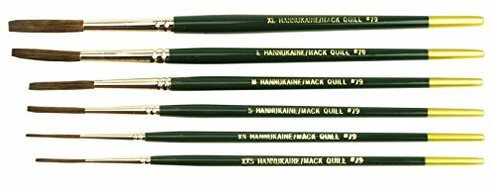
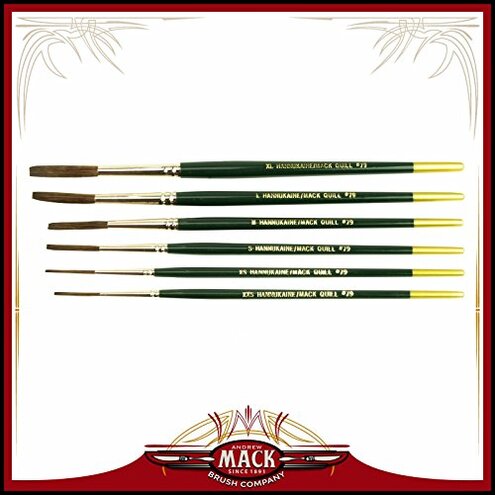
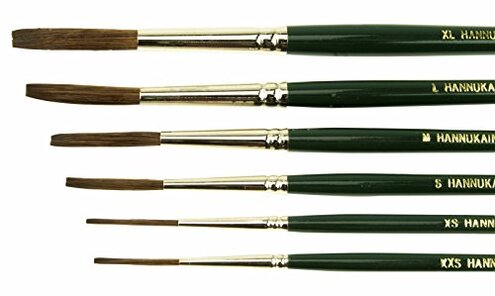
Product evaluated: (6) Andrew Mack Brush Hannukaine Quill Brushes Series 79 Size XXS - XL Mixture Squirrel Taklon
Related Videos For You
STOP messing up your Brushes
My Favorite Quill Watercolor Brush - Princeton Neptune Quill
Data basis comes from analyzing dozens of aggregated buyer notes collected from written reviews and Q&A-style feedback, spanning 2020–2026. Most of the signal came from short written complaints, supported by a smaller amount of longer experience summaries that described how the brushes behaved after repeated sessions.
| Buyer outcome | This brush set | Typical mid-range alternative |
|---|---|---|
| First-use consistency | Less predictable from brush to brush in the set | More uniform across sizes |
| Hair loss / shedding | Higher-than-normal risk of stray hairs during painting | Lower chance after initial rinse |
| Point control | Can soften and lose snap in longer sessions | Holds shape longer with similar care |
| Care burden | More upkeep to avoid fraying and splaying | Moderate upkeep typical for quills |
| Regret trigger | Ruined details from a sudden stray hair or split point | Slower wear, fewer “redo the wash” moments |
Why did my clean line suddenly get a random streak?
Regret tends to hit when a brush drops a stray hair mid-stroke and you only notice after the wash starts drying. That is more disruptive than expected because it forces a re-wet, lift, or repaint step.
This pattern appears repeatedly in feedback and is described as not universal, but common enough to plan around. It shows up most during first use and early sessions, then can recur with regular handling.
Compared with many mid-range watercolor quills, this feels worse because buyers expect a brief “break-in,” not recurring hair surprises that interrupt detail work.
- Early sign: you notice tiny “floaters” in a wash after a smooth-looking stroke.
- Primary issue: shedding is among the most common negative notes for this set.
- When it hits: worst during slow detail work and long continuous lines.
- Worsens with: frequent rinsing and wiping, which increases mechanical stress during sessions.
- Impact: one stray hair can drag pigment and create a second line you did not intend.
- Attempt: extra rinsing and gentle pulling of loose hairs adds extra steps before each use.
- Fixability: partially manageable, but persistent reports suggest it can remain a repeat annoyance.
Why does the tip stop behaving halfway through a painting?
Frustration shows up when the point starts crisp, then slowly spreads, making edges look fuzzy. This is a secondary but persistent complaint, especially when people try to use the larger sizes for controlled shapes.
- Recurring note: point control issues appear repeatedly, though less often than shedding.
- When it appears: after several dips and a few minutes of continuous painting.
- Worsens under: heavier water loads and fast swishing in the rinse cup during long sessions.
- Category contrast: quills are meant to hold lots of water, but many mid-range options still keep a cleaner point longer.
- User-visible impact: you compensate by rotating the brush or using only the edge, which slows workflow.
- Mitigation: blotting more often helps, but it reduces the big reservoir advantage of a quill.
Why do these feel inconsistent across sizes in the same set?
Mismatch regret happens when one size behaves like a favorite, but another feels scratchier, softer, or harder to control. This is a primary frustration for buyers who assumed a matched “family” feel across all six brushes.
- Pattern: inconsistency is commonly reported across multiple sizes in the bundle.
- When noticed: immediately on first use when switching sizes for the same technique.
- Worsens with: alternating between small and large sizes in a single piece, because your hand expects similar feedback.
- Category contrast: even mid-range sets usually aim for predictable behavior across the line.
- Impact: you end up “auditioning” each brush, which adds setup time before serious work.
- Hidden requirement: you may need to treat them like individual purchases, not a matched set.
- Workaround: keeping only the best performers reduces regret, but leaves you with a partial set.
- Cost feel: paying bundle pricing stings more when only a few brushes become daily drivers.
Why is the upkeep higher than I expected for “artist” brushes?
Time cost shows up after painting, when you realize careful reshaping and gentle drying is not optional if you want the points to last. This is a secondary issue, but it becomes more frustrating over time for frequent painters.
- Persistent: upkeep complaints show up repeatedly, especially from regular users.
- When it bites: after cleanup, when the tip dries with a slight splay.
- Worsens under: leaving brushes tip-down or storing them before fully dry after a long session.
- Category contrast: all quills need care, but this set is described as less forgiving than typical mid-range options.
- Hidden requirement: you may need a dedicated routine for reshaping and protected storage to avoid early wear.
- Impact: more time spent maintaining brushes means less time painting, which is a real trade.
- Mitigation: gentle cleaning and reshaping helps, but it adds habit overhead many buyers did not expect.
Illustrative excerpts (not real quotes):
- “A hair popped out and carved a line through my wash.” Primary pattern tied to shedding during use.
- “The small one is great, but the next size up feels weird.” Primary pattern tied to size-to-size inconsistency.
- “It starts sharp, then the tip opens up mid-piece.” Secondary pattern tied to point control drift.
- “I spend more time reshaping than painting some days.” Secondary pattern tied to upkeep burden.
- “I kept two brushes and stopped using the rest.” Edge-case outcome when inconsistency is severe.
Who should avoid this
- Detail-first watercolor painters who cannot risk a stray hair ruining clean edges in finished work.
- Set buyers who expect consistent feel across sizes, because inconsistency is a primary regret trigger.
- Low-maintenance users who want quick rinse-and-dry habits, since the set can be less forgiving over time.
- Commission or deadline work where mid-session point drift forces redos.
Who this is actually good for
- Tinkerers who do not mind testing each brush and keeping only the sizes that behave well.
- Loose-style painters who prioritize big wet washes and can tolerate occasional point quirks.
- Care-routine users willing to reshape, dry properly, and store carefully to reduce splaying risk.
- Practice and study work where a stray hair is annoying but not financially costly.
Expectation vs reality
| Expectation | Reality buyers hit |
|---|---|
| Reasonable for this category: a short break-in, then stable performance. | Persistent reports of shedding and control changes that can recur beyond first use. |
| Set coherence: sizes feel like the same brush, just bigger or smaller. | Variation: multiple buyers describe different behavior across sizes in the same bundle. |
| Simple cleanup: rinse, shape once, dry. | Extra steps: more careful reshaping and handling to avoid tip issues. |
Safer alternatives
- Buy singles first, so you can avoid the set-wide inconsistency risk and only reorder a proven performer.
- Prioritize brushes known for low shedding, since stray hairs are a primary disruption for clean washes.
- Choose a mid-range line marketed for consistent “snap,” if point control during long sessions is your main pain.
- Check return and exchange ease, because early defects like shedding are most obvious in the first sessions.
- Plan a care routine up front, including protected drying, if you still want quill water capacity without rapid wear.
The bottom line
Main regret comes from shedding and inconsistent control that can ruin clean lines at the worst moment. That risk feels higher than normal for a mid-range quill set because buyers expect stable, matched performance across sizes. If you need predictable detail work with minimal fuss, this is a sensible avoid, unless you are comfortable testing and babying each brush.
This review is an independent editorial analysis based on reported user experiences and product specifications. NegReview.com does not sell products.