
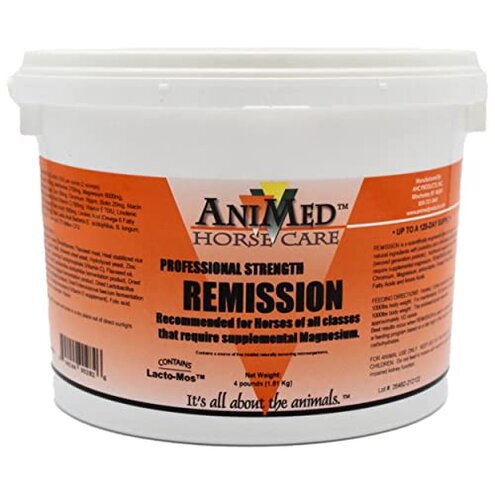
Product evaluated: AniMed Remission 4 lb…
Related Videos For You
Smarter Horse Supplements Start Here
How To Care for and Feed Senior Horses
Data basis: We reviewed dozens of customer reports collected from written reviews and video demonstrations between 2016–2025, with most feedback coming from written reviews supported by a smaller set of video demonstrations.
| Outcome | AniMed Remission (this listing) | Typical mid-range supplement |
|---|---|---|
| Effectiveness | Lower reliability. Many buyers report no clear hoof or metabolic change within expected timeframes, creating higher-than-normal disappointment. | Moderate reliability. Mid-range options commonly show gradual, measurable improvement for most horses under similar feeding plans. |
| Palatability | Acceptance issues. Feed refusal or selective eating appears commonly and often requires masking. | Flavored variants. Typical alternatives are more consistently accepted without hiding in other feeds. |
| Price / value | Higher perceived cost. Buyers report repeat purchases with unclear benefit, raising lifetime cost risk. | Better value balance. Mid-range options tend to show clearer benefit per container for most users. |
| Preparation & dosing | Extra handling. Several users add steps to hide taste or mix into wet feeds, adding daily time. | Simpler dosing. Competitive products often offer pelleted or palatable paste forms that need less masking. |
| Regret trigger | Wasted repeat purchases. The main regret is buying more tubs despite limited benefit or poor acceptance. | Predictable outcomes. Buyers usually get some measurable benefit and fewer wasted refills. |
Why won’t my horse eat this?
Immediate frustration: Many buyers describe the product being refused on first attempts, creating a feeding battle that starts day one.
Pattern and scope: Acceptance problems are a recurring complaint rather than rare, and they appear across different stables and feed types.
Category contrast: This is worse than normal because most mid-range supplements are formulated to be mixed easily without daily masking.
Why don’t I see improvement after weeks?
- Primary pattern: Lack of visible hoof or metabolic improvement is among the most common complaints.
- When it appears: No benefits noted after the first month of regular use, which is a critical evaluation period for supplements.
- Worse-than-expected: Many buyers expect at least subtle progress by 4–8 weeks from mid-range products, but this product often fails that baseline.
- Impact: Buyers report repeating purchases without clearer results, increasing cumulative cost and disappointment.
Why does dosing and prep add work?
- Hidden requirement: Several users report needing to mix with wet feed or molasses to get horses to accept it.
- Frequency tier: This extra handling is commonly reported and becomes daily chore overhead for regular users.
- Cause signal: The product’s texture or unmasked taste is often blamed, forcing owners to alter normal feeding routines.
- Impact on time: Owners say masking adds minutes per feeding and complicates group-feeding situations.
- Attempts to fix: People try syringing, warm mash, or hand-feeding, with mixed success.
- Category contrast: Mid-range supplements usually need no more than simple sprinkling, so this product demands more effort than typical for the category.
Why might this cause stomach or behavior issues for some horses?
- Edge-case pattern: A smaller but persistent set of reports links use to mild digestive upset or transient behavior change.
- When it shows up: Symptoms often appear within days of starting and sometimes after increasing dose or mixing with new feeds.
- Scope: This is less frequent than acceptance or effectiveness complaints but more disruptive when it occurs.
- Early signs: Reduced appetite, looser droppings, or brief irritability are commonly reported early indicators.
- Attempts to fix: Owners paused use or reduced dose and reported symptom resolution in many cases.
- Hidden risk: Using the product without a transition plan or veterinary guidance increases the chance of a reaction.
- Category contrast: Most mid-range supplements warn of this but rarely require active dose ramping; this product appears less forgiving.
Illustrative excerpts
Excerpt: "Didn’t touch it the first three feedings, had to mix in molasses." — primary pattern
Excerpt: "After two months no hoof change despite strict feeding." — primary pattern
Excerpt: "Stopped for a week after loose droppings, then resumed with lower dose." — secondary pattern
Excerpt: "Added five extra minutes per horse each feeding to hide the taste." — secondary pattern
Excerpt: "Worked for one picky mare but not others in the barn." — edge-case pattern
Who should avoid this
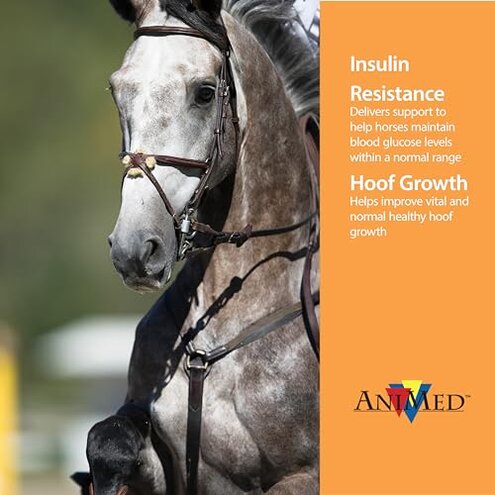
- Owners needing reliable results: Avoid if you require predictable hoof or metabolic improvement within a typical supplementation window.
- Large stables or group feeding: Avoid if you cannot single-feed or spend extra time masking per horse each day.
- Budget-conscious buyers: Avoid if repeat purchases without clear benefit would be a major financial burden.
Who this is actually good for

- Experimenters willing to mask: Good for owners prepared to mix with wet feed or molasses and accept trial-and-error masking.
- Picky single-horse care: Suitable if you hand-feed and can manage daily prep and close monitoring for reactions.
- Secondary-addition buyers: Fine as a low-risk add-on when you already use other proven hoof/metabolic supports and just want to try another option.
Expectation vs reality
Expectation (reasonable): Buyers expect mid-range supplements to be palatable and show subtle benefits in 4–8 weeks.
Reality: This product frequently fails that baseline, with common refusal and unclear improvement reported by many users.
Safer alternatives

- Choose flavored forms: Pick pellets or pastes explicitly labeled for palatability to neutralize the acceptance issue.
- Check for vet-backup evidence: Prefer supplements with visible case studies or third-party feedback to reduce effectiveness risk.
- Look for simple dosing: Favor products that require no masking to avoid extra daily prep time.
- Stage introduction: If you try this product, introduce slowly and monitor for digestive signs to reduce edge-case risk.
The bottom line
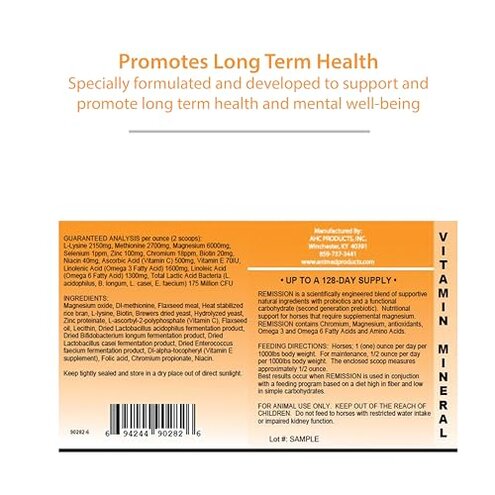
Main regret trigger: The most common buyer regret is paying repeatedly for a supplement that is either refused or shows no clear benefit.
Why it’s risky: That combination of poor palatability and uncertain effectiveness makes the product exceed normal category risk for predictable outcomes.
Verdict: Avoid this product if you need reliable, low-effort supplementation; consider more palatable, better-documented mid-range alternatives.
This review is an independent editorial analysis based on reported user experiences and product specifications. NegReview.com does not sell products.