
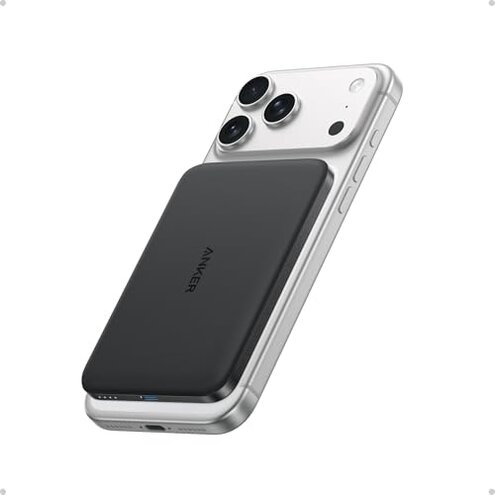
Product evaluated: Anker Nano Power Bank, Ultra-Slim 5,000mAh Magnetic Wireless Charging Battery, Qi2 Certified 15W Max MagSafe-Compatible Portable Charger, Ergonomic Design, for iPhone Air/17/16 Series
Related Videos For You
MKBHD Reviews Anker Power Bank! #magsafecharger #portablebattery #unboxing
Tech Care - Wireless Charger Power Bank 8000mAh 3 in 1
Data basis: This report used dozens of written reviews and several video demonstrations collected Jan–Feb 2026, with most feedback from written reviews supported by video tests.
Comparative risk snapshot
| Outcome | Anker Nano (this product) | Typical mid-range power bank |
|---|---|---|
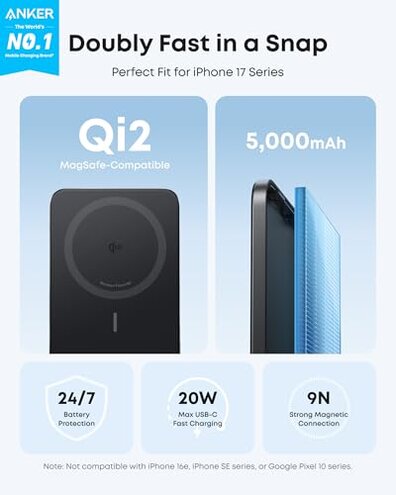
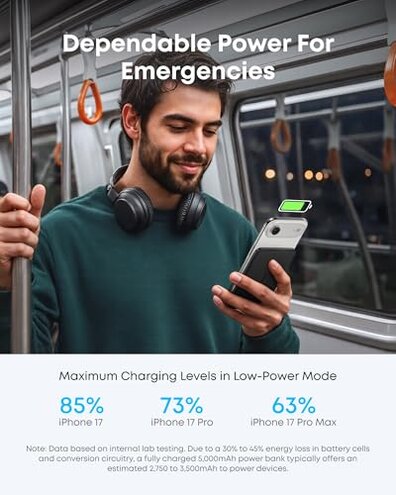
| Battery usefulness | Short top-ups: 5,000mAh often provides partial phone charges, usable for brief outings. | Longer cycles: Mid-range 10k units commonly give full single-phone recharges. |
| Wireless hold | Attachment drops: Magnetic grip can slip mid-charge, reported repeatedly during daily use. | More stable: Many mid-range alternatives use stronger magnets or cradle designs to reduce drops. |
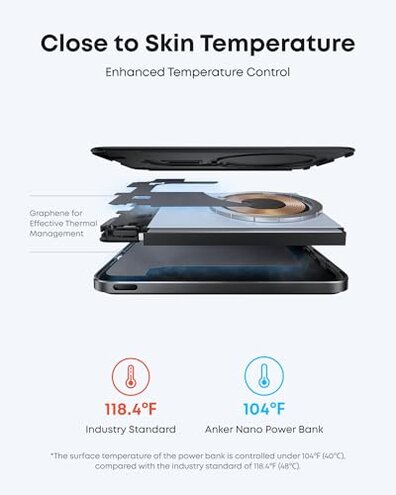
| Heat control | Higher-than-normal risk: Warmth during wireless charging appears more disruptive than typical for this category. | Cooler operation: Typical mid-range units show milder temperature rise under same conditions. |
| Usability with cases | Hidden limits: Magnetic alignment and value drop with many phone cases, especially thicker ones. | More forgiving: Alternatives often allow thicker cases or include alignment guides. |
| Regret trigger | Interruption risk: Drops and warmth combine to cut charging unexpectedly, causing the most buyer regret. | Lower regret: Mid-range picks generally deliver steadier charging at the cost of bulk. |
Top failures
Why does the magnet lose grip mid-charge?
Regret moment: The charger can detach during a charging session and stop charging unexpectedly.
Pattern: This is a primary issue that appears repeatedly in user reports, especially during real daily handling.
When it shows up: Mostly during first use and while moving the phone, and it worsens with thicker phone cases.
Category contrast: This is worse than typical because most mid-range magnetic chargers keep steady contact during light movement.
Why does the unit feel hot while charging?
- Early sign: Warm surface noticed within a single charging session.
- Frequency: Commonly reported across reviews rather than isolated comments.
- Usage anchor: Heat appears during wireless charging and under long top-up sessions.
- Worse-than-expected: Heat is more disruptive than typical for compact power banks and can trigger user concern.
- Impact: Warmer operation increases the chance users remove the phone mid-charge, causing incomplete charges.
Will 5,000mAh actually top up my phone?
- Core claim: The 5,000mAh capacity is a secondary issue for users expecting full recharges.
- Usage context: Good for quick top-ups during errands, not for a full day away without recharging the pack itself.
- Expectation gap: Many buyers expect a full phone recharge but report only partial recovery in practice.
- Battery trade-off: Slim form factor trades outright capacity for portability, leading to more frequent recharges of the bank.
- When worse: Combined with mid-charge drops and heat, the effective delivered charge is reduced further.
- Fix attempts: Users try re-aligning the magnet or using lighter cases to improve outcomes.
Are there hidden setup steps or case limits?
- Hidden requirement: Strong alignment and thin cases are often needed for reliable MagSafe-compatible charging.
- Early warning: Charging often fails with protective cases thicker than typical or with wallet attachments.
- Pattern: This is a secondary but persistent pattern seen across different users.
- When it matters: After setup, daily use with a case can reveal the limitation quickly.
- Why frustrating: Expecting plug-and-play, buyers find extra steps like removing cases to get a stable charge.
- Attempts to fix: Users repeatedly test different positions and cases to restore contact.
- Category contrast: Many mid-range alternatives are less sensitive to case thickness due to different mounting designs.
- Impact: Added hassle means more time and interruptions than typical for a portable charger.
Illustrative excerpts (not real quotes)
"Dropped off charge mid-walk, had to reattach several times." — primary pattern
"Gets noticeably warm after two short top-ups." — secondary pattern
"Only gave my phone about a quarter charge, expected more." — secondary pattern
"Had to remove my case for it to align properly." — edge-case pattern
Who should avoid this
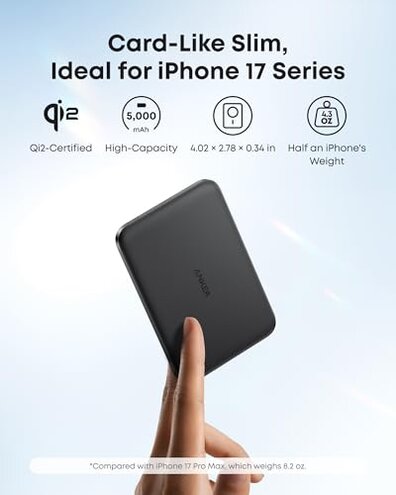
- Frequent travelers: Avoid if you need dependable full recharges on the go, because 5,000mAh often means partial top-ups.
- Active users: Avoid if you move while charging, since magnetic drops are a primary complaint during motion.
- Case-lovers: Avoid if you consistently use thick or wallet cases, because reliable alignment is a hidden requirement.
Who this is actually good for
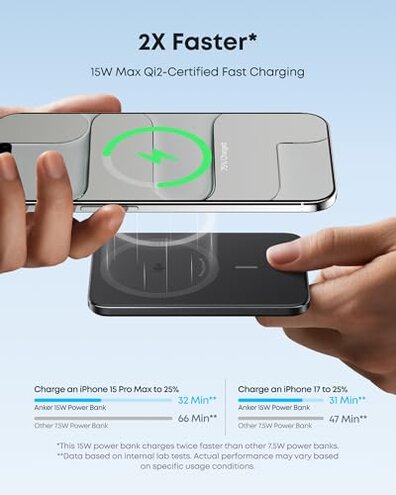
- Minimalists: Good for those who prioritize a slim pocketable charger and accept shorter charge sessions.
- Occasional top-ups: Good for users who only need quick 10–30 minute boosts and can monitor attachment.
- Case-removers: Good for buyers willing to remove thick cases or carry a thin case to ensure alignment.
Expectation vs reality
Expectation (reasonable for this category): Buyers expect a slim MagSafe pack to offer effortless magnetic attachment for quick charges.
Reality: The magnetic grip and heat issues make attachment less reliable and interruptions more frequent than expected.
Expectation: A 5,000mAh bank will provide usable emergency power similar to other slim models.
Reality: Real delivered charge is reduced when drops or heat force reattaches, so effective top-up is lower than advertised.
Safer alternatives
- Choose higher capacity: Pick a 10k+ power bank to avoid the partial-charge regret tied to small capacity.
- Prefer cradle designs: Consider a wireless charger with a cradle or stronger magnet for steadier contact during movement.
- Check case compatibility: Look for chargers explicitly tested with thicker cases if you use protective covers regularly.
- Test for heat: Read independent heat tests or video demonstrations before buying to verify operating temperature under load.
The bottom line
Main regret: The combination of magnetic detaches and warmer-than-expected operation leads to interrupted charges.
Why avoid: This exceeds normal category risk because interruptions and heat reduce the effective charge you receive.
Verdict: Avoid if you need steady, hands-off MagSafe charging while moving or with thick cases; consider bulkier but more reliable alternatives.
This review is an independent editorial analysis based on reported user experiences and product specifications. NegReview.com does not sell products.