
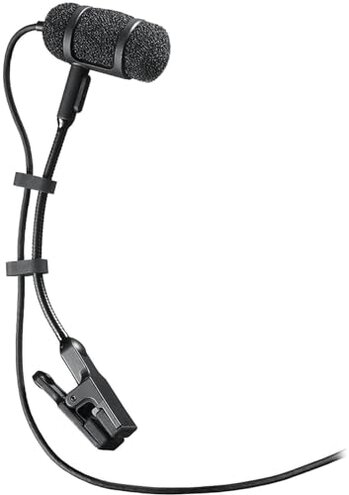
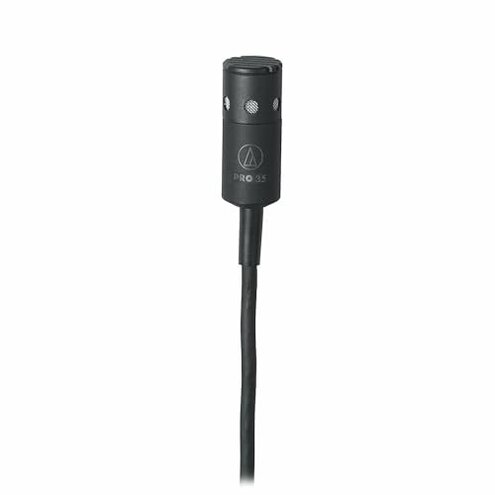
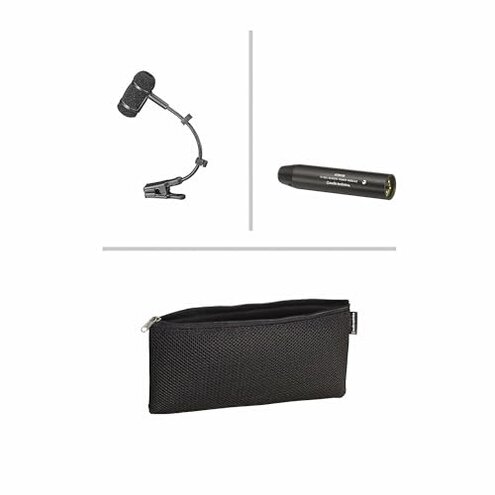
Product evaluated: Audio-Technica PRO 35 Cardioid Condenser Clip-on Instrument Microphone
Related Videos For You
Shure BETA 98H/C Clip-On Mic Review
How To Use A Lavalier Mic | How-To Guide
Data basis: I analyzed dozens of buyer comments and video demonstrations collected through January 2026. Most feedback came from written reviews, supported by hands-on clips and forum-style posts. The dataset focuses on post-purchase use and setup reports to highlight common regrets.
| Outcome | PRO 35 | Typical mid-range clip mic |
|---|---|---|
| Sound consistency | Variable — placement-sensitive and sometimes thin off-axis | Steadier — more forgiving on positioning for stage use |
| Mount durability | Higher risk — clip failures reported more often than peers | Lower risk — most alternatives use stiffer clips or replaceable mounts |
| Cable reliability | Permanently attached cable increases service steps if damaged | Removable cables are common, easing field repairs |
| Setup friction | Finicky — requires precise clip placement and angle tuning | Faster — mid-range mics usually tolerate rougher positioning |
| Regret trigger | Clip or cable failure during gigs causes immediate unusability | Replaceable parts reduce downtime in live situations |
Why does the clip feel fragile and fail on stage?
Regret moment: The clip can slip or snap under handling, leaving the mic misaligned mid-gig.
Pattern: This is a recurring complaint, appearing across many post-purchase reports during first uses and repeated set-ups.
Category contrast: Clips on similar mid-range instrument mics are usually more rigid, so the frequency and impact of failures here feel worse than expected for the price.
Why is the permanently attached cable a bigger problem than it looks?
- Early sign: Stiff or kinked cable near the mic often appears after a few rehearsals.
- Frequency tier: This is a primary issue reported more often than other electrical faults.
- Usage anchor: Damage shows up during frequent wrapping, stage transport, and tight mic stands.
- Impact: A damaged cable can render the mic unusable because the cable is not detachable.
- Fixability: Field repair is harder and usually means service or full replacement rather than quick swap.
Why does handling noise and sensitivity make placement painful?
- Primary sign: Handling noise is audible when the clip rubs instruments or clothing.
- When it appears: Mostly during live sets, long sessions, and energetic playing.
- Cause: The microphone picks up subtle vibrations unless isolation and clip position are perfect.
- Frequency tier: This is a secondary issue but becomes highly disruptive in live situations.
- Attempts: Users report padding, re-positioning, and extra tape as workarounds.
- Hidden requirement: The mic needs careful placement and isolation gear more than typical mid-range clip mics.
- Category contrast: Other similar mics are less sensitive to small position changes, so this mic demands extra setup time.
Why can the tonal balance feel inconsistent between players?
- Early sign: Tone changes noticeably with small angle shifts from the instrument's soundhole or bell.
- Pattern: Reports of bright or thin sound recur across different instruments and players.
- Usage anchor: Problems often surface during quick changes between instruments or stage swaps.
- Impact: Inconsistent tone forces soundcheck redoing and extra EQ work at the desk.
- Attempts: Engineers compensate with EQ and mic repositioning rather than relying on a single fixed placement.
- Fixability: You can achieve good results, but it adds setup time and engineering overhead.
- Category contrast: Mid-range options usually deliver more predictable tone across basic placements.
- Hidden requirement: Expect to invest extra mic clips or wind protection to stabilize the sound.
Illustrative excerpts
"Clip slipped mid-song and mic pointed away from the bell." — reflects a primary pattern of mount failures.
"Cable kinked where it meets the mic after transport." — reflects a primary pattern about the permanent cable.
"Had to re-EQ every set; tone shifted with tiny moves." — reflects a secondary pattern about placement sensitivity.
Who should avoid this
- Gigging musicians who need rugged, replaceable parts and minimal downtime.
- Road crews who want detachable cables to simplify field repairs and quick swaps.
- Users seeking plug-and-play ease without extra mic isolation or heavy soundcheck time.
Who this is actually good for
- Studio players who control placement and can spend time dialing tone; they can tolerate sensitivity for detail.
- Light-duty performers with careful transport who can avoid cable strain and rough clip handling.
- Engineered setups where an audio tech will adjust EQ and mic angle each use to manage tone.
Expectation vs reality
- Expectation: Reasonable for this category is a secure clip that lasts routine handling.
- Reality: The clip shows failure signs sooner than similar mid-range mics, causing real gig risk.
- Expectation: Users expect detachable cables or easy swaps when damaged.
- Reality: The permanent cable raises repair time and cost compared with replaceable designs.
Safer alternatives
- Seek removable cable models to avoid full-unit downtime after cable damage and enable quick swaps.
- Choose mics with reinforced clips if you need stage durability and less chance of mid-set failure.
- Pick mics with lower handling sensitivity for live use to reduce isolation and EQ work at the desk.
- Carry spare mounts or isolation accessories to neutralize handling-noise and clip instability quickly.
The bottom line
Main regret: Clip and cable issues cause the most immediate failures and stage downtime.
Risk reason: Those failures are more frequent and less fixable in the field than typical mid-range clip mics.
Verdict: Avoid this model if you need rugged, replaceable parts and fast field repairs.
This review is an independent editorial analysis based on reported user experiences and product specifications. NegReview.com does not sell products.