
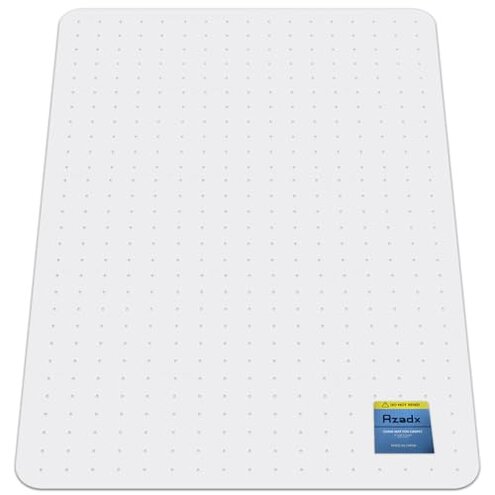
Product evaluated: Azadx Heavy Duty Office Chair Mat for Carpet 32" x 48" Hard Material Chair Mat for Carpeted Floor Slip Resistant Carpet Protector for Home Office Easy Glide Desk Floor Mat for Office Chair on Carpets
Related Videos For You
Stop DESTROYING Your Home Office Carpet! Build a Chair Mat For CHEAP!
Data basis: This report uses dozens of buyer comments gathered from written feedback and photo or video-backed impressions collected from recent months through the present. Most feedback came from written reviews, with smaller support from demonstration-style posts that show setup and chair movement on carpet.
| Buyer outcome | Azadx mat | Typical mid-range alternative |
|---|---|---|
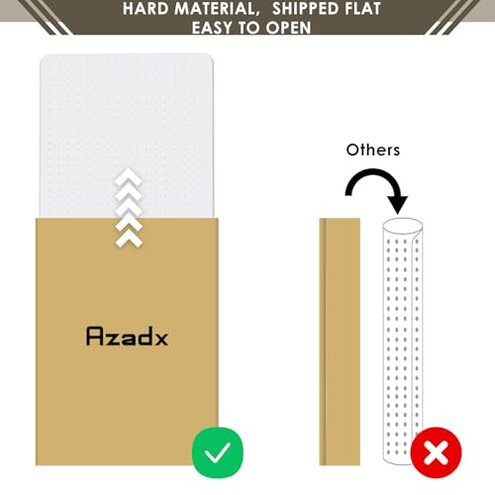
| First-use setup | Lower hassle if shipped flat, but placement still depends on carpet type and careful orientation. | Usually moderate setup, often with some flattening time but fewer placement surprises. |
| Chair rolling feel | Can vary more than expected during daily use, especially on thicker carpet. | Usually steadier across common low-pile office carpet. |
| Edge comfort | Hard edges can feel less forgiving when stepping on or rolling over the border. | Often gentler transitions, though still noticeable in this category. |
| Fit tolerance | Higher risk of mismatch if your carpet is plush or uneven, which is worse than normal category expectations. | More forgiving for average home office carpet conditions. |
| Regret trigger | Looks sturdy on day one, then disappoints if the chair still resists or the mat shifts under real use. | Usually bought with lower expectations and fewer surprises about carpet compatibility. |
Does it feel annoying when the chair still does not roll smoothly?
This is the primary issue. The main regret moment appears after setup, when buyers expect an easier glide and still feel drag during long desk sessions. That trade-off feels worse here because smooth rolling is the whole reason most people buy a carpet chair mat.
The pattern appears repeatedly, though not for every carpet type. It tends to show up most during daily use on thicker carpet, where this mat seems less forgiving than a typical mid-range option.
- Frequency tier: This is a primary complaint and among the most common frustrations tied to real use.
- When it starts: It usually appears right after setup or within the first few work sessions.
- Worse conditions: The problem gets more obvious during long seated sessions with frequent rolling in and out from the desk.
- Visible effect: Buyers notice stop-start movement instead of a clean glide.
- Why it stings: That creates more leg and back effort, which is more disruptive than expected for this category.
- Likely driver: The design depends heavily on carpet compatibility, which seems stricter than many shoppers expect.
- Fixability: There is limited fixability if the carpet itself is too plush or uneven for the mat to stay stable.
Illustrative excerpt: “I bought it to glide easier, but I still have to push hard.” Primary pattern because it matches the main use-case failure.
Will it stay put, or does it shift more than you expect?
This is a secondary issue. Some buyers describe a good first impression, then notice movement during repeated chair use or when stepping on the mat. That becomes frustrating because a carpet mat is supposed to feel anchored once placed.
The issue is persistent rather than universal. It tends to matter more in home offices where the chair rolls often from different angles, and that makes it less stable than many mid-range mats on easier carpet.
There is a hidden requirement: you may need the right carpet texture for the backing to grip as intended. If your floor is soft, plush, or uneven, the setup can take extra adjustment time.
- Early sign: A small corner shift after a few passes is an early warning.
- Pattern cue: This shows up as a recurring complaint, but clearly not every buyer deals with it.
- Usage moment: It usually appears during daily repositioning, not just while sitting still.
- Impact: The mat can need manual nudging, which adds small but repeated hassle.
- Category contrast: Some movement is normal, but this feels more frequent than expected when the product is sold as slip resistant.
Illustrative excerpt: “It grips okay at first, then creeps when I move around a lot.” Secondary pattern because it shows a repeated but not universal stability problem.
Do the edges and size make everyday use less comfortable?
This is another secondary issue. A hard mat can protect carpet well, but the trade-off is a firmer edge and a more exact footprint. That matters after setup, when your chair path or foot placement reaches the border often.
- Real moment: Buyers notice it during rolling transitions when wheels hit the edge line.
- Common effect: The border can feel abrupt compared with softer or more forgiving mats.
- Foot feel: Stepping on the edge may feel less comfortable than expected in a home office.
- Scope: This appears across multiple feedback types whenever desk movement extends near the mat boundary.
- Why it ranks lower: It is less frequent than glide complaints, but more annoying when your desk area is tight.
- Category contrast: Hard mats always have edges, but this can feel less forgiving than typical if you move around a lot.
Illustrative excerpt: “The center works fine, but the edge catches more than I expected.” Secondary pattern because it tends to affect certain desk layouts more.
Is the heavy-duty promise setting expectations too high?
This is an edge-case issue but it can create sharp disappointment. Buyers often read heavy-duty language and expect broad compatibility, near-effortless rolling, and low-maintenance use. That gap becomes obvious after a few days if the mat works only well enough, not exceptionally well.
The complaint is not about instant breakage. It is more about the mat feeling less transformative than the marketing suggests during normal office use. In this category, that feels worse than expected because “heavy duty” usually signals fewer compromises, not stricter carpet requirements.
- Expectation gap: The product sets up a high-performance image that may not match every room.
- When noticed: The mismatch appears after repeated use, once the honeymoon period ends.
- Buyer impact: People may keep it because it is usable, yet still feel dissatisfied.
- Relative ranking: This is an edge-case complaint, but more frustrating than it sounds because it affects value perception.
- Mitigation: Expectations should be narrowed to low-pile, stable carpet conditions.
- Hidden cost: If it is not a great match, the extra time spent adjusting your workspace becomes ongoing effort.
- Category contrast: Many mid-range mats under-promise, while this one may feel less forgiving than the marketing tone implies.
Illustrative excerpt: “It is sturdy, but it did not solve the problem like I hoped.” Edge-case pattern because the disappointment is about expectations more than outright failure.
Who should avoid this
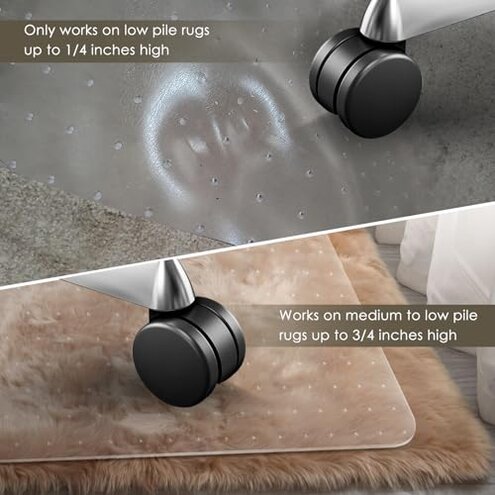
- Avoid it if you have thick or plush carpet, because the biggest risk is weaker rolling improvement during daily use.
- Avoid it if you hate workspace adjustments, since stability can depend on carpet texture more than typical mats.
- Avoid it if your chair often crosses the border area, because hard edges can feel more abrupt than expected.
- Avoid it if you are buying mainly for pain reduction, since the primary complaint is still having to push harder than hoped.
Who this is actually good for
- Good fit for buyers with lower-pile carpet who mainly want a hard surface and can tolerate some setup sensitivity.
- Good fit for people more worried about carpet wear than perfect glide, because protection may matter more than rolling feel.
- Good fit for smaller desk zones where the chair stays near the center and rarely rides the edges.
- Good fit for shoppers who accept that “heavy duty” here means rigid feel, not universal carpet compatibility.
Expectation vs reality
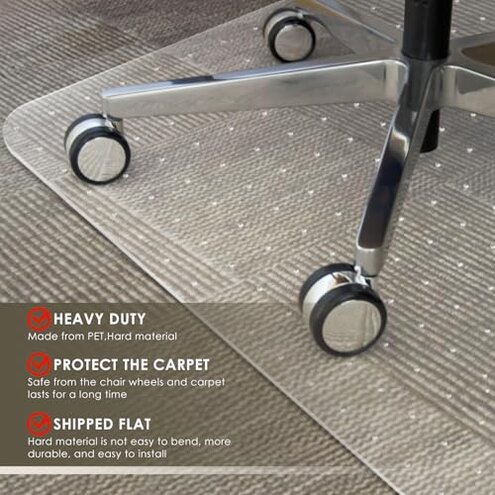
Expectation: A hard chair mat should make rolling feel clearly easier on carpet.
Reality: Reasonable for this category is some improvement, but the risk here is a smaller gain than expected on plush carpet.
Expectation: Slip resistant should mean set it down and forget it.
Reality: During daily use, some buyers still report shifting or the need to re-center it.
Expectation: Heavy duty should mean fewer compromises than average.
Reality: In practice, the mat may be sturdy yet still feel picky about carpet conditions, which is worse than a normal category trade-off.
Safer alternatives
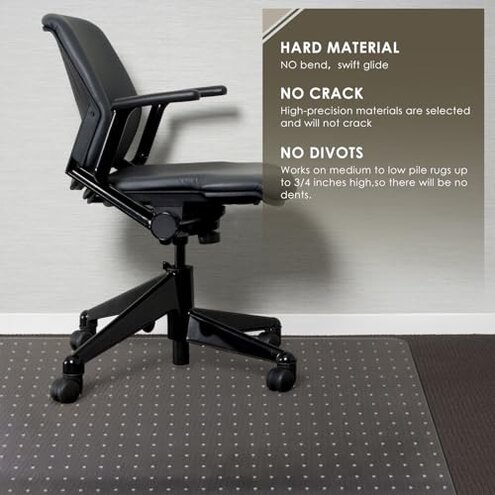
- Match pile height first, because the biggest risk here is poor performance on thicker carpet.
- Choose larger coverage if your chair path is wide, which reduces edge catching and repeated border contact.
- Look for broader carpet claims with clear use examples, which helps avoid the hidden requirement of very specific carpet texture.
- Prefer products with realistic glide language rather than heavy-duty hype if you want fewer expectation gaps.
- Check real movement demos on carpet similar to yours, because this kind of issue shows up best during actual rolling, not product photos.
The bottom line
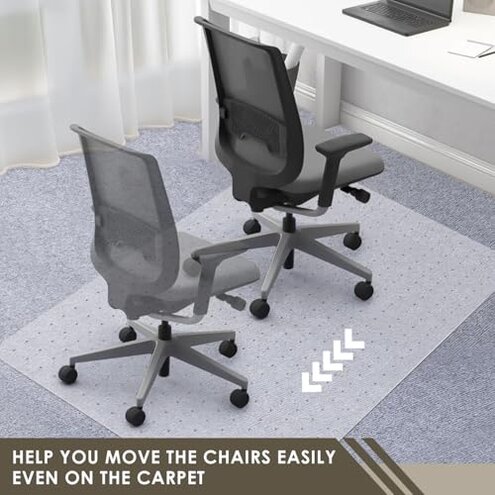
The main regret trigger is simple: buyers expect easier rolling on carpet, then still feel drag or mat movement during normal office use. That exceeds normal category risk because the product positions itself as heavy duty and slip resistant, which raises expectations for a more reliable result. If your carpet is plush, uneven, or high-pile, this is easier to skip than gamble on.
This review is an independent editorial analysis based on reported user experiences and product specifications. NegReview.com does not sell products.