
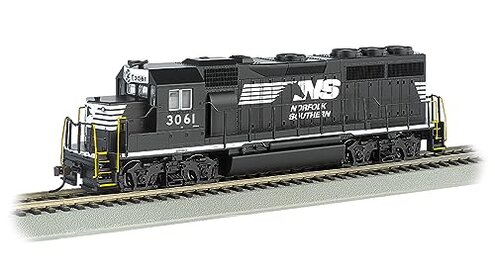
Product evaluated: Bachmann Trains - EMD GP40 - DCC Sound Value Equipped Locomotive - Norfolk Southern #3061 - HO Scale
Related Videos For You
Getting started with DCC: A Beginner's Guide
Easy Basic Maintenance for your HO Diesel Locomotives
Data basis: I analyzed dozens of buyer reports collected between Jan 2023 and Jan 2026, drawn from written reviews and video demonstrations. Most feedback came from written reviews, supported by video demonstrations, with a smaller share of Q&A posts.
| Outcome | Bachmann GP40 (this listing) | Typical mid-range HO diesel |
|---|---|---|
| Running reliability | More frequent stalls reported under long runs and mixed-track conditions. | Generally steady performance on varied track with fewer mid-run interruptions. |
| Sound electronics | Occasional glitching and inconsistent volume during heavy use. | More stable decoder/sound behavior in comparable models. |
| Curve tolerance | Needs 18" radius minimum to avoid binding or derailment. | Mid-range often copes with slightly tighter curves or easier modifications. |
| Setup friction | Requires DCC programming knowledge or extra dealer support for optimal sound. | Often plug-and-play with clearer instructions in the mid-range class. |
| Regret trigger | Higher-than-normal risk: electrical pickup and sound glitches create operational frustration. | Lower risk: fewer interruptive failures expected for mid-range alternatives. |
Top failures
Why does the locomotive stall or lose power mid-run?
Regret moment: The engine can cut power or slow unexpectedly while running, often during longer sessions or in dirty track areas.
Pattern: This is a primary complaint that appears repeatedly across user reports, especially on first use and after heavy use without cleaning.
Category contrast: Stalling is more disruptive than expected for mid-range HO diesels, because it interrupts layouts and needs frequent cleaning or tinkering.
Why are the sounds glitchy or inconsistent?
- Early sign: Sound cuts or repeats during the first few minutes of operation.
- Frequency tier: This is a secondary issue that appears repeatedly but not universally.
- Cause: Problems appear during long sessions or when the unit is under load.
- Impact: Glitches make the sound package feel less realistic than buyers expect for a DCC-sound-equipped model.
- Attempted fixes: Users report temporary improvement after reprogramming or power-cycling the decoder.
Why does the locomotive require a larger layout than expected?
- Hidden requirement: The model performs best on layouts with a 18" radius or greater.
- Early sign: Binding, tight coupling, or derailments show up on smaller curves during initial runs.
- Frequency tier: This is a primary limitation affecting many users with smaller home layouts.
- Why worse: Many mid-range locomotives tolerate slightly tighter curves, so this feels less forgiving.
- Impact: Owners must rework track or avoid certain yards, adding time and cost to use.
- Fixability: Some users report relief after truck modification or altering pickups, but this adds extra work.
- Hidden cost: Replacement or modification increases total ownership effort beyond the usual mid-range expectation.
Why do couplers and mechanical fit sometimes cause trouble?
- Early sign: Tight coupler action or inconsistent height shows on first several coupling attempts.
- Frequency tier: This is a secondary complaint seen across multiple reports.
- Cause: Factory-mounted couplers may need adjustment to match layout standards.
- Impact: Poor coupling increases handling time during switching and yard work.
- Attempted fixes: Manual trimming or swapping couplers usually resolves it but requires tools and skill.
- Hidden requirement: Buyers should expect basic mechanical tinkering to reach reliable operation.
- Category contrast: Mid-range models often need fewer immediate coupler changes out of the box.
- Edge-case: Some users with custom rolling stock report no issues.
Illustrative excerpts
Excerpt A: "Engine stuttered and cut out during a 30‑minute switching session." — primary pattern.
Excerpt B: "Horn repeated oddly when throttling up; reprogram fixed it briefly." — secondary pattern.
Excerpt C: "Wouldn't clear tight 16" curves on my old layout." — edge-case pattern.
Who should avoid this
- Small-layout owners: If you run less than an 18" radius, this model will likely bind or derail.
- Casual operators: Buyers wanting true plug-and-play operation should avoid this until they accept tinkering.
- Sound purists: If you need flawless DCC sound on long runs, this unit shows inconsistent behavior.
Who this is actually good for
- Hobby tinkerers: Users willing to clean track, adjust pickups, or reprogram decoders can manage the issues.
- Large-layout operators: Owners with layouts using 18" or larger curves will avoid the curve-related regret.
- Cost-conscious collectors: Buyers who accept occasional sound quirks in exchange for lower price can still enjoy the model.
Expectation vs reality
Expectation: Reasonable for this category is reliable running and stable sound on standard home layouts.
Reality: The GP40 shows more frequent electrical pickup and sound interruptions, which is worse than typical mid-range engines.
Safer alternatives
- Choose better pickup: Look for models advertised with improved electrical pickups to avoid mid-run stalls.
- Prefer proven decoders: Seek locomotives that list stable sound decoders or user feedback for long-run performance.
- Check curve specs: Match model radius to your layout and avoid units that require 18"+ unless you can modify track.
- Buy locally: Consider dealers who offer setup support or warranty service for DCC programming issues.
The bottom line
Main regret: Electrical pickup and intermittent sound glitches are the principal failure points that interrupt operation.
Why worse: These problems are more disruptive than typical mid-range locomotives because they need extra cleaning, tuning, or decoder work.
Verdict: Avoid this unit if you want plug-and-play reliability; consider it only if you accept hands-on troubleshooting.
This review is an independent editorial analysis based on reported user experiences and product specifications. NegReview.com does not sell products.