
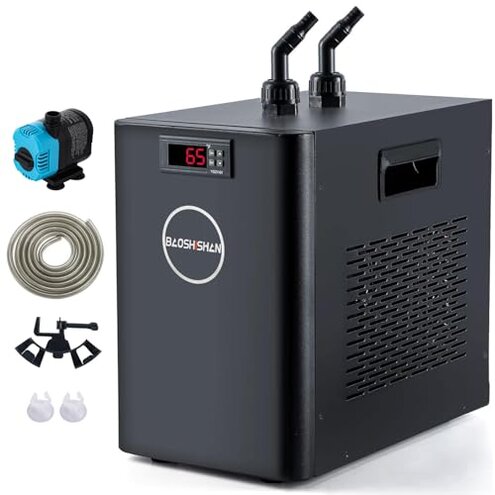
Product evaluated: BAOSHISHAN Aquarium Chiller 42gal 1/10 HP Water Chiller for Hydroponics System with Compressor Refrigeration Special Quiet Design for Fish Tank Axolotl Coral Reef Tank 160L
Related Videos For You
How to Choose and Install an Aquarium Chiller
Aquarium Chillers: How to Keep Cool in the Summer!
Data basis: This report synthesizes findings from dozens of buyer reviews and demonstration videos collected Jan 2020–Jun 2024, with most feedback from written reviews supported by a smaller set of video tests.
Comparative risk snapshot
| Outcome | BAOSHISHAN 42gal | Typical mid-range chiller |
|---|---|---|
| Cooling reliability | Inconsistent performance in warm rooms and reduced capacity at recommended 33–42gal water levels. | Steadier cooling across a wider ambient range with less water-volume sensitivity. |
| Noise level | Higher fan/compressor noise reported during continuous use. | Quieter operation is common at this category level. |
| Installation effort | Complex setup with hidden ventilation and water-volume needs. | Simpler install and fewer environmental limits. |
| Maintenance & reliability | More upkeep and reports of premature faults during heavy or continuous use. | Lower maintenance expectations for typical mid-range options. |
| Regret trigger | High risk of poor cooling/noise in hot environments — a buyer-visible failure. | Medium risk; most alternatives are less sensitive to room heat. |
Cooling failure? Why doesn't the unit hold temperature reliably?
Regret moment: Buyers expect steady water temperatures but report the unit fails to reach or hold setpoints in warm rooms.
Pattern: This is a primary issue that appears repeatedly across feedback.
- When it shows up: After setup and during hot ambient conditions the chiller struggles to lower water more than ~10°F.
- Worse if: Indoor temperatures are high or the tank is filled to full 42gal volume.
- Why worse than usual: More sensitive than mid-range chillers to ambient heat and water volume, so cooling drops off faster.
- Visible impact: Fish or corals experience slow temperature drift and hobbyists must run extra equipment or reduce load.
Excessive noise? Is the unit louder than expected during everyday use?
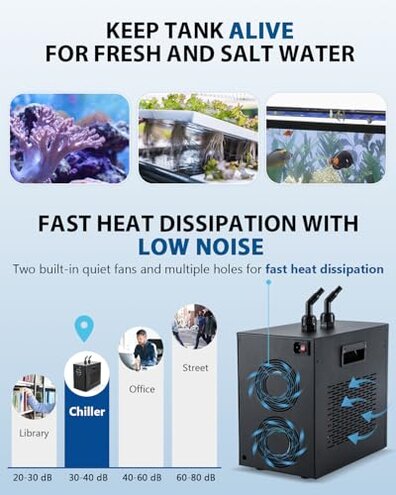
Regret moment: Users report noticeable fan and compressor noise during continuous operation that disturbs quiet rooms.
Pattern: This is a secondary issue that appears across many written and video reports.
- Early signs: Fans run loudly at startup and stay audible during heavy load.
- Frequency tier: More disruptive than expected for this class of chiller.
- Cause: Compact design concentrates heat, forcing fans and compressor to run harder.
- Impact: Uncomfortable near bedrooms or living areas and may force relocation of the unit.
- Attempts at fixes: Buyers add sound dampening or move the unit but noise often remains noticeable.
- Fixability: Partial, requires extra time and expense.
Setup surprises? Are there hidden installation or operating requirements?
Regret moment: The chiller needs specific clearance and lower effective water volumes to work well, which many buyers did not plan for.
Pattern: This is a primary issue reported early during installation.
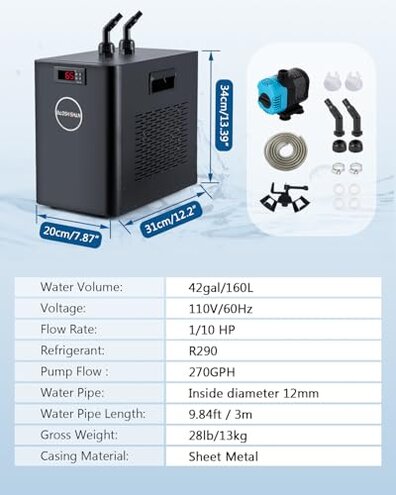
- Hidden requirement: Must leave at least 6" clearance for ventilation or performance degrades.
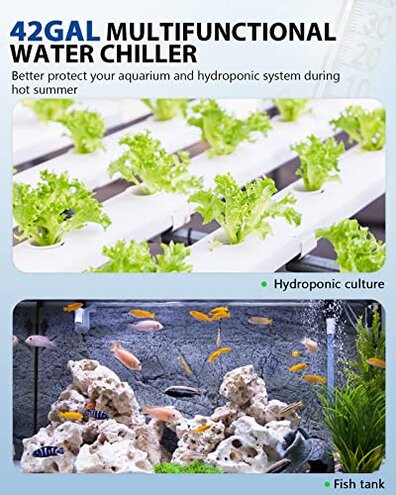
- Water volume note: Recommended 33gal max in hot weather, not the full 42gal rating.
- Why worse than usual: Typical mid-range chillers tolerate fuller tanks and tighter spaces.
- Impact: You may need a smaller effective tank volume or extra airflow to avoid failures.
- Buyer action: Adds setup steps and possible relocation costs.
Durability concerns? Does it fail or need repairs sooner than expected?
Regret moment: Some owners report faults or reduced performance after months of regular use.
Pattern: This is a secondary issue seen in longer-term feedback rather than only first use.
- Early signs: Reduced cooling efficiency or louder operation over time.
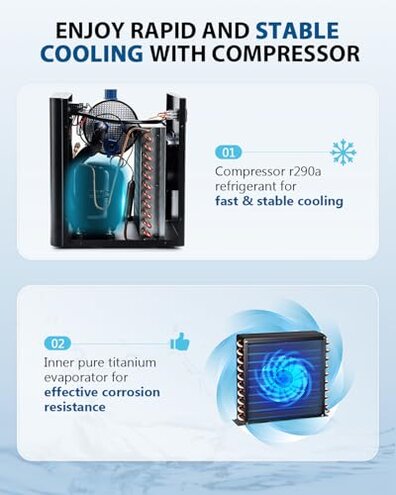
- Cause: Sustained heavy operation in warm rooms stresses compressor and fans.
- Impact: Unexpected repair, replacement, or added maintenance costs.
- Fix attempts: Repairs are possible but add downtime and expense.
- Hidden cost: More upkeep than most mid-range alternatives.
- Edge sensitivity: Less durable under continuous heavy loads than category peers.
Illustrative excerpts
Illustrative: "Chiller barely lowers temp in my hot room, runs all day." — reflects a primary pattern.
Illustrative: "Louder than expected, had to move it to garage." — reflects a secondary pattern.
Illustrative: "Needed extra space and less water to work right." — reflects a primary pattern.
Who should avoid this
- Hot-room owners: Those with warm indoor environments where cooling consistency is critical.
- Noise-sensitive users: Buyers who need near-silent equipment for living spaces.
- Large-tank hobbyists: People who expect full 42gal capacity without performance loss.
- Minimal-maintenance buyers: Those unwilling to accept extra upkeep or relocation costs.
Who this is actually good for
- Basement setups: Users with cool, ventilated basements who can spare clearance and want a budget chiller.
- Space-flexible hobbyists: Owners who can reduce effective tank volume and accept noise for lower price.
- DIY modifiers: Buyers willing to add sound-damping and extra airflow to mitigate noise and heat.
- Short-term growers: Users needing temporary cooling where long-term durability is less important.
Expectation vs reality
- Expectation (reasonable): A mid-range chiller should hold temperature in typical home rooms.
- Reality: This unit is more sensitive to ambient heat and may not reach setpoints without reduced water volume or extra ventilation.
- Expectation: Acceptable noise for a compressor chiller.
- Reality: Noise is louder and more intrusive than many category peers, often requiring relocation.
Safer alternatives
- Choose a sturdier chiller: Look for units advertised with wider ambient-range specs to neutralize cooling inconsistency.
- Prioritize quiet models: Seek chillers with low-decibel ratings or isolated compressor housings to avoid noise issues.
- Check ventilation needs: Buy chillers that explicitly require less clearance to avoid hidden setup changes.
- Match effective volume: Prefer models rated comfortably above your tank volume so you won't need to under-fill.
- Warranty & support: Favor sellers with clear, quick support to reduce downtime from durability problems.
The bottom line
Main regret: The most frequent buyer-visible failure is inconsistent cooling and intrusive noise when used in warm rooms.
Why it matters: These issues exceed normal category risk because they force extra setup, reduced tank volume, or relocation.
Verdict: Avoid this model unless you can guarantee cool, ventilated placement and accept higher noise and maintenance.
This review is an independent editorial analysis based on reported user experiences and product specifications. NegReview.com does not sell products.