
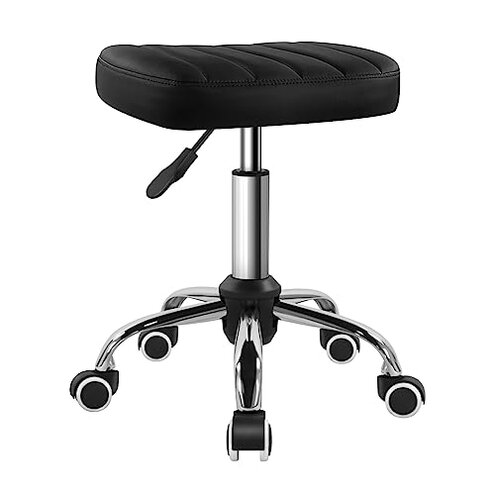
Product evaluated: BFTOU Black Minimalist Square Swivel Stool with Wheel for Work SPA Shop Massage Height-Adjustable and Cost-Effective Rolling Stool Chair
Related Videos For You
Rolling Shop Stool | How to Make | practical garage solution
Aowos Adjustable Swivel Bar Stools
Data basis: I analyzed dozens of buyer-written reviews and several video demonstrations collected from June 2023 to January 2026. Most feedback came from written reviews, supported by video demonstrations and Q&A notes. Signals emphasize recurring use problems rather than one-off shipping issues.
| Outcome | BFTOU Stool | Typical Mid‑Range Stool |
|---|---|---|
| Stability | Higher wobble risk reported during normal use and after light assembly. | Expected steady performance for short sessions with fewer complaints. |
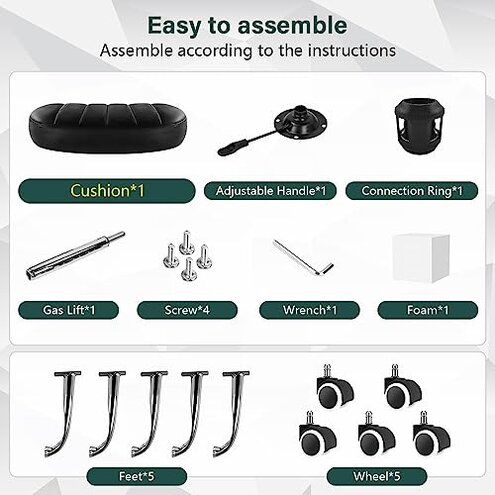
| Assembly | Extra steps required and fiddly base assembly appears repeatedly in feedback. | Simpler setup with clearer instructions is common among mid-range models. |
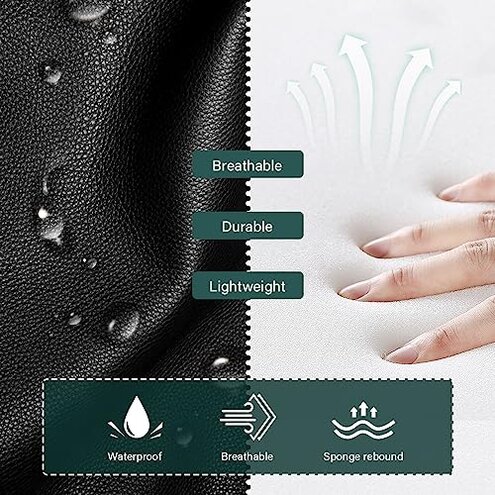
| Durability | Higher surface wear and creasing reported within weeks of use by several buyers. | Better longevity under regular salon or home use is typical. |
| Wheels & floors | Casters cause marks and roll inconsistently in some reports. | Smoother, floor-safe casters are more common at mid-range price points. |
| Regret trigger | Instability during use (wobble or uneven sit) leads to user regret more often. | Lower regret when stability meets category expectations. |
Top failures
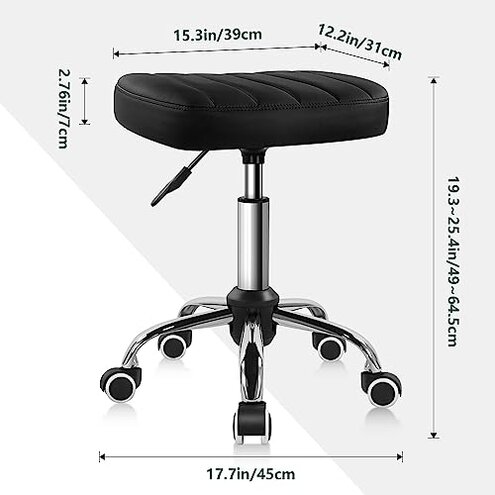
Why does the seat wobble and feel unsafe?
Regret moment: Buyers describe the wobble when sitting down or leaning back, creating an immediate safety concern.
Pattern: This problem is commonly reported rather than universal and often shows up at first use or after minor tightening.
Usage anchor: Wobble appears during normal tasks like reaching for items, long sessions, or when adjusting the height repeatedly.
Category contrast: More disruptive than expected for a mid-range rolling stool, because similar models usually remain steady after minimal setup.
Why does the seat cover crease and peel so quickly?
- Early sign: Noticeable creasing and surface dulling after only days to weeks of use in several reports.
- Frequency tier: Secondary issue—appears repeatedly enough to matter for daily users.
- Cause insight: Repeated swivel and weight shifts accelerate surface wear during normal salon or home use.
- Impact: Visual wear makes the stool look older and cheaper faster than most mid-range alternatives.
- Fix attempts: Simple cleaning or conditioners rarely reverse surface peeling once started.
Why do the wheels roll poorly and mark floors?
- Early sign: Some buyers report uneven rolling immediately after assembly.
- Scope signal: Persistent across different floor types—hardwood, tile, and laminate—though not universal.
- When it worsens: Frequent moving and long daily shifts increase floor scuffs and wheel stickiness.
- Category contrast: Worse than typical mid-range stools that use smoother, floor-friendly casters.
- Impact: Adds extra time and cost to protect floors or to replace casters.
- Attempted fixes: Many buyers ended up swapping casters for softer, higher-quality replacements.
- Hidden cost: Replacement casters or felt pads add unexpected expense and effort.
Why is assembly fiddly and what hidden steps are required?
- Early sign: Assembly often requires extra tightening and patience beyond the stated instructions.
- Pattern statement: Recurring reports describe needing additional time and tools despite a short advertised setup.
- Usage anchor: Problems surface during first assembly and can reappear after shipping or movement.
- Hidden requirement: Buyers commonly need to re-check fasteners and apply extra torque to the base to reduce wobble.
- Why worse than expected: Most mid-range stools can be assembled quickly with basic tools without post‑assembly retightening.
- Fixability: The issue is often fixable with extra time and tools, but that adds effort many buyers did not plan for.
- Risk trade-off: Low purchase price trades off for extra setup time and ongoing checks.
Illustrative excerpts (not real quotes)
Excerpt: "Seat wobbled the first day, tightening did not stop it." — primary pattern
Excerpt: "Casters leave marks on my hardwood when I roll around." — secondary pattern
Excerpt: "I had to buy replacement wheels and spent extra time assembling." — primary pattern
Excerpt: "Cover creased after two weeks of salon use; looks worn." — secondary pattern
Who should avoid this
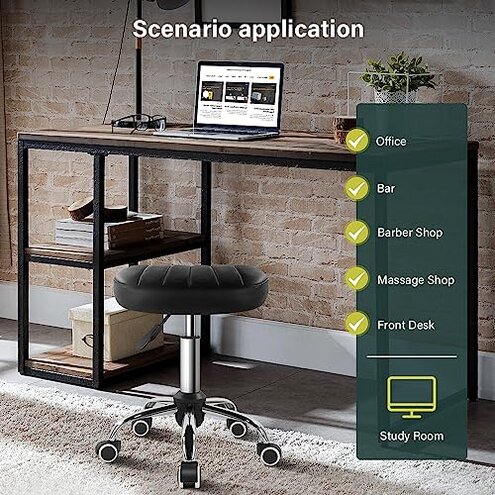
- Salon pros: Avoid if you need reliable multi-hour daily stability, since wobble and wear exceed category tolerance.
- Heavy users: Avoid if you expect long-term cosmetic durability for daily shifts, because surface wear appears sooner than typical.
- Hardwood owners: Avoid if you cannot tolerate floor marking or extra caster replacement costs.
Who this is actually good for
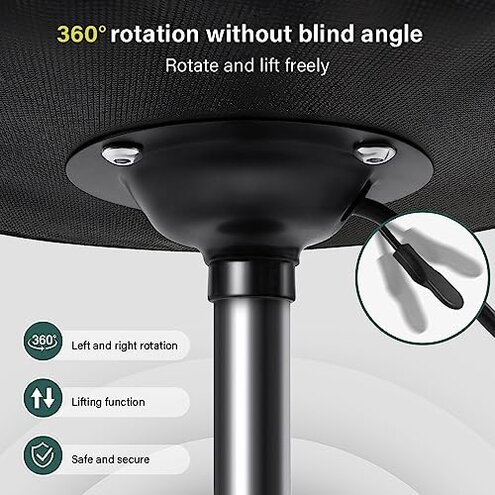
- Occasional home use: Good if you sit briefly at a counter or need a low-cost stool and can tolerate occasional tightening.
- Budget-minded buyers: Good if you accept visual wear and plan to replace casters cheaply over time.
- Short-session tasks: Good for light tasks under an hour where stability demands are lower and price matters most.
Expectation vs reality
Expectation: Reasonable for this category that an affordable rolling stool assembles quickly and stays steady with minimal checks.
Reality: The BFTOU model often needs extra tightening and caster swaps, which increases time and maintenance beyond normal expectations.
Expectation: Reasonable to expect surface longevity for routine use in home or light professional settings.
Reality: Surface creasing and wear can show up within weeks for regular users, making cosmetic regret likely.
Safer alternatives

- Buy models with verified stability: Look for stools with reinforced bases or user reports confirming steady performance after setup to avoid wobble.
- Choose floor-safe casters: Prioritize products with soft or polyurethane wheels to prevent marks and reduce replacement needs.
- Prefer tested upholstery: Seek stools with higher-rated surface durability or longer user-tested lifespans to limit early peeling.
- Pick clearer assembly designs: Favor products advertising tool-free or guided assembly and published tightening steps to avoid hidden setup time.
The bottom line
Main regret: The combination of wobble, surface wear, and fiddly assembly is the primary buyer trigger for regret.
Why it exceeds risk: These issues occur more often and require extra time or parts, making the low price less helpful for daily-professional use.
Verdict: Avoid if you need a stable, low-maintenance stool for frequent or long sessions; consider spending a bit more for proven stability.
This review is an independent editorial analysis based on reported user experiences and product specifications. NegReview.com does not sell products.