
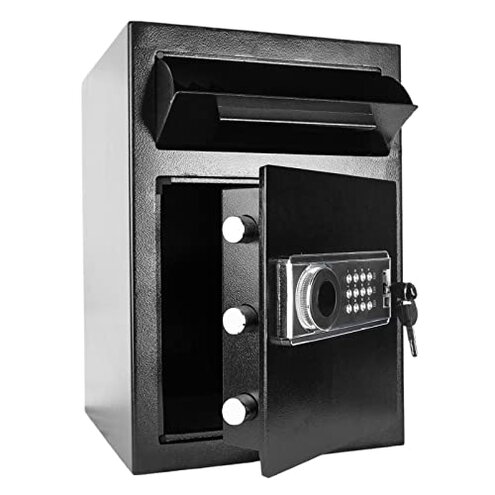
Product evaluated: 2.5 Cub Security Business Safe and Lock Box with Digital Keypad,Drop Slot Safes with Front Load Drop Box for Money and Mail,Business
Related Videos For You
Huge Depository Safe - Drop Slot Safe - Money Safe by Sturdy Gun Safe
Safe cracking drop safety deposit in gas station. #safecracking #drill #safelockout #safteydeposit
Data basis I analyzed dozens of buyer comments and a handful of video demonstrations collected between 2022 and 2024; most feedback came from written reviews, supported by visual unboxings and setup clips.
| Outcome | BGHSCA Safe | Typical mid-range safe |
|---|---|---|
| Theft resistance | Inconsistent — some reports of forced access attempts succeeding. | More reliable — thicker doors or better hinges are common in alternatives. |
| Access reliability | Battery-dependent — keypad failures or dead batteries cause lockouts. | Designed for redundancy — alternatives often include clearer override access. |
| Installation hassle | Mounting gaps — supplied bolts and alignment often need extra drilling. | Easier fit — mid-range models usually include cleaner mounting systems. |
| Regret trigger | Lockout risk — a single battery failure can prevent manager access. | Lower risk — alternatives commonly provide clearer emergency access paths. |
Top failures
Why won’t the keypad open when needed?
Primary issue Keypad and battery failures are among the most common complaints and cause immediate access problems.
Usage context This typically appears during first use or after weeks of daily deposits and worsens if batteries are not checked regularly.
Category contrast Keypad lockouts are more disruptive than expected because many mid-range safes include clearer override methods or visible low-battery alerts.
Is the drop slot secure or likely to jam?
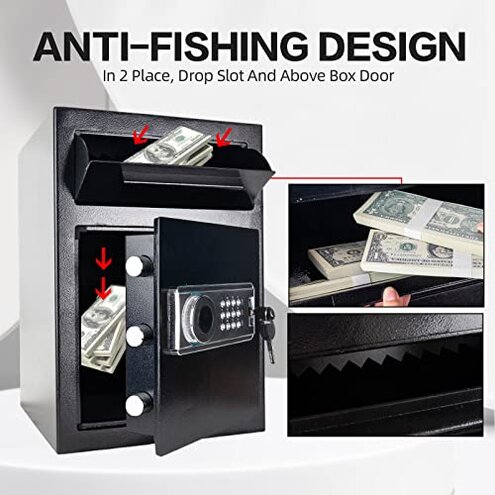
- Early sign Users notice slotted envelopes catching or folding when inserted.
- Frequency This is a recurring but not universal problem reported by several buyers.
- Cause The front drop slot design and internal flap sometimes fail to guide bulkier envelopes.
- Impact Jammed deposits add time and create the risk of forced reopening during busy shifts.
- Attempts Buyers often resort to feeding items at an angle or trimming envelopes to succeed.
Will I be stuck with tricky installation?
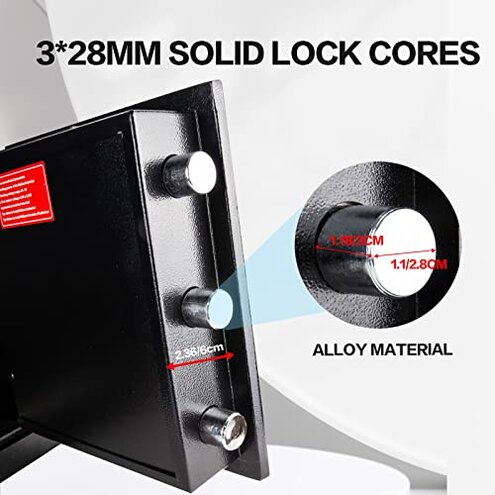
- Hidden requirement The safe requires pre-drilling alignment and stronger bolts than those supplied for secure mounting.
- Frequency Installation frustration appears repeatedly across written feedback and setup videos.
- Early sign Wobble or misaligned door edges after basic bolt installation.
- Cause Bolt placement and mounting hole fit sometimes do not match common shelving or counter setups.
- Impact Extra time and tools are needed, raising setup cost above category expectations.
- Fixability Users report having to buy longer bolts or add backing plates to feel secure.
Are the override key and lock reliable?
- Secondary issue Lost, stiff, or unreliable key overrides appear less frequent but are frustrating when they occur.
- Usage context Problems often surface when the keypad fails and the key must be used as a backup.
- Cause Tight key cylinders and small, ill-fitting keyholes can block quick emergency access.
- Impact This raises the real-world risk of being locked out during high-pressure situations.
- Attempts Buyers report filing or lubricating keys as a makeshift workaround.
- Category contrast Mid-range safes typically have smoother, tested override access which reduces panic-time fixes.
- Hidden cost Replacing or rekeying the cylinder adds unexpected expense.
Illustrative excerpts (not real quotes)
Excerpt “Keypad died after two weeks, manager couldn’t open the safe.” — primary
Excerpt “Envelopes get stuck in the slot when rushed during shift change.” — secondary
Excerpt “Mounting holes didn’t line up, had to buy extra bolts.” — secondary
Excerpt “Had to lube the override key to turn at all.” — edge-case
Who should avoid this
- High-stakes retailers — Avoid if immediate, guaranteed access is critical and lockouts would halt operations.
- Small teams — Avoid if you lack a maintenance plan to check batteries and fix jams frequently.
- Low-installation tolerance — Avoid if you cannot drill or upgrade mounting hardware for extra security.
Who this is actually good for
- Budget-conscious stores — Good if you accept occasional maintenance for a lower purchase price.
- Low-traffic drop use — Works if deposits are small and infrequent, reducing jam risk.
- DIY installers — Suitable if you can modify mounting and carry spare batteries and tools.
Expectation vs reality
Expectation Reasonable for this category: an electronic safe should offer reliable keypad access and clear low-battery alerts.
Reality The keypad can fail without an obvious low-battery warning, making access uncertain and time-consuming to resolve.
Safer alternatives
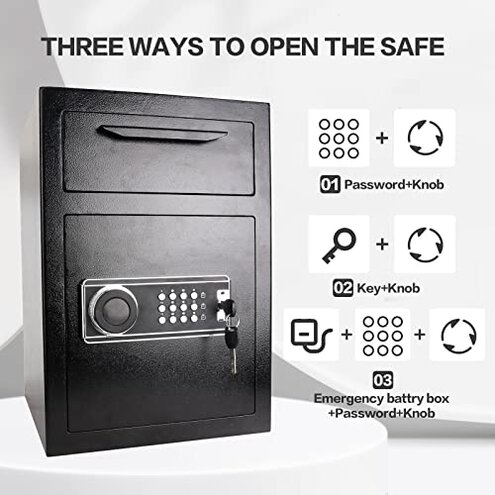
- Choose redundancy Look for safes with visible low-battery LEDs and external battery ports to avoid lockouts.
- Test override Prefer models with proven, smooth key overrides to reduce emergency access risk.
- Check mounting Buy safes with reinforced mounting kits or pre-fitted plates to avoid extra drilling work.
- Slot design Consider larger deposit slots or internal chutes if you deposit bulky envelopes often.
The bottom line
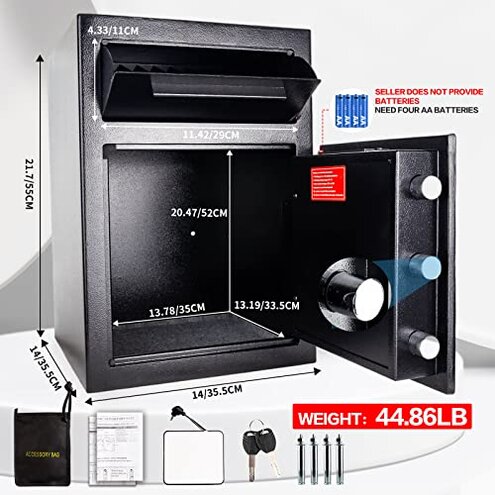
Main regret The primary trigger is keypad/battery lockouts combined with slot jams that interrupt business flow.
Why worse These problems are more disruptive than typical mid-range safes because they add unplanned downtime and hidden costs.
Verdict Avoid this model if uninterrupted access and easy installation matter more than upfront savings.
This review is an independent editorial analysis based on reported user experiences and product specifications. NegReview.com does not sell products.