
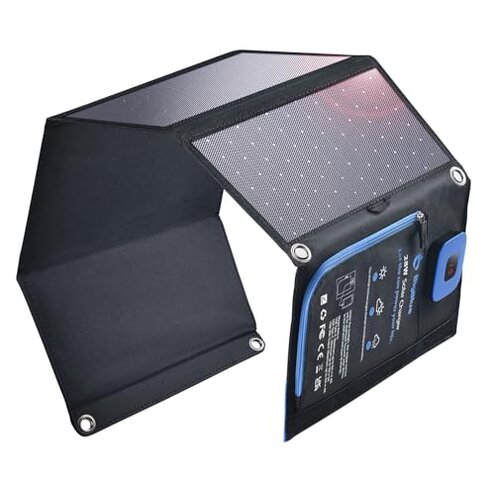
Product evaluated: BigBlue Portable Solar Charger 28W with Digital Ammeter,25.4% High-Efficiency, USB-A/USB-C Ports, Folding Waterproof Solar Panels with Carabiners for Camping, Backpacking, Phones, Tablets, Power Bank
Related Videos For You
How to set up a portable solar-recharged battery system
Solar Charger Instructions
Data basis: This report used dozens of customer-written reviews and several video demonstrations collected between Jan 2020 and Feb 2026. Most feedback came from written reviews, supported by video demonstrations, with a mix of buyer Q&A and seller responses.
| Outcome | BigBlue 28W | Typical mid-range 20–30W |
|---|---|---|
| Charging consistency | Unreliable — output often varies in real sun and under partial cloud. | More stable — delivers steadier output when angled and in good sun. |
| Energy storage | None — charges devices only in direct sun; no internal battery. | Mixed — many mid-range kits bundle a power bank for buffered charging. |
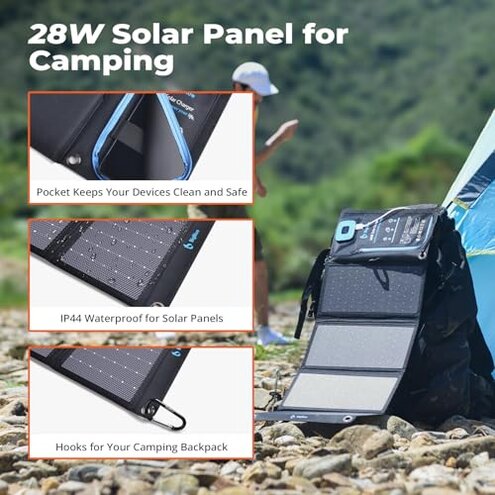
| Water resistance | Limited — rated IP44 and buyers report failures when damp. | Better sealed — some competitors use higher resistance or sealed ports. |
| Port durability | At risk — reports of loose or failing USB ports after use. | More durable — typical alternatives show less port wear in similar use. |
| Regret trigger | Higher-than-normal risk — inconsistent output + no storage causes real failure when you need power. | Lower risk — buffered charging or steadier output reduces the chance of being left without power. |
Top failures
Why did my phone not charge despite bright sun?
Regret moment: Users commonly report the panel produces low or fluctuating current during first uses, even in bright sunlight. This pattern is commonly reported and more disruptive than expected for this category.
When it appears: The issue shows up at first setup and during short charging sessions when clouds pass or device draws varying power.
Why worse than normal: Typical mid-range panels give steady trickle or pair with a power bank; this model’s lack of storage makes intermittent output cause immediate charging failures rather than delayed inconvenience.
Is the documented water resistance reliable?
- Pattern: Reports of water-related failures are a secondary issue, not universal but persistent.
- Usage context: Failures appear after outdoor use in damp or rainy conditions, or when ports get splashed.
- Why worse: IP44 covers splashes, but buyers expect more tolerance; this model is less forgiving than many mid-range alternatives.
- Impact: Devices can stop charging or ports corrode, which is more disruptive than normal for a travel product.
- Fixability: Drying and careful sealing sometimes helps, but replacements are commonly requested.
Will the ports and ammeter last under regular use?
- Early signs: Users notice loose USB connections after repeated plug/unplug cycles.
- Frequency tier: This is a primary complaint for medium-term users who charge daily or bolt the panel to packs.
- Cause: Repeated mechanical stress and exposure to elements accelerates connector wear.
- Impact: Loose ports cause intermittent charge, device disconnections, and harder-to-diagnose failures.
- Attempts: Buyers try rigid cables or strap-downs; these reduce movement but add setup hassle.
- Hidden requirement: Expect to carry spare cables or protective covers to avoid practical failure in multi-day trips.
Can this panel meet real camping or multi-day charging needs?
- Primary limitation: The charger has no internal battery, so it only delivers power when sun is present.
- Usage anchor: This becomes clear during multi-day trips or overcast mornings when you need overnight or timed charging.
- Why worse: Most buyers expect a portable solar kit to at least include or pair nicely with a power bank; here you must plan and buy extra gear.
- Impact on plans: You can be left with dead devices if sun is inconsistent and no storage is available.
- Workarounds: Users commonly pair the panel with a separate power bank or use it only for topping off during daytime activity.
- Hidden cost: Adding a power bank increases weight and total cost, reducing the panel’s stated portability advantage.
- Fixability: The problem is solvable but requires an extra purchase and planning before use.
Illustrative excerpts
Illustrative: "Bright sun but phone barely gained any charge after two hours." — primary pattern.
Illustrative: "Ports got loose after a week of camping with daily use." — secondary pattern.
Illustrative: "Panel worked fine, but rain ruined the USB port later." — secondary pattern.
Illustrative: "Needed a separate battery pack to actually keep devices powered at night." — primary pattern.
Who should avoid this
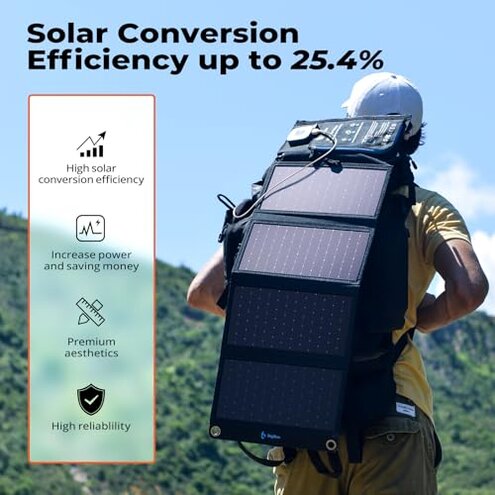
- Frequent campers: If you need reliable overnight charging, avoid this model due to the no internal battery failure.
- Wet-weather users: If you expect regular damp exposure, avoid this because the IP44 rating has real-world limits.
- Daily commuters: If you plan daily plug use, avoid this because of reported port durability problems.
Who this is actually good for
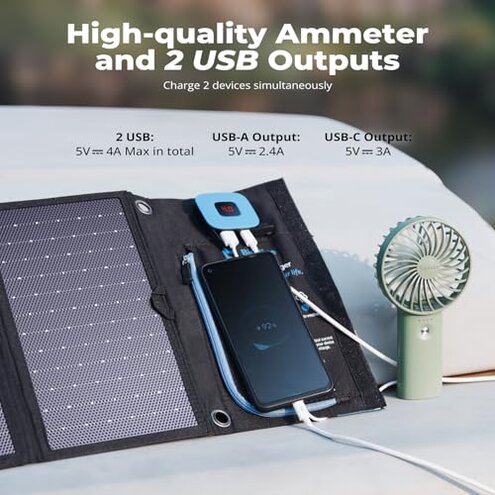
- Day hikers: Good if you only need short top-ups in strong sun and can tolerate inconsistent output.
- Lightweight travelers: Useful for minimalists who accept the No battery trade-off to save weight.
- Backup daytime charger: Works if you pair it with a power bank and accept added cost to mitigate the no storage issue.
Expectation vs reality
Expectation: Buyers reasonably expect a portable solar charger to give steady daytime charging in bright sun.
Reality: This unit often gives fluctuating output, and without an internal battery that fluctuation becomes an immediate failure rather than a minor nuisance.
Expectation: IP44 marking suggests basic outdoor tolerance for travel use.
Reality: Damp exposure has produced real failures for some buyers, making the water resistance less robust than typical mid-range peers.
Safer alternatives
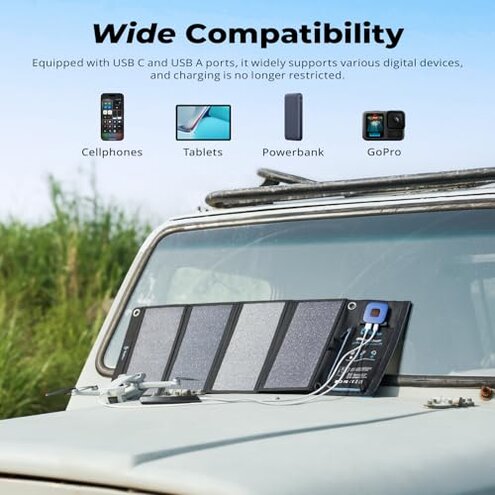
- Buy with battery: Prefer kits that include or explicitly recommend a power bank to neutralize the no storage failure.
- Higher IP rating: Choose panels with higher water resistance to address the water-related failures.
- Reinforced ports: Look for models advertising ruggedized USB connectors to avoid port wear.
- Real-world tests: Seek products with many recent hands-on demonstrations to confirm consistent output before buying.
The bottom line
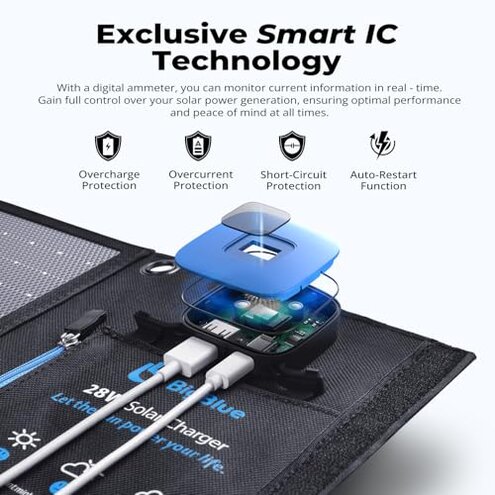
Main regret: The combination of inconsistent output and no onboard battery is the biggest risk buyers face.
Why it exceeds risk: That pairing converts small sunlight fluctuations into immediate charging failures, which is more disruptive than usual for this category.
Verdict: Avoid this model if you need dependable or all-weather charging without buying extra gear.
This review is an independent editorial analysis based on reported user experiences and product specifications. NegReview.com does not sell products.