
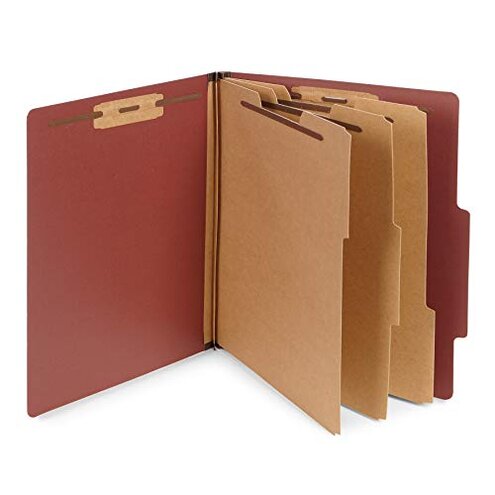
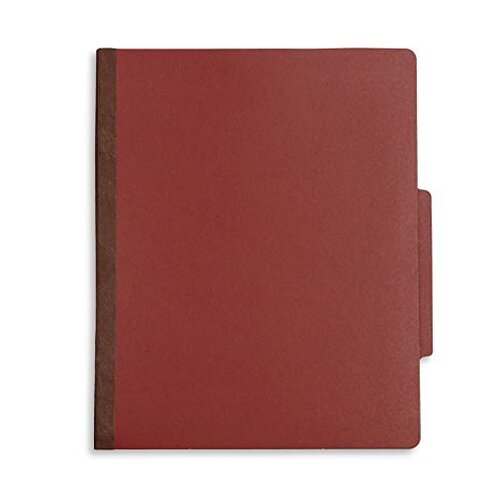
Product evaluated: Blue Summit Supplies 10 Red Classification Folders, 3 Dividers, Letter Size with 2 Inch Tyvek Expansions, 8 Section Brick Red Classification Folder, 10 Pack
Related Videos For You
What Are Classification Folders? How to Buy
Data basis Dozens of written buyer reviews and several video demonstrations were examined between January 2020 and December 2025. Source mix Most feedback came from written reviews, supported by short video tests and product Q&A entries.
| Outcome | This product | Typical mid-range folder |
|---|---|---|
| Durability | Higher failure Reports of metal prongs bending or detaching under regular loading. | More robust Prongs usually hold through repeated filing and refiling without fail. |
| Expansion hold | Inconsistent Tyvek spine sometimes splits or fails to keep bulky files secure. | Reliable Mid-range options keep expansion under load better over months. |
| Divider strength | Weaker Kraft dividers reported to tear or separate with heavy use. | Thicker Alternatives use heavier dividers that resist tearing during daily handling. |
| Labeling & tabs | Misaligned Tabs and cuts sometimes off-center causing filing friction. | Aligned Typical folders have cleaner tab cuts and predictable label placement. |
| Regret trigger | Higher risk Failures appear more disruptive than expected for office folders. | Lower risk Mid-range picks rarely force re-filing or hardware replacement. |
Prongs fail? When metal fasteners bend, detach, or shear under normal use
Primary regret Many buyers report the metal prongs bending or detaching when adding or removing large stacks of paper. Usage anchor This typically occurs within the first few uses or after repeated refiling cycles.
Pattern signal This is a recurring complaint across reviews and appears repeatedly with heavier loads. Category contrast For this category, prong failure is among the most common complaints and is more disruptive than expected.
Spine splits? Does the Tyvek expansion hold bulky files over time?
- Early signs Tyvek fraying at the seam during initial packing or after the first expansion.
- Frequency tier This is a secondary issue that appears commonly with heavy, stacked files.
- Root cause The thin expansion material struggles under constant pressure from full sections.
- Impact Files bulge or fall out if the spine separates during transport or shelving.
- Fixability Users report temporary fixes like tape, but these add time and reduce neatness.
Dividers tear? Will the folder withstand daily handling and sorting?
- Noticeable wear Kraft dividers often split where punched or folded during frequent sorting.
- Usage anchor Damage usually appears after daily handling over several weeks.
- Why worse Typical mid-range folders use heavier divider stock and last longer under the same use.
- Hidden requirement Expect lighter loads or extra reinforcement if you need long-term durability.
- User impact Torn dividers force reorganization and increase file time and frustration.
- Attempts Buyers often reinforce with tape or replace dividers entirely to keep files usable.
Tabs miscut? Do tab placement and sizing cause filing friction?
- Label misfit Tabs can be off-center, making labels look crooked or hard to read.
- Filing delay Misaligned tabs slow down quick-scan filing workflows in busy offices.
- Scope signal This appears repeatedly but is less frequent than prong failures.
- Cause Manufacturing tolerance appears looser than typical mid-range folders.
- Workaround Buyers recut tabs or use stickers to make labels legible, adding extra steps.
- Impact on system Color-coded systems depend on neat tabs; miscuts reduce organizational speed.
- Long-term If many folders have imperfect tabs, cumulative time loss becomes noticeable.
Illustrative excerpts
Excerpt 1 "Metal prongs bent after a single heavy file load, folder no longer secures papers." Pattern: primary
Excerpt 2 "Expansion tore at the spine during transport — added tape to keep it closed." Pattern: secondary
Excerpt 3 "Tabs weren't centered; my label slipped and filing slowed in a fast office." Pattern: edge-case
Who should avoid this
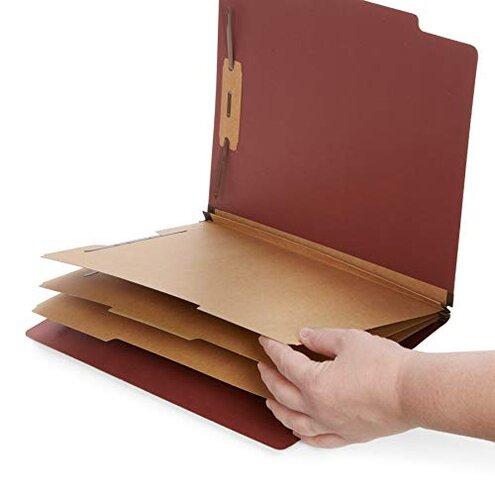
- High-volume offices Avoid if you need frequent refiling or heavy stacks that stress fasteners.
- Medical records Avoid if files must stay secure during transport or regulatory audits.
- Long-term archiving Avoid if you expect folders to last many years without reinforcement.
Who this is actually good for

- Light-use home Good for home filing with occasional updates where loads are small.
- Color-coded tasks Useful for short-term projects that benefit from the red color and multiple sections.
- Low-cost needs Acceptable when you prioritize price over heavy-duty longevity for temporary files.
Expectation vs reality
Expect Reasonable for this category: folders that hold a few dozen pages and handle refiling. Reality Many buyers experience prong bending or spine wear sooner than expected, causing mid-use rework.
Expect Clean tabs and labels for quick scanning. Reality Tab miscuts add manual fixes and slow filing workflows.
Safer alternatives
- Choose reinforced Look for folders with thicker fastener anchors or riveted prong mounts to avoid detachment.
- Stronger expansion Prefer options that advertise a heavy-duty expansion or reinforced spine for bulky files.
- Heavier dividers Pick folders with thicker divider stock if you sort or handle files daily.
- Tab precision Buy samples first to check tab alignment before bulk purchases for color-coded systems.
The bottom line
Main regret The most common cause of buyer regret is prong and spine failures under normal use. Why worse These failures are more disruptive than typical mid-range folders and often require tape or replacement. Verdict Avoid for heavy or mission-critical filing; consider only for light, short-term use.
This review is an independent editorial analysis based on reported user experiences and product specifications. NegReview.com does not sell products.