
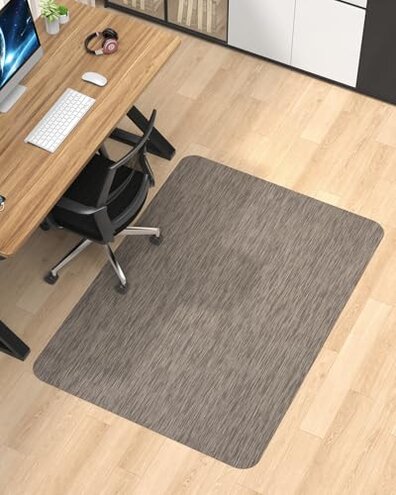
Product evaluated: Blvornl Office Chair Mat for Hardwood Floor, 35.4"*47.2" Desk Computer Chair Mat for Hard Wood, Large Anti-Slip Hard Floor Protector Rolling Chair Mat, PVC Mat Desk Rug for Office and Dark Brown
Related Videos For You
Unboxing and Setting Up a Vitrazza Glass Office Chair Mat
Stop DESTROYING Your Home Office Carpet! Build a Chair Mat For CHEAP!
Data basis: This report uses dozens of buyer comments collected from product-page feedback, written impressions, star-rating text, and a smaller share of photo or video-backed demonstrations from mid-2024 to early-2026. Most signals came from written reviews, with visual uploads mainly used to confirm setup, floor grip, and flattening behavior during normal home-office use.
| Buyer outcome | This mat | Typical mid-range alternative |
|---|---|---|
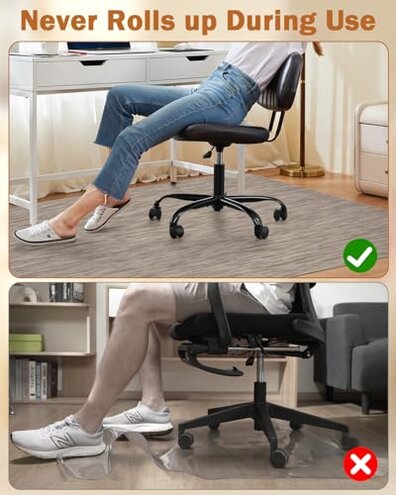
| Grip on hard floors | Higher risk of shifting during rolling use if the floor is smooth or the chair is used hard | Usually steadier after setup, with less movement during daily office use |
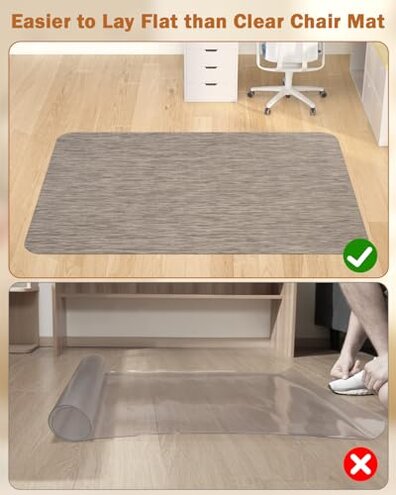
| Flatness after unpacking | More setup effort because curled edges can need extra time to relax | More forgiving, often flattening faster with less intervention |
| Chair rolling feel | Mixed feel; texture can add drag compared with smoother mats | More predictable rolling, closer to what buyers expect in this category |
| Looks vs function | Better decor fit, but style can come with more day-to-day trade-offs | Plainer look, but often easier to live with for pure desk use |
| Regret trigger | Buying for zero-fuss use and then dealing with movement, curl, or extra setup | Lower regret if your main goal is simple floor protection with less babysitting |
Annoyed that the mat may not stay put during rolling?
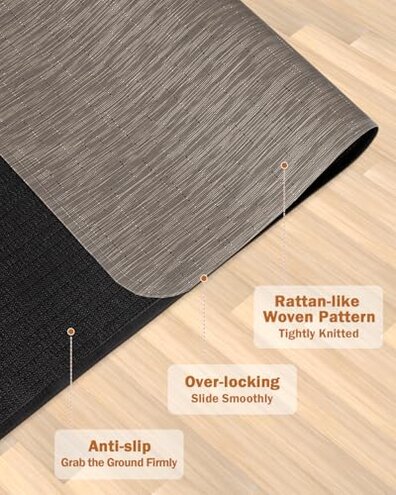
This is a primary issue and among the most disruptive complaints for a chair mat. The regret shows up during daily use, when repeated chair movement matters more than how the mat looked on day one.
The pattern appears repeatedly, not with every floor, but often enough on smooth hard surfaces to matter. Compared with a reasonable category baseline, this feels less secure than expected for a mat sold mainly for hard-floor protection.
- Early sign: you notice small shifts after scooting back from the desk a few times.
- Frequency tier: this is the primary complaint, appearing more often than appearance-related negatives.
- Usage moment: it tends to show up after setup, once the chair starts rolling in and out over long work sessions.
- Why it frustrates: the problem adds extra repositioning, which defeats the point of a protective mat.
- Worse condition: smooth wood, tile, laminate, or stronger chair push-off makes the movement feel more obvious.
- Category contrast: some shifting can happen with thin mats, but this seems more frequent than normal for a mid-range hard-floor option.
Illustrative: “I bought protection, not another thing to straighten every day.” — Primary pattern
Frustrated that the edges may not lie flat right away?
- Pattern: this is a secondary issue, but it appears persistently enough to affect first impressions.
- When it hits: the problem shows up on first use, right after unrolling and placing it under the desk.
- Real impact: raised ends can catch wheels or shoes, which makes the workspace feel unfinished.
- Hidden requirement: some buyers end up needing extra flattening time, weight on the corners, or a warm room before normal use.
- Why that matters: a mat in this size should feel close to ready after unpacking, not like a short setup project.
- Category contrast: rolled mats often need a little settling, but this seems less forgiving than typical mid-range alternatives.
- Fixability: the issue is sometimes temporary, but it still adds time and hassle that many buyers did not plan for.
Illustrative: “It protected the floor, but the corners fought me for days.” — Secondary pattern
Expecting smooth rolling but getting more drag than you want?
This complaint is recurring, though not as common as slipping or curling. It usually appears during longer desk sessions, when the chair needs to glide in small movements rather than big pushes.
The trade-off is easy to recognize: the woven-look surface adds style, but can feel less slick than standard clear mats. In this category, some texture is normal, yet buyers looking for easy rolling may find the resistance more noticeable than expected.
- Severity: this is a secondary issue, but more frustrating when you move constantly at your desk.
- Usage context: it shows up after setup, especially with heavier office chairs or frequent micro-adjustments.
- Buyer impact: extra drag can make the chair feel harder to reposition and less comfortable over a full workday.
- What buyers try: some adjust wheel pressure or chair position, but that only partly reduces the annoyance.
- Category contrast: many chair mats trade some grip for movement control, but this one can feel less balanced than a smoother mid-range mat.
Illustrative: “Looks nicer than clear plastic, but my chair does not glide easily.” — Secondary pattern
Buying it for a neat wood-look office and then noticing function comes second?
- Pattern: this is an edge-case issue for some buyers, but a persistent theme when expectations are appearance-first and performance-first at the same time.
- Regret moment: it usually lands after a few days, once the mat becomes part of the work routine instead of a decor upgrade.
- Core trade-off: the style stands out, but some buyers feel the mat acts more like a decor accessory than a low-maintenance office tool.
- Why it feels worse: in this category, buyers usually accept plain looks if function is dependable, so weaker day-to-day behavior feels like a bad exchange.
- Scope: this concern is less frequent than slipping, but it shows up across different kinds of use cases.
- Who notices most: people in active desk setups, gaming spaces, or shared rooms tend to feel the compromise faster.
- Fixability: there is no simple fix if your main goal is easy rolling and zero movement; a different mat style may fit better.
Illustrative: “It matches the room, but I still notice it every time I move.” — Edge-case pattern
Who should avoid this
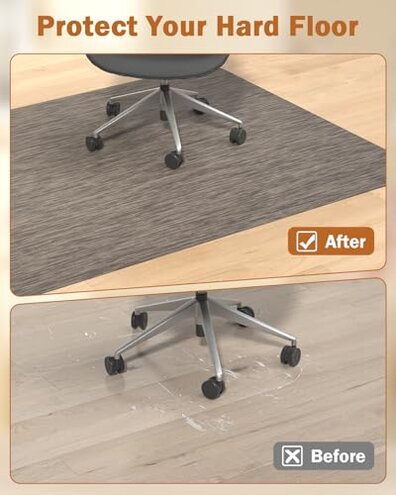
- Avoid it if you want a mat that works perfectly right out of the box, because flattening and grip can need extra patience.
- Avoid it if your chair moves constantly during work, since drag and shifting can feel worse than normal for this category.
- Avoid it if your floor is very smooth, because the sliding risk appears higher than with a typical mid-range hard-floor mat.
- Avoid it if you hate setup tweaks, since this mat may ask for corner weighting or repositioning before it feels settled.
Who this is actually good for
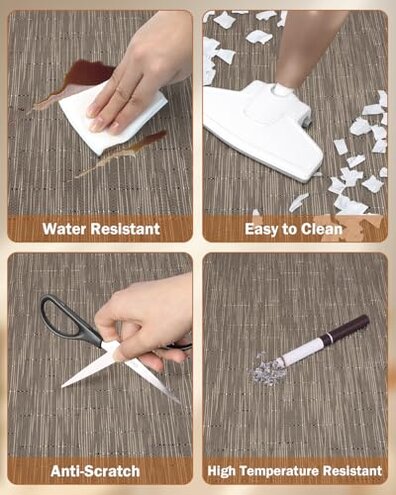
- Good fit for buyers who care more about a warmer, less industrial look than perfect chair glide.
- Good fit for lighter desk use where the chair is not rolling hard all day, so grip issues matter less.
- Good fit for someone willing to tolerate a short break-in period to get the mat flatter over time.
- Good fit for spaces where floor protection matters most and minor repositioning is an acceptable trade-off.
Expectation vs reality
Expectation: a hard-floor chair mat should protect the floor and stay reasonably planted during normal rolling.
Reality: this one appears less stable than expected on some smooth floors, which creates extra maintenance for a basic office accessory.
Expectation: a rolled mat may need a little settling, which is reasonable for this category.
Reality: the setup hassle can feel worse than expected, because edge curl may last long enough to interrupt normal use.
Expectation: a decorative finish should not significantly change chair movement.
Reality: the textured look can bring more rolling resistance than buyers expect from a desk mat in this price range.
Safer alternatives
- Choose flat-pack options or mats described as quick-flattening if you want to avoid the curled-edge setup problem.
- Look for grip-focused designs with stronger hard-floor traction if your workspace has smooth laminate, tile, or sealed wood.
- Prefer smoother surfaces if easy chair glide matters more than decorative texture during long office sessions.
- Check use-case fit and buy a plain utility mat when function matters more than room styling.
The bottom line
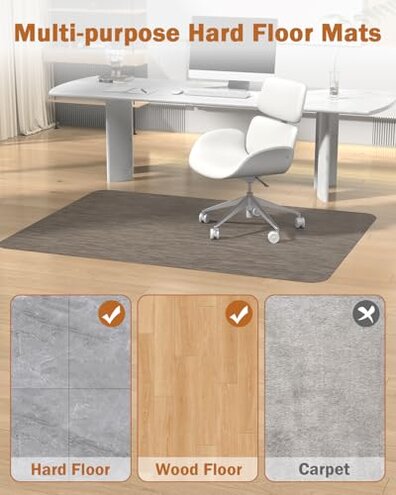
The main regret trigger is simple: buyers expect low-effort floor protection, then run into shifting, edge curl, or drag during everyday chair use. That exceeds normal category risk because these problems affect the product’s core job, not just its appearance. Verdict: avoid it if you want dependable grip and easy rolling without setup babysitting.
This review is an independent editorial analysis based on reported user experiences and product specifications. NegReview.com does not sell products.