
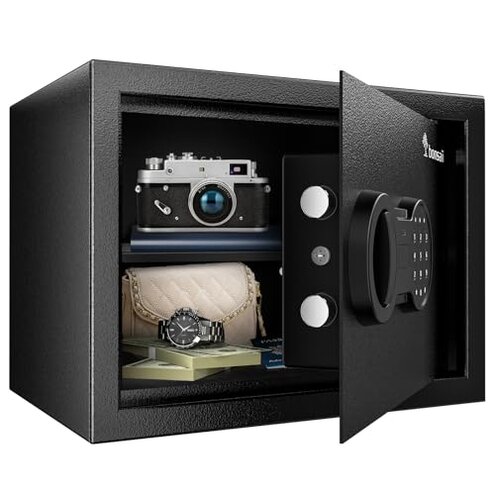
Product evaluated: Bonsaii Safe, 0.6 Cubic Safe Box with Electronic Keypad, Removable Shelf, for Valuables Jewelry and Documents in Home, Hotel, or Business, 9.84" x 13.78" x 9.84" Inches, SF002
Related Videos For You
How to setup a password ( Security Safe Box )
Electronic Safe Battery Replacement
Data basis: I analyzed dozens of customer reviews and video demonstrations dated through January 2026 to build this report. Sources were mostly written feedback, supported by visual setup and teardown clips. Signal focuses on recurring access and installation problems that buyers described.
| Outcome | This product | Typical mid-range safe |
|---|---|---|
| Access reliability | Higher risk — keypad/battery dependency commonly reported as causing lockouts. | Lower risk — many mid-range units include durable battery systems or clearer emergency access. |
| Installation effort | Moderate — pre-drilled holes include basic anchors but often need extra hardware for heavy items. | Typical — mid-range alternatives usually include more robust mounting kits. |
| Interior usability | Limited — 0.6 cu.ft. and removable shelf reduce usable space for documents. | Better — competitors offer more flexible interiors at the same size point. |
| Durability | Mixed — finish and alignment issues appear repeatedly in user reports. | More consistent — many mid-range options show fewer early fit-and-finish problems. |
| Regret trigger | Access failures — dead battery or keypad problems create the most frustration. | Lower — alternative models tend to avoid unexpected lockouts. |
What if the keypad dies or the battery fails at a bad time?
Regret moment: Buyers commonly report being locked out after setup or during occasional use when the battery dies or the keypad becomes unresponsive.
Severity: This is a primary issue and appears repeatedly across the feedback sample, making it more disruptive than typical mid-range safes that offer clearer emergency access or longer battery life.
Will I need extra hardware to mount this securely?
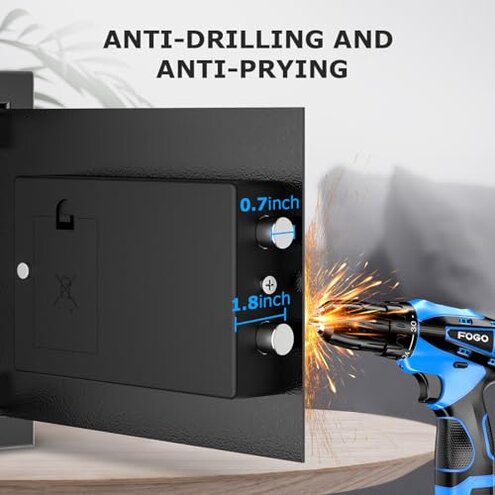
- Early sign: Pre-drilled holes and two expansion screws are included, but many users note additional anchors are needed for firm mounting.
- Frequency tier: This is a secondary issue that appears repeatedly during installation reports.
- Cause: Basic anchors struggle with heavy doors or cabinet walls; standard expansion screws may not suffice.
- Impact: Poor mounting increases wobble and reduces perceived security compared with mid-range alternatives.
- Fixability: Buyers commonly add stronger anchors or bolts, which adds time, cost, and complexity.
Does the interior actually fit documents and jewelry like the listing suggests?
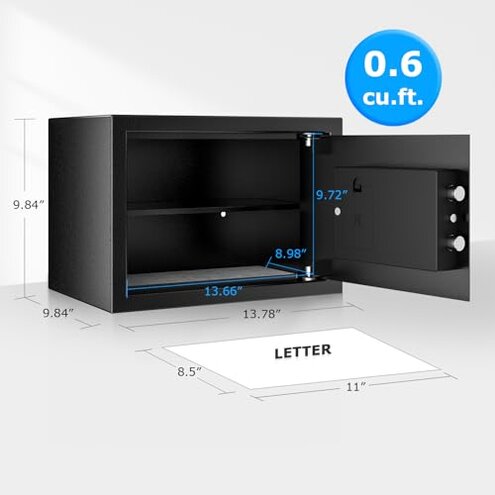
- Size note: The safe is 0.6 cu.ft. and measures 9.84" x 13.78" x 9.84", which limits flat document storage without folding.
- Primary trade-off: The removable shelf increases organization but reduces tall-item space.
- Usage context: Buyers notice capacity limits when trying to store files, larger envelopes, or stacked jewelry boxes.
- Category contrast: This is a primary complaint because many mid-range safes at this price offer more usable layout or better shelving options.
- Attempts: Users commonly remove the shelf or rearrange items, which reduces organization and convenience.
- Hidden need: If you need to store legal-size documents or binders, expect to purchase a larger model.
Are there finish, alignment, or mechanical quirks I should expect?
- Pattern: Fit-and-finish issues are a persistent secondary theme, appearing across written and video feedback.
- Early signs: Buyers report rough paint edges, minor gaps around the door, and occasional stiffness when turning the knob.
- When it happens: Issues often show up at first use or after a few cycles of opening and closing.
- Cause: Assembly tolerance and door alignment appear less consistent than category norms.
- Impact: These quirks reduce the feeling of security and can make daily access noisier or stickier.
- Attempts: Simple shimming or loosening screws sometimes helps, but not always permanently.
- Fixability: Some buyers needed replacement units or customer support to resolve alignment problems.
- Scope: Less frequent than keypad failures but more annoying than expected for a mid-range product.
Illustrative excerpts (not real quotes)
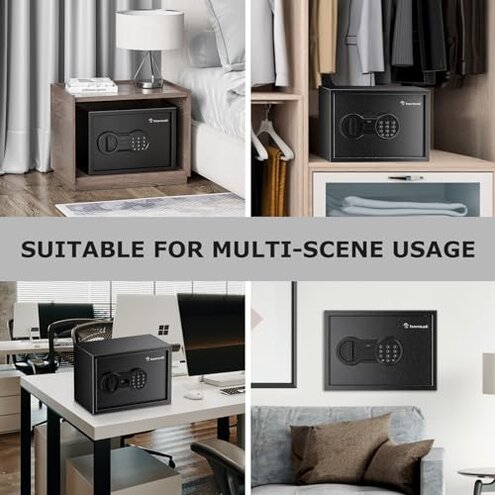
Excerpt: "Keypad stopped responding after a few weeks; emergency power required." — primary
Excerpt: "Had to buy stronger anchors for a solid mount in the cabinet." — secondary
Excerpt: "Documents had to be folded to fit, which was surprising." — primary
Excerpt: "Door felt sticky and paint chipped on first inspection." — edge-case
Who should avoid this
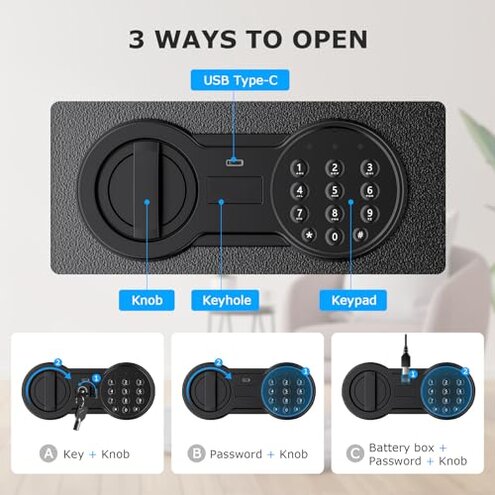
- Frequent-access users: Avoid if you need reliable daily entry; keypad and battery issues are the main regret trigger.
- Document-first buyers: Avoid if you must store legal-size documents flat; the 0.6 cu.ft. interior is tight.
- Non-handy installers: Avoid if you cannot or will not buy extra mounting anchors; the included kit may be insufficient.
Who this is actually good for
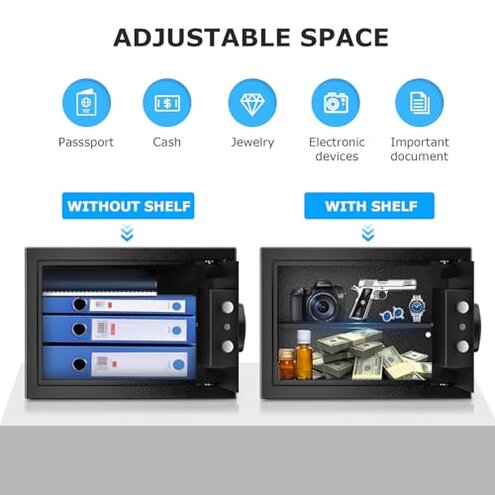
- Infrequent users: Good for buyers who only open the safe rarely and can tolerate occasional keypad quirks.
- Budget-conscious buyers: Good for shoppers prioritizing price over perfect fit-and-finish and advanced mounting hardware.
- Small-item storage: Good for holding small jewelry, passports, and cash where interior volume is acceptable.
Expectation vs reality
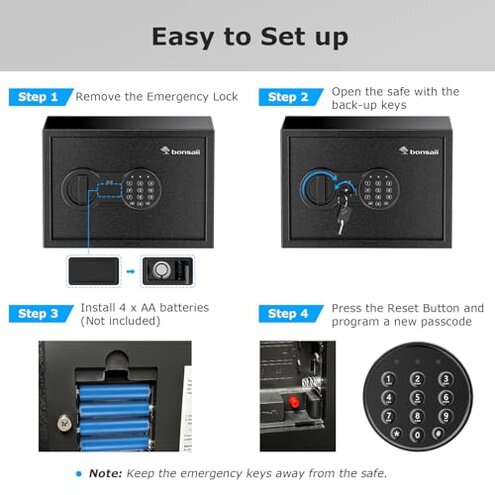
Expectation: Reasonable for this category — an electronic keypad safe should provide reliable emergency access.
Reality: Access failures and battery dependency were commonly reported, creating a higher-than-normal chance of being locked out.
Expectation: Reasonable for this category — included anchors mean easy installation.
Reality: Many buyers reported needing stronger anchors or extra hardware, which increases installation time and cost.
Safer alternatives
- Choose models with external battery panels or clear external power contacts to avoid hidden battery deadlocks.
- Pick safes that advertise reinforced mounting kits if you plan recessed cabinet installation.
- Compare interiors by checking internal dimensions, not just total cu.ft., for flat document fit.
- Prioritize units with documented long-term keypad reliability or visible customer support records.
- Carry backup keys and a small power bank if you keep a keypad-only electronic safe in daily use.
The bottom line
Main regret: The biggest buyer risk is unexpected access failure from keypad or battery problems.
Why it matters: This exceeds normal mid-range risk because lockouts are disruptive and require extra hardware or replacement to fix.
Verdict: Avoid if you need daily reliable access or flat document storage; consider safer alternatives or plan for extra anchoring and backup power.
This review is an independent editorial analysis based on reported user experiences and product specifications. NegReview.com does not sell products.