
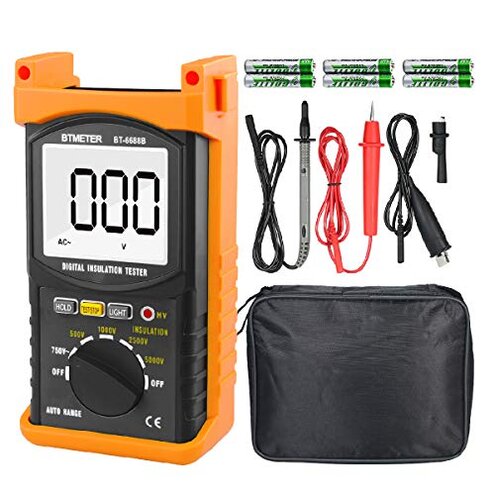
Product evaluated: BTMETER BT-6688B Megohmmeter 200 Gig Ohm Digital Insulation Resistance Tester, 500V/1kV/2.5kV/5kV Test Voltage, Auto Ranging, Backlight Display
Related Videos For You
How to use insulation tester (Megger)? |Explained
How to Measure Insulation Resistance With The Fluke 1587
Data basis — This report used dozens of user reports and video demonstrations collected through Jan 2026, with most feedback from written reviews supported by short visual tests and setup clips.
| Outcome | BT-6688B | Typical mid-range tester |
|---|---|---|
| Reading consistency | Variable readings often fluctuate between ranges during field checks, causing confusion. | Stable readings usually hold steady across short test sessions in this price tier. |
| Build durability | Fragile probes and connectors reported more often than expected for similar tools. | Rugged leads and reinforced connectors are common in mid-range alternatives. |
| Usability | Confusing interface with hidden settings that increase setup time for new users. | Simpler menus and clearer labeling are typical in comparable models. |
| Safety / hidden needs | Hidden calibration and strict test-time limits create higher-than-normal safety risk if ignored. | Clearer warnings and guidance are more common in mid-range units. |
| Regret trigger | Unreliable field data that forces retests and second tools. | Predictable results that reduce repeat measurements for most users. |
Top failures
Why do readings jump or disagree?
Severity — You notice the regret when a measured value moves between ranges during a single session.
Pattern — This inconsistency is a recurring complaint across many users and appears repeatedly during field checks.
Context — It commonly shows up on first use and during longer measurement cycles when testers compare multiple points.
Category contrast — Most mid-range megohmmeters give steady short-session results; this model is less forgiving and causes extra retests.
What fails physically during use?
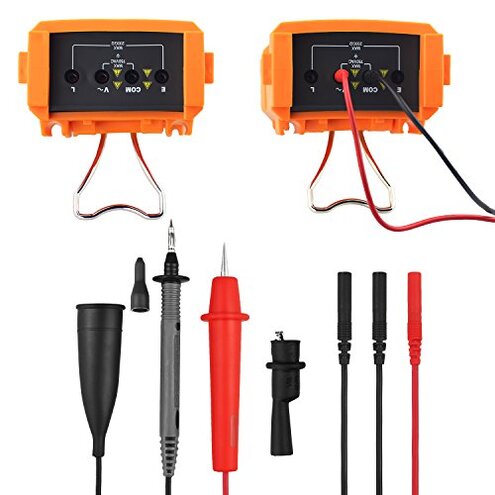
- Probe wear — Early fraying or loose probe connectors are commonly reported during routine handling.
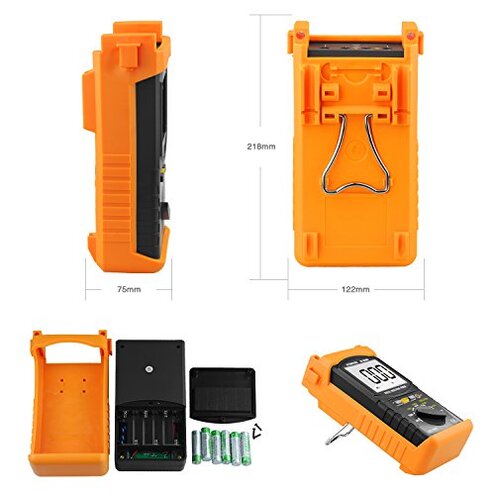
- Case fragility — The protective case can crack or fit loosely after normal drops or storage handling.
- Lead stiffness — Some buyers note stiff or poorly shielded leads that reduce maneuverability in tight spots.
- Connector fit — Intermittent contact at the jack appears repeatedly and causes sudden reading changes.
- Repair effort — Fixes usually add steps like re-terminating leads or buying replacement probes from third parties.
Why is setup confusing or error-prone?
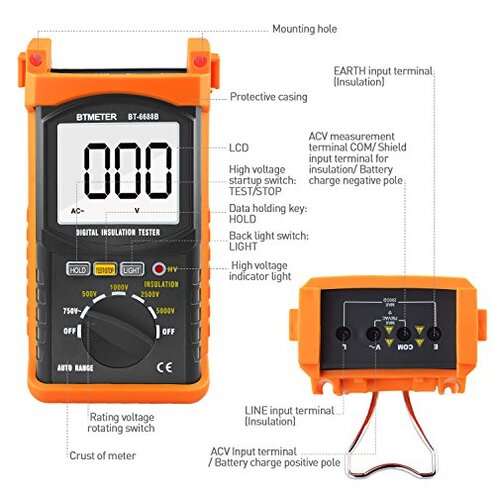
- Unlabeled settings — Voltage and range selection are not always intuitive for first-time users.
- Hidden toggles — Some safety limits and timing rules sit behind non-obvious menu steps.
- Backlight dependence — The display can be hard to read without the backlight, adding a step in low light.
- Documentation gaps — Quick-start materials lack clarity on test-duration limits and safe practice.
- Accidental mode changes — Buttons are close together and cause unintended setting swaps during handling.
- Extra training — New users often need extra time or reference videos to avoid user-error readings.
Are there hidden safety or calibration requirements?
- Measurement limit — The device requires short measurement windows when resistance is low, a hidden safety rule that many miss.
- Calibration need — Periodic calibration or cross-check is commonly needed to trust high-value readings.
- High-voltage risk — Using higher test voltages without clear procedure raises the chance of operator error.
- Accessory dependency — Reliable results often depend on specific probe condition and clean connections.
- Service access — Getting calibration or parts may add downtime compared with mid-range brands.
- Hidden costs — Replacement probes and calibration introduce extra expense after purchase.
- Edge-case failures — Rare thermal drift or sporadic zeroing issues appear under heavy daily use.
Illustrative excerpts
Excerpt: "Readings moved between ranges during one motor check, forcing repeats." — primary
Excerpt: "Probe connector loosened after a few uses and caused contact loss." — secondary
Excerpt: "Menu steps hid the test-time rule and I exceeded the safe window." — secondary
Excerpt: "Needed external calibration before trusting the 1GΩ result." — edge-case
Who should avoid this
- Field technicians who need immediate, repeatable readings without retests should avoid this unit.
- High-volume users that rely on rugged leads and quick setup will find the extra maintenance costly.
- Safety-first teams that cannot accept hidden test-time rules or extra calibration steps should choose a clearer alternative.
Who this is actually good for
- Hobbyists who accept occasional retests and want a low-cost feature set can tolerate inconsistent readings.
- Low-frequency users who use the meter rarely and can budget time for calibration or learning setup steps.
- Budget buyers who want many voltage options and can swap probes when needed will find usable value.
Expectation vs reality
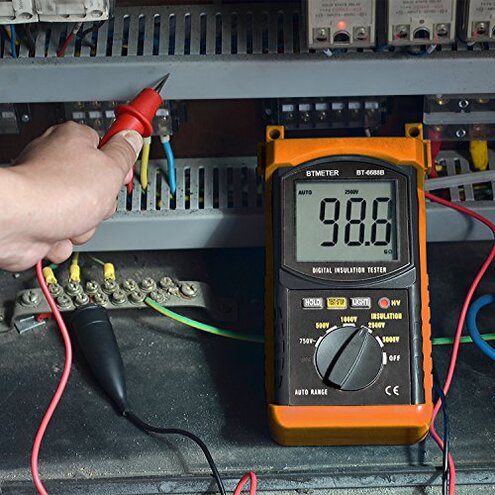
- Expectation — Reasonable for this category: basic insulation testers give stable short-session measurements.
- Reality — This model produces more reading fluctuation than typical mid-range testers, increasing repeat checks and downtime.
- Expectation — Leads and probes should survive routine field handling.
- Reality — Probes and connectors show wear sooner, adding replacement cost and effort.
Safer alternatives
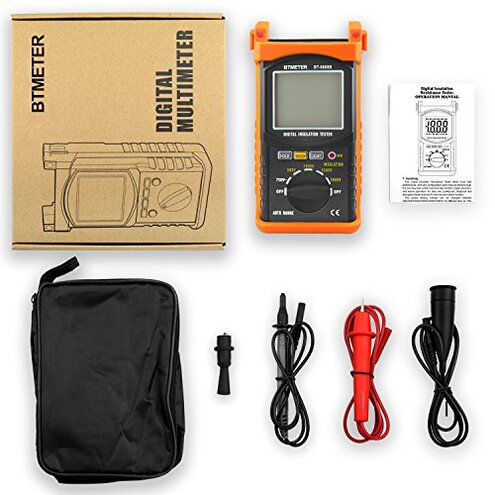
- Choose durable leads — Prioritize models with reinforced probe connectors to neutralize the probe-failure issue.
- Favor clearer UI — Look for testers with labeled menus and visible warnings to avoid hidden setup errors.
- Buy calibrated units — Pick sellers that include calibration certificates to reduce unexpected accuracy problems.
- Inspect probes — Replace or upgrade probes before field use to prevent intermittent contact errors.
- Compare warranties — Longer coverage can offset the higher maintenance this model tends to require.
The bottom line
Main regret — The primary issue is unreliable field readings that force repeat tests and extra tools.
Why it matters — That failure and fragile probes exceed normal category risk for users who need dependable, low-downtime equipment.
Verdict — Avoid this unit if you depend on repeatable field performance; consider it only if you accept extra calibration and probe replacement time.
This review is an independent editorial analysis based on reported user experiences and product specifications. NegReview.com does not sell products.