
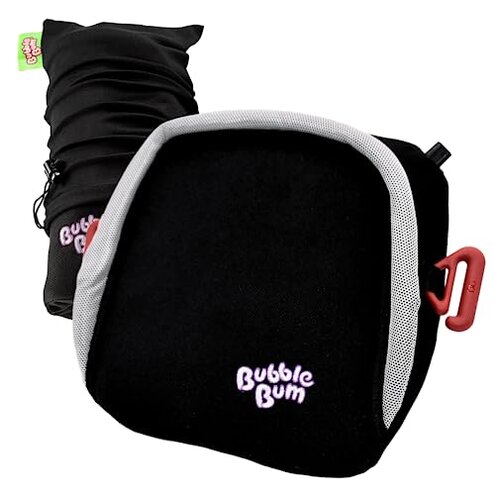
Product evaluated: BubbleBum Inflatable Booster Car Seat – Foldable, Lightweight, Backless Travel Booster Seat for Kids, Portable Carseat for Toddler, Fits 3 Across, Compact for Uber - Ages 4-11 Year Old, - Black
Related Videos For You
Alex Demonstrates How To Use The BubbleBum Booster Seat.
Britax crash test shows dangers of booster seats
Hundreds of buyer comments were aggregated from written reviews and video demonstrations collected between 2015–2024, with most feedback coming from written reviews and supported by visual tests and buyer clips.
| Outcome | BubbleBum (inflatable) | Typical mid-range booster |
|---|---|---|
| Stability on long rides | Less stable — commonly reported shifting or squish on extended trips. | More stable — molded foam or plastic holds shape during long drives. |
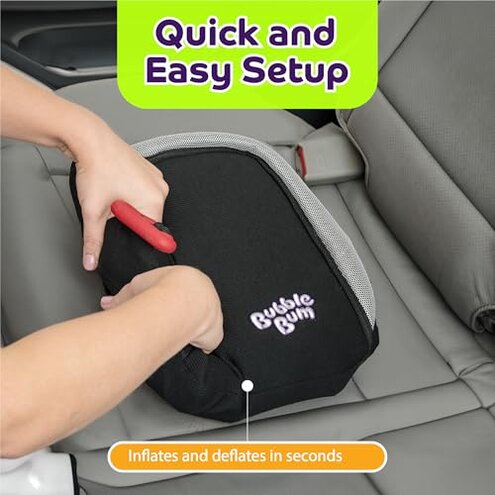
| Setup time | Slower — requires inflation each use and belt positioning checks. | Faster — usually ready out of the box with minimal adjustment. |
| Leak risk | Higher-than-normal risk — punctures and slow deflation appear repeatedly in feedback. | Low risk — rigid boosters rarely lose function mid-ride. |
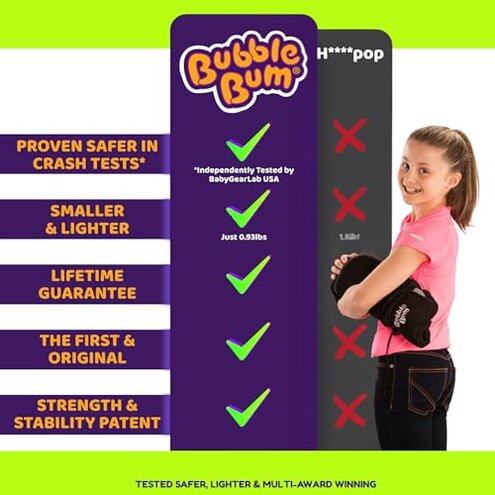
| Space saving | Compact — folds small for travel and fits three across in tight seats. | Bulkier — wider but more rigid support and durability. |
| Regret trigger | Mid-ride deflation — primary regret that makes buyers feel unsafe. | Minor adjustments — typical frustrations but less safety impact. |
Will it deflate during a trip and leave my child unsupported?
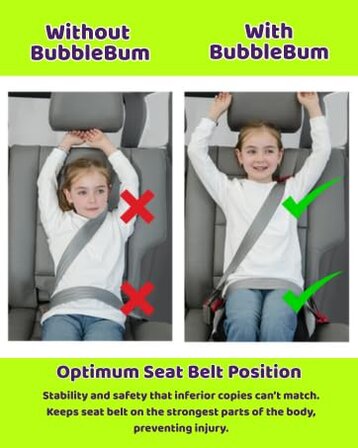
Immediate regret moments include mid-ride softening or slow leaks that reduce height and belt position during use.
Pattern — this is among the most common complaints, and it appears repeatedly after several weeks to months of use, rather than only at first setup.
Does the booster keep the seat belt aligned correctly?
- Early sign — belt sits too low or slips off the shoulder during city driving, commonly reported during everyday use.
- Frequency tier — a primary issue for many buyers but not universal across all installs.
- Cause — inflatable shape allows belt movement, especially on squishy or angled seats.
- Impact — makes a ride feel less secure than rigid boosters, increasing anxiety on busy roads.
How annoying is setup and daily upkeep?
- Hidden requirement — it must be fully inflated before every use, which adds time compared with standard boosters.
- When it shows up — setup friction is most obvious when switching cars during errands or using rideshares.
- Attempts to fix — users commonly re-inflate mid-day or keep a pump on hand, a workaround that adds effort.
- Worsens — the burden increases with daily handling or frequent travel.
- Category contrast — more upkeep than most mid-range boosters, which are typically grab-and-go.
- Fixability — repair for punctures exists but requires tools and time, so not a quick solution on the road.
Will it last if I use it often or for long trips?
- Longevity concern — wear and punctures are a persistent secondary issue reported across months of use.
- Early signs — gradual softening or small hiss noises appear after repeated inflation cycles.
- Frequency tier — less frequent than setup complaints but more disruptive when it occurs.
- Cause — thin inflatable material is more vulnerable than rigid shells to sharp edges and rough handling.
- Impact — a puncture during travel turns the booster unusable and forces last-minute decisions.
- Attempts — some buyers carry patch kits, but those add hidden cost and effort.
- Category contrast — far less durable than standard boosters, making it a poor fit for heavy daily use.
Illustrative excerpts
Illustrative "Inflated fine at home, half-deflated on highway after one hour." — primary pattern.
Illustrative "Belt slid off shoulder during school run, felt insecure." — primary pattern.
Illustrative "I always need a pump in the car now, extra hassle." — secondary pattern.
Illustrative "Patch kit held for a week, then another leak appeared." — edge-case pattern.
Who should avoid this
Daily commuters who need a grab-and-go solution should avoid this product because frequent inflation and durability issues exceed normal category tolerance.
Long-trip families requiring reliable, no-maintenance seating should avoid it due to the higher risk of mid-ride deflation and belt misalignment.
Parents of very active kids who subject seats to rough handling should avoid it because wear and puncture vulnerability is worse than typical boosters.
Who this is actually good for
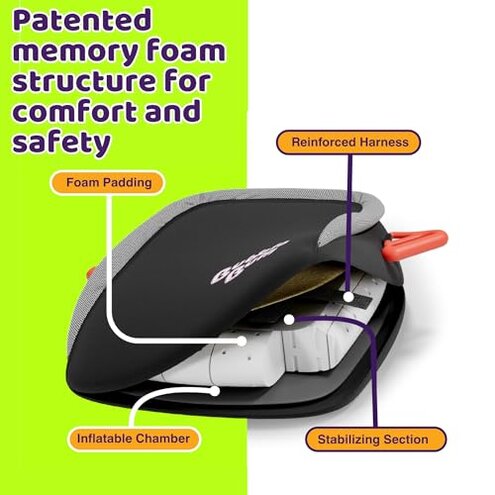
Occasional travelers who need a compact booster for rare trips and can tolerate extra setup time may accept the inflation step.
Light-use grandparents who store the seat and use it infrequently will benefit from the portability despite leak risk.
Short rides and taxis where space saving matters more than long-term durability; users here tolerate lower longevity for compactness.
Expectation vs reality
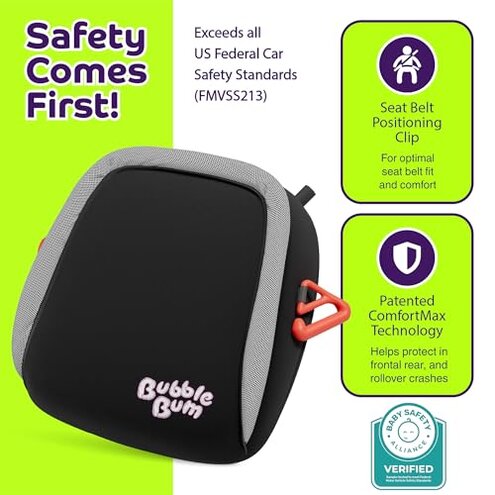
Expectation — reasonable for this category: buyers expect a portable booster to trade some rigidity for compactness.
Reality — many find the trade-off harsher than expected because inflation upkeep and leak risk create active safety worries during common use.
Expectation — quick setup for travel use.
Reality — setup time increases when you must inflate and verify belt position each use, adding minutes per trip.
Safer alternatives
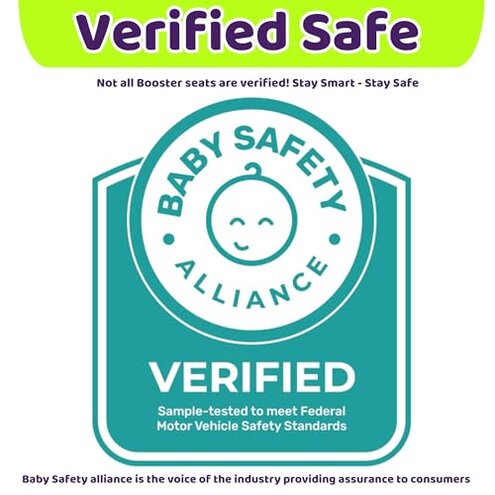
- Choose rigid boosters for daily reliability to neutralize mid-ride deflation risk.
- Prioritize molded shells to avoid belt-slippage issues and reduce extra adjustments.
- Look for travel-specific foam boosters if you need compactness but want better durability than inflatable options.
- Carry spare repair kits only as a last-resort mitigation; they add time and don't fully restore original reliability.
The bottom line
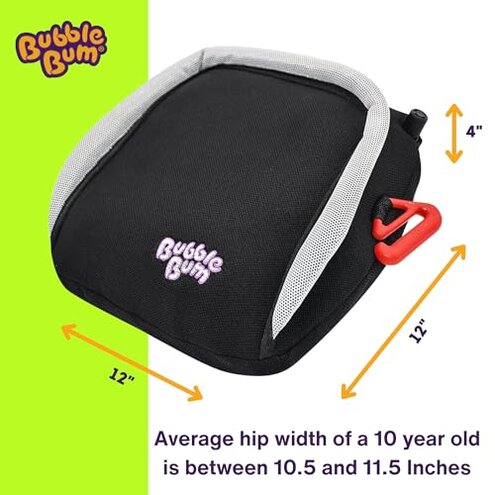
Main regret — the primary trigger is mid-ride softening and belt misalignment that many buyers find unsettling.
Why worse — this exceeds normal category risk because inflatable construction adds maintenance and puncture vulnerability compared with mid-range boosters.
Verdict — avoid for daily or long-distance family use; consider only if portability is your top priority and you accept extra upkeep.
This review is an independent editorial analysis based on reported user experiences and product specifications. NegReview.com does not sell products.