
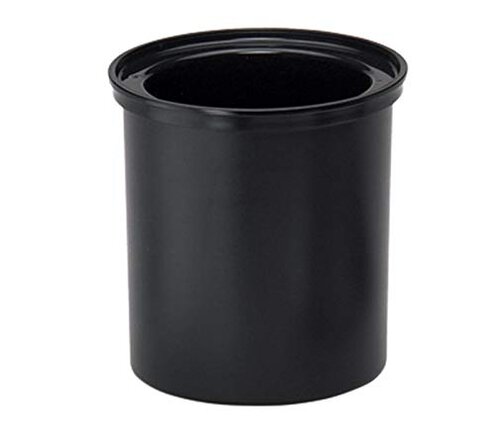
Product evaluated: Cambro ColdFest Black Round 2 Qt Crock
Related Videos For You
STANLEY ADVENTURE ALL IN ONE FOOD JAR AND CAMP CROCK
Food Safety Tips and Your Crockpot
Data basis: This report synthesizes findings from dozens of buyer reviews and visual demonstrations collected between 2016 and 2025. Most feedback came from written customer reviews, supported by video demonstrations and seller Q&A. The distribution is weighted toward recent buyer experiences.
| Outcome | Cambro ColdFest | Typical mid-range alternative |
|---|---|---|
| Cold retention | Weaker-than-expected at long events; variable performance versus the 6-hour claim. | More consistent cold for multi-hour use under normal conditions. |
| Lid fit & transport | Loose fit reported during carrying and serving, increasing spill risk. | Secure lids or locking designs reduce spills while moving. |
| Usable capacity | Smaller usable volume than buyers expect from "2 quarts" labeling. | Clear internal capacity or larger nominal sizes match expectations more closely. |
| Durability & cleaning | Plastic wear and lid warping appear with frequent dishwasher use. | More durable plastics or dishwasher-safe assurances hold up better over time. |
| Regret trigger | Higher risk of warm food and spills at events, exceeding normal category tolerance. | Lower risk if you need multi-hour cold holding and safe transport. |
Why is my food not staying cold long enough?
Regret moment: You expect multi-hour cold holding during events, but food warms sooner than anticipated.
Pattern: This is a primary issue that appears repeatedly in buyer feedback.
When it shows: The problem appears after first use in long sessions or when the crock is used without long pre-chill time.
Category contrast: Typical mid-range insulated crocks keep food cold more consistently, so this feels worse than normal for the category.
Does the lid leak or fail during transport?
- Early sign: The lid feels loose when first placed on the crock.
- Frequency tier: This is a secondary issue seen across multiple user reports.
- Cause: Non-locking lid design and shallow sealing edge increase movement during carrying.
- Impact: Increased risk of spills when transporting between kitchen and buffet.
- Attempts: Users often add tape or bagging as a workaround.
- Fixability: The issue is partially fixable with aftermarket straps but not solved by normal use.
Is the size and cleanup worse than advertised?
- Label mismatch: The stated "2 quarts" can give a smaller usable volume than buyers expect.
- Hidden requirement: Effective cooling commonly requires the gel segment to be pre-frozen for many hours before use.
- Frequency tier: Capacity complaints are a secondary issue that surface at first setup.
- Cleaning: Repeated dishwasher cycles may cause wear and lid warping over time.
- Impact: You may need extra containers or ice, which adds time and steps during event prep.
- Attempts: Buyers often pre-chill both crock and contents to achieve better results.
- Category contrast: This product requires more prep and upkeep than most mid-range alternatives.
Illustrative excerpts (not direct quotes)
"Gel barely cold after a few hours at my party." — This reflects a primary pattern about cooling failure.
"Lid popped loose while carrying to buffet table." — This reflects a secondary pattern about transport and spill risk.
"Needed a full freezer day to make it work right." — This reflects an edge-case pattern about hidden prep time.
Who should avoid this
- Event hosts who need reliable multi-hour cold holding without extra prep should avoid this product.
- Mobile caterers who require secure, spill-free transport should avoid this model due to lid fit concerns.
- Buyers wanting exact capacity without extra containers should avoid this product because usable volume is smaller than expected.
Who this is actually good for
- Single-use hosts who serve chilled dips at short gatherings and can pre-chill the unit will tolerate the cooling limits.
- Stationary buffet users who don’t move the crock after setup can accept the loose lid risk.
- Low-maintenance buyers who understand extra prep and occasional cleanup wear will find the unit workable.
Expectation vs reality
- Expectation (reasonable for this category): Small food crocks should hold cold for several hours without extra steps.
- Reality: This unit often requires extended pre-freezing and chilled contents to meet multi-hour needs.
- Expectation: A labeled capacity like "2 quarts" matches usable serving volume.
- Reality: Usable volume is often less due to internal gel space and design.
Safer alternatives
- Choose locking lids or models with positive-seal closures to neutralize the spill risk.
- Prefer clarified capacity descriptions or larger nominal sizes to avoid usable volume surprises.
- Select insulated models with verified multi-hour performance to avoid the cooling shortfall.
- Look for dishwasher-safe labeling that notes high-heat durability to prevent lid warping.
The bottom line
Main regret: The most common buyer trigger is insufficient cold retention during multi-hour use, often paired with a loose lid.
Why worse: These problems require extra prep and workarounds, making the unit less reliable than typical mid-range options.
Verdict: Avoid this crock if you need dependable multi-hour cooling or spill-free transport without added steps.
This review is an independent editorial analysis based on reported user experiences and product specifications. NegReview.com does not sell products.