
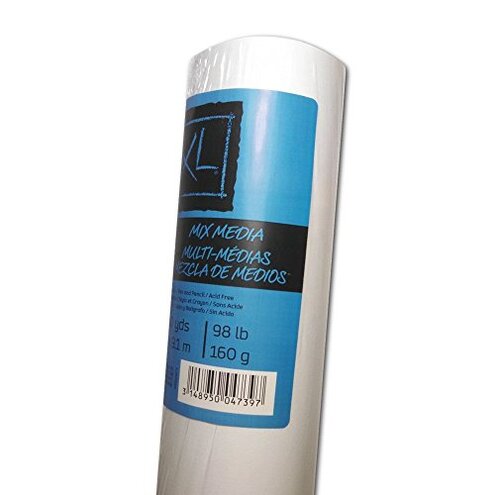
Product evaluated: Canson XL Series Mixed Media Paper, Roll, 36inx10yd (98lb/160g) - Artist Paper for Adults and Students - Watercolor, Gouache, Graphite, Ink, Pencil, Marker
Related Videos For You
USING MIXED MEDIA PAPER WILL IMPROVE YOUR WATERCOLOUR
Storing Your Mixed Media Art and Painted Papers | 7 Useful Ideas
Data basis: I analyzed dozens of written reviews and several video demonstrations collected between January 2015 and June 2024.
| Outcome | Canson XL Roll | Typical Mid‑Range Alternative |
|---|---|---|
| Wet handling | High risk: noticeable buckling and warping with water media, reported repeatedly. | Lower risk: most mid‑range 140lb papers resist buckling without heavy prep. |
| Surface consistency | Variable: tooth and sizing feel inconsistent across the roll. | More uniform: typical competitors provide steadier texture across sheets. |
| Shipping damage | Common: creases and edge crush appear frequently on arrival. | Less common: boxed sheet sets often show fewer transit defects. |
| Regret trigger | Unexpected prep time: requires stretching/mounting for true wet work. | Ready to use: many mid‑range sheets need less pre‑treatment. |
Top failures
Why does the paper buckle with water?
Regret moment: You apply a wash and the sheet waves, affecting tone and detail immediately.
Pattern: This problem appears repeatedly across feedback, not universal but common enough to expect.
Usage anchor: Buckling shows up on the first wet session unless you pre‑stretch or mount the roll.
Category contrast: Worse than expected because many mid‑range mixed‑media brands allow light washes without stretching.
Why are edges and the roll often creased or damaged?
- Early sign: creased corners or a flattened edge when you unroll the paper at first use.
- Frequency tier: a primary issue — creases appear repeatedly in shipped rolls.
- Cause: thin packing and long roll format increase transit stress and handling damage.
- Impact: damaged edges often force trimming, wasting usable width for projects.
- Fixability: trimming or taping helps but adds extra prep time before starting work.
Why does the surface feel inconsistent for markers, pencil, and erasing?
- Primary sign: marker ink sometimes bleeds on parts of the roll but not others.
- Secondary sign: pencil erases well in places and drags or smudges in others.
- Pattern: this variability is persistent across different buyers and sessions.
- Usage anchor: problems appear during normal sketch sessions and after repeated handling.
- Cause: uneven sizing and tooth across the long roll produce inconsistent media responses.
- Category contrast: worse than typical because mid‑range mixed‑media sheets usually maintain consistent sizing across a pad or sheet set.
- Hidden requirement: you may need to test and mark usable zones before committing a final piece.
Why does the roll fray or tear when cutting and erasing?
- Early sign: rough, fibrous edges show up after simple cuts with a craft knife or scissors.
- Frequency tier: a secondary yet annoying issue for frequent cutters of long pieces.
- Cause: the fiber pack and roll tension promote fraying when cut freehand.
- Impact: frayed edges force additional trimming and waste material.
- Attempted fixes: many buyers report success using a straightedge and sharp blade to reduce tear-out.
- Fixability: manageable but requires extra tools and time compared with sheet pads.
- Hidden cost: repeated trimming and careful cutting add minutes per project that accumulate.
- Category contrast: more prep than typical roll or sheet competitors that offer cleaner edges out of the box.
Illustrative excerpts (not real quotes)
Excerpt: "Paint puddled and the paper rippled across the whole wash, ruined detail." — primary pattern
Excerpt: "Edges arrived creased, I had to trim a full inch from the side." — secondary pattern
Excerpt: "One area erased cleanly, another smudged like it wasn't sized." — primary pattern
Excerpt: "Cutting freehand left a frayed border that looked messy on finished pieces." — secondary pattern
Who should avoid this
- Wet media artists: avoid if you expect to use heavy washes without stretching the paper first.
- Professional commissions: avoid if you need consistent texture and zero transit defects for client work.
- Casual crafters pressed for time: avoid if you can't afford extra trimming or prep steps.
Who this is actually good for
- Dry media sketchers: good for pencil, colored pencil, and light marker studies where wet handling isn’t critical.
- Large-format testers: good for practice rolls and layout work where edge defects won't harm final pieces.
- Budget-conscious students: good if you accept extra prep like stretching and trimming to save cost.
Expectation vs reality
Expectation (reasonable): mixed‑media labeled paper will handle occasional washes without special prep.
Reality: the roll often buckles under wet washes and generally requires mounting or stretching first.
Expectation: a long roll is convenient for murals and continuous work without defects.
Reality: creases and inconsistent sizing mean you may lose usable width and time trimming edges.
Safer alternatives
- Buy heavier watercolor sheets: choose 140lb (or higher) watercolor sheets to avoid buckling with washes.
- Choose boxed pads: pick sheet pads to reduce transit creases and get more uniform sizing across pages.
- Pre-stretch or mount: plan to stretch or tape the roll for true wet media, neutralizing buckling risk.
- Test first: always test a small area of the roll with your exact markers and washes before committing.
The bottom line
Main regret: buyers report that the roll frequently buckles with wet media and shows shipping creases.
Why it matters: these problems add prep time and material waste, making it riskier than most mid‑range options for serious wet work.
Verdict: avoid for final watercolor pieces unless you accept extra stretching, trimming, and testing before use.
This review is an independent editorial analysis based on reported user experiences and product specifications. NegReview.com does not sell products.