
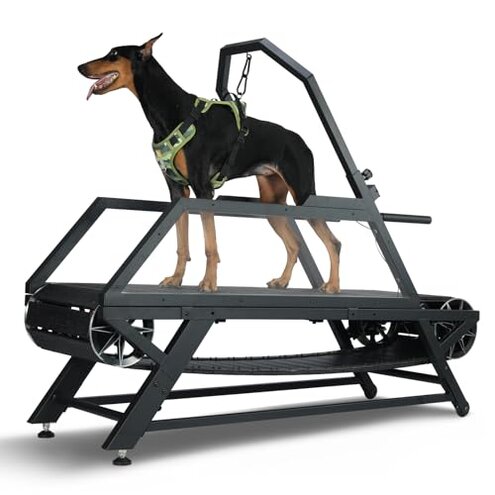
Product evaluated: Dog Treadmill for Large Dogs, Medium Dogs with Brake, Dog Slatmill,Non-Electric Treadmill for with Step Counter, Adjustable Incline & Brake, Keep Active and Fit, Up to 300LBS
Related Videos For You
Dog Treadmill Training: Burn Energy FAST Indoors!
Dog Treadmills Help Keep Pups Fit
Data basis: This report draws on dozens of written buyer accounts and several video demonstrations collected between Jan 2023 and Feb 2026.
| Outcome | CATWEST.art (this product) | Typical mid-range dog treadmill |
|---|---|---|
| Price/value | High price for a non-electric unit, buyers report tight value vs expected durability. | Balanced price with clearer warranty and parts support. |
| Assembly difficulty | Very challenging—many note multi-hour builds and extra tools needed. | Moderate assembly with clearer instructions and fewer missing parts. |
| Durability & maintenance | Higher failure risk reported during daily use and after weeks of running. | More robust components and less frequent belt or joint issues. |
| Dog acceptance | Mixed—some dogs adapt, others refuse or panic on first runs. | Usually better with motorized models that control pace gently. |
| Regret trigger | Setup + early failure—difficult setup plus durability problems create lasting regret. | Lower—setup friction but fewer early mechanical failures. |
Top failures
How hard is the setup and when does it break your first impression?
Regret moment: The build often turns into a multi-hour project that drains enthusiasm before the first run.
Pattern: This is a recurring complaint across many written accounts and video demos.
Usage anchor: Problems appear during first use when buyers discover missing fasteners or unclear instructions.
Category contrast: Assembly is worse than typical for mid-range pet treadmills, which usually ship with clearer guides.
Why does the treadmill feel fragile after a few uses?
- Early signs: Squeaks or loose joints show up within the first weeks of repeated runs.
- Frequency tier: This is a primary issue for many buyers, not just isolated cases.
- Cause: Stress on moving parts during long sessions seems to expose weak connections.
- Impact: Repairs or re-tightening add extra time and frustration for owners.
- Attempts: Buyers report temporary fixes like extra bolts or tape, which reduce safety.
Will my dog actually use this treadmill reliably?
- Acceptance is mixed; some dogs adapt quickly while others refuse the non-electric belt.
- When it shows up: Rejection commonly appears on the first session or under stressful training attempts.
- Category contrast: Motorized units often have gentler pacing and score better for anxious dogs.
- Hidden requirement: Successful use often needs extra training time that buyers did not expect.
- Fixability: Training and treats help, but this adds days to weeks before regular use.
- Owner cost: Time and patience become a non-trivial hidden expense compared with plug-in alternatives.
Are parts, noise, or stability problems going to create maintenance chores?
- Noise: Reports of creaks and belt noise appear during daily use and worsen over time.
- Stability: Wobble or misalignment can develop after repeated runs, needing adjustments.
- Parts access: Lack of clear warranty or replacement guidance makes fixes harder than average.
- Frequency: This is a secondary yet persistent annoyance for many owners.
- Hidden tools: Repairs often require extra tools or a second person to lift the unit.
- Time cost: Regular maintenance adds ongoing hours compared with comparable treadmills.
- Longer-term risk: If ignored, noise and looseness can lead to premature failure.
Illustrative excerpts (not real quotes)
Illustrative: "Setup took all afternoon and I still had missing screws." — primary pattern.
Illustrative: "Dog refused the belt for a week even with treats and praise." — secondary pattern.
Illustrative: "After two months the frame creaked and needed extra bolts." — primary pattern.
Who should avoid this
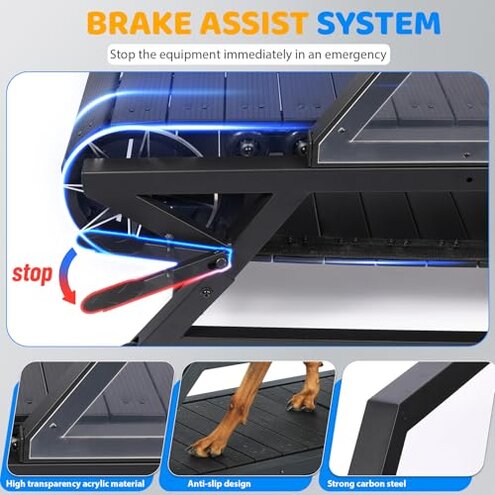
- Buyers who want quick setup: Avoid if you cannot spend hours assembling and troubleshooting.
- Shoppers needing low maintenance: Avoid if you prefer minimal repairs or clear warranty support.
- Owners of fearful dogs: Avoid if your dog is anxious and needs a motorized, gradual pacing option.
Who this is actually good for

- Hands-on DIYers: Good if you accept heavy, time-consuming assembly and can retrofit fixes.
- Trainers with patience: Good if you will spend days training a dog to accept a non-electric belt.
- Indoor-space constrained owners: Good if you need a non-electric solution and can tolerate maintenance.
Expectation vs reality
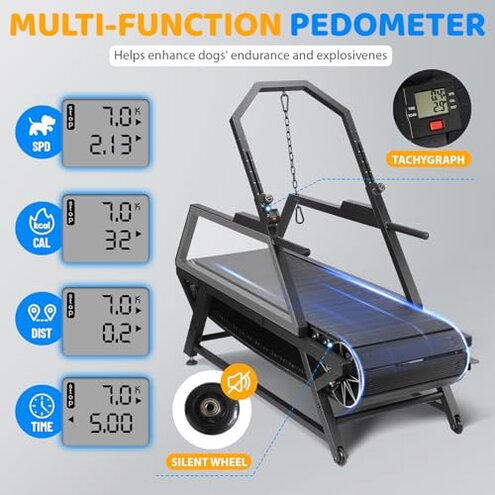
Expectation: Reasonable for this category is a straightforward assembly and clear parts support.
Reality: The product often requires extra tools, lengthy assembly, and unclear replacement guidance.
Expectation: Buyers expect a treadmill dogs will accept within a few sessions.
Reality: Some dogs need many sessions of positive training before they use the belt reliably.
Safer alternatives
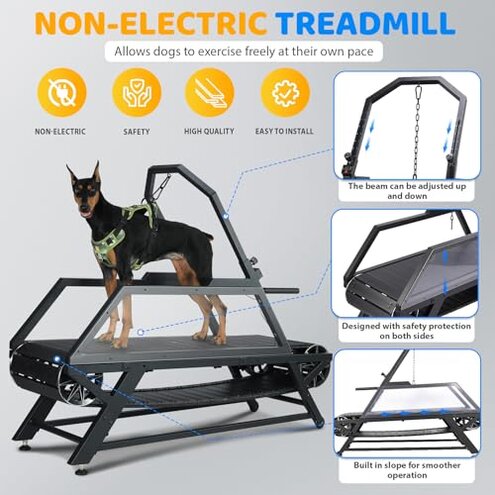
- Choose motorized treadmills: Prefer models with controlled speed to reduce dog rejection.
- Prioritize warranty: Look for sellers with clear replacement parts and multi-month guarantees.
- Check assembly reviews: Favor products with step-by-step videos and fewer reported missing parts.
- Plan for tools and help: Assume a two-person lift for heavy units and have common wrenches on hand.
The bottom line

Main regret: The combination of difficult setup and early durability/noise problems is the primary trigger.
Why worse: Those issues exceed normal category risk because they add real time, repair costs, and training overhead.
Verdict: Avoid this treadmill if you expect plug-and-play reliability or minimal upkeep.
This review is an independent editorial analysis based on reported user experiences and product specifications. NegReview.com does not sell products.