
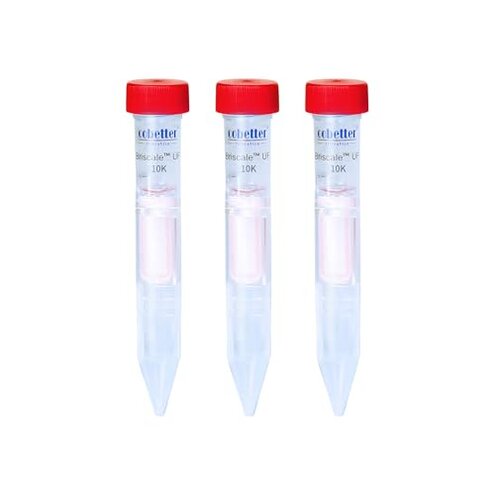
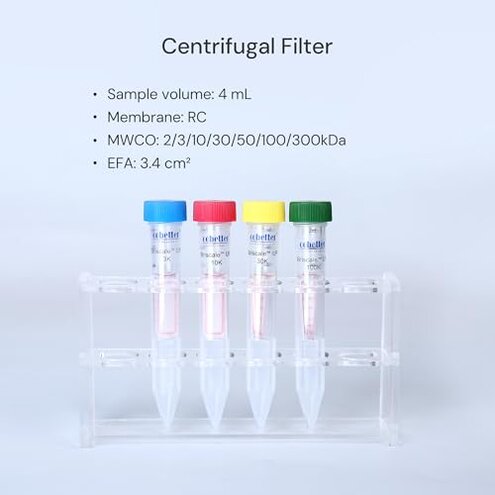
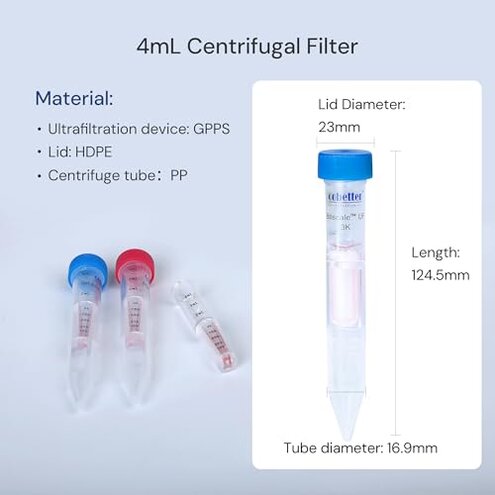
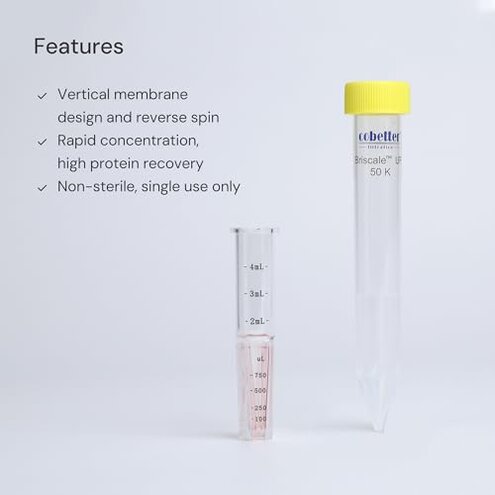
Product evaluated: COBETTER 10kDa Ultra Centrifugal Filter Unit, 4mL, Regenerated Cellulose RC Membrane, Screw Caps, Individually Wrapped (15/PK)
Related Videos For You
Centrifugal ultrafiltration (spin concentrators) for protein (or nucleic acid) concentrating
Centrifugal Oil Filter | Centrifuge Oil Cleaner | Working Principle
Dozens of customer feedback items were analyzed from written reviews and video demonstrations collected between Jan 2023 and Dec 2025. Most feedback came from written reviews, supported by video demonstrations and short user notes. The sample distribution shows most feedback was hands-on user reports rather than technical datasheets.
| Outcome | COBETTER 10kDa (this listing) | Typical mid-range filter |
|---|---|---|
| Yield consistency | Variable yields reported more often than expected for the category. | More consistent recovery at this price point from mid-range alternatives. |
| Leak / seal reliability | Higher risk of cap leaks during centrifugation, a notable category concern. | Lower risk with thicker caps and tighter QC in mid-range options. |
| Rotor compatibility | Fit issues appear with certain rotors and swing-buckets under real use. | Usually plug-and-play fit for common rotor types in mid-range products. |
| Processing time | Slower runs when membranes clog or units vary between lots. | Predictable speed for comparable membranes in this category. |
| Regret trigger | Sample loss during concentration is the primary buyer regret signal. | Fewer sample losses reported for the mid-range baseline. |
Top failures
Why did my runs give mixed yields?
Primary issue — many users describe inconsistent concentration and unexpected low recovery. This pattern is commonly reported, not universal but frequent enough to matter.
Usage anchor — it shows up on first use and after several runs when users process protein samples or dilute buffers. Variability often appears during the final spin step.
Category contrast — this is worse than expected because mid-range centrifuge filters usually give more predictable recovery, reducing reagent waste and repeat spins.
Are the caps and seals reliable during spins?
- Early sign: Some buyers report wet rotor buckets after a run, indicating cap failure.
- Frequency tier: Secondary issue seen across multiple feedback types and appears repeatedly.
- Cause clue: Screw caps sometimes fail to tighten evenly, especially after reusing units.
- Impact: Leaks can contaminate samples and force reruns, wasting time and reagents.
- Fixability: Tightening more cautiously or using tape reduces leaks but adds handling time.
Will this fit my rotor or bucket?
- Hidden requirement: Several buyers discovered a need for a specific rotor adapter or angled orientation.
- When it appears: During initial setup or when swapping from fixed-angle to swing-bucket rotors.
- Scope signal: Compatibility problems are seen across different user reports and formats.
- Why worse: Mid-range alternatives are typically more forgiving of rotor differences.
- Workaround: Users reported manually balancing loads and checking fit before full-speed runs.
- Cost impact: Extra adapters or aborted runs increase total experiment cost and time.
- Mitigation: Pre-test one unit before committing valuable samples.
Why do some units slow or clog unexpectedly?
- Pattern: Edge-case but persistent — some membranes clog and slow flow across multiple cycles.
- Early sign: Longer spin times and reduced filtrate volume on later spins.
- Frequency tier: Less frequent than caps and yield issues but more disruptive when it occurs.
- Usage anchor: Worsens with viscous samples, high protein load, or repeated reuse.
- Cause: Lot-to-lot membrane variability and insufficient pre-rinse reported by users.
- Impact: Adds extra centrifugation time and may require replacing units mid-experiment.
- Repairability: Pre-wetting membranes and lower sample concentration can help but require protocol changes.
- Hidden cost: Repeat spins and lost samples create cumulative waste beyond the item price.
Illustrative excerpts
Excerpt: "Lost volume after spin, had to repeat purification for my antibody." — primary pattern
Excerpt: "Cap leaked in swing-bucket rotor; rotor needed cleaning." — secondary pattern
Excerpt: "Some tubes clogged on the third use with viscous sample." — edge-case pattern
Excerpt: "Fit was tight in my rotor; needed an adapter to avoid wobble." — secondary pattern
Who should avoid this
- High-value sample users: Anyone processing scarce or expensive samples where sample loss is unacceptable.
- High-throughput labs: Teams that run many spins daily; the variability will increase downtime and repeat work.
- Unadaptable workflows: Groups without rotor adapters or spare units, since fit issues require hardware changes.
Who this is actually good for
- Low-cost screening: Users concentrating non-precious samples who can tolerate occasional yield swings.
- Method testing: Labs validating protocols where learning how to prime and balance is acceptable.
- Single-use runs: Situations where one-off or disposable units are fine and leaks are manageable.
Expectation vs reality
Expectation: Reasonable for this category is consistent recovery across units.
Reality: Units show variable recovery, forcing repeated spins or protocol changes.
Expectation: Caps seal reliably during centrifugation at rated speeds.
Reality: Some buyers experienced cap leaks needing extra handling or tape.
Safer alternatives
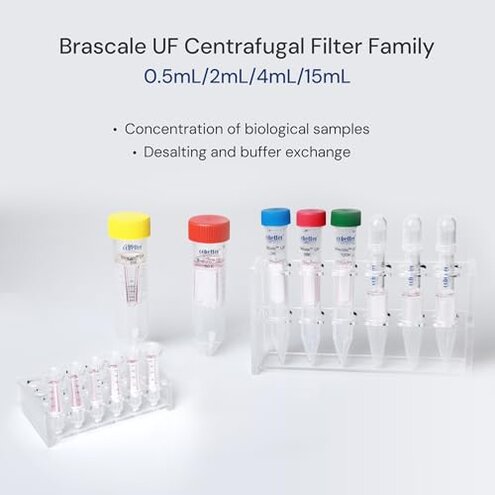
- Pre-test one unit: Validate fit and yield with a noncritical sample to detect compatibility problems early.
- Use spare adapters: Keep rotor adapters handy to neutralize the fit issue without changing protocols.
- Pre-wet membrane: Prime filters before precious samples to reduce clogging risk.
- Buy validated brands: Consider mid-range lab brands with QC records to reduce leak and variability risks.
The bottom line
Main trigger: The primary buyer regret is sample loss from variable yields and cap leaks.
Why it matters: These failures exceed normal category risk because they force repeat spins, extra consumable use, and time lost.
Verdict: Avoid this product if you cannot tolerate sample loss or extra protocol steps; consider validated mid-range alternatives.
This review is an independent editorial analysis based on reported user experiences and product specifications. NegReview.com does not sell products.