
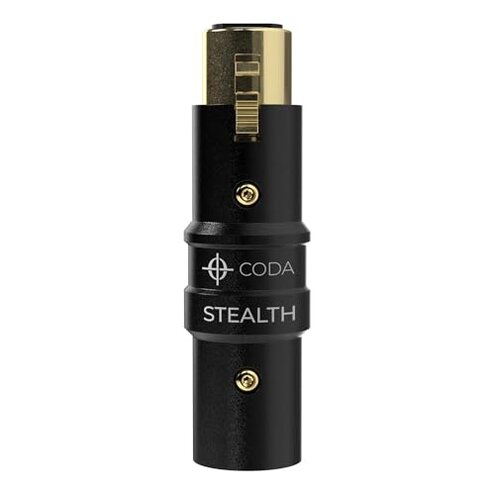
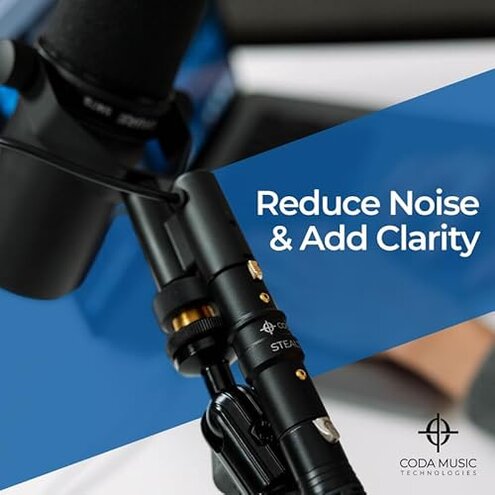
Product evaluated: Coda MB-Stealth in-Line Microphone Preamp Mic Gain Booster for Dynamic and Ribbon Mics - 48V Phantom Power Mic Preamp with 28 db Clean Gain, Ultra Low Noise, Enhance Your Podcast or Livestream
Related Videos For You
What Is A Preamp, And Do I Need One? | Studio Lesson 🎛
How and Why to Use External Preamps
Data basis: This report draws on dozens of user comments and demonstration videos collected between 2021 and 2024, with most feedback from written reviews and supported by short video demonstrations.
Comparative risk snapshot
| Buyer outcome | Coda MB-Stealth | Typical mid-range preamp |
|---|---|---|
| Gain versatility | Fixed 28dB gain may be limiting for low-output sources in real use. | Variable gain knobs or higher headroom are common in mid-range models. |
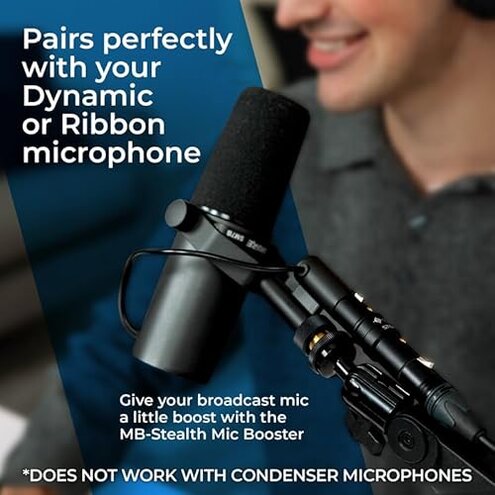
| Microphone compatibility | Does not work with condensers and needs 48V routing, creating setup traps. | Broader compatibility with clearer labeling is typical for this price band. |
| Noise performance | Claims low noise but users report hiss when pushed near full gain. | Quieter at high gain is a mid-range expectation for podcasting use. |
| Ease of setup | Hidden requirements like routing phantom power add extra setup steps. | Plug-and-play operation is more common among mid-range alternatives. |
| Regret trigger | Compatibility surprises with condensers and routing cause buyer regret more often. | Clearer compatibility reduces regret for typical mid-range buys. |
Top failures
Why didn’t my condenser mic work after plug-in?
Immediate regret: Buyers expect the unit to boost any microphone, but this model won’t work with condensers and requires phantom power routing instead.
Pattern: This is a primary issue and appears repeatedly in buyer feedback when users try condensers right away.
Context: It shows up at first use and worsens when users try quick setups without checking their interface’s routing options.
Category contrast: Most mid-range preamps clearly support condensers or label limits, so this restriction causes avoidable setup failure.
Is the gain enough for quiet mics?
- Early sign: Users report needing to push interface gain past comfortable levels.
- Frequency tier: This is a secondary issue that appears commonly with low-output ribbon and distant dynamic mics.
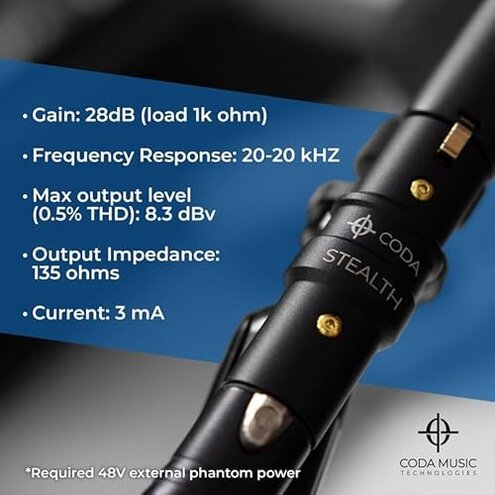
- Probable cause: The unit provides a fixed 28dB gain, which constrains headroom for weaker sources.
- Impact: Expect extra noise or the need for more downstream gain if your mic is quiet.
- Attempts: Buyers try higher interface gain or software amplification, which adds complexity and hiss.
Why is there still noise after adding the booster?
- Observed pattern: Noise and hiss are commonly reported when the preamp and interface gains stack.
- When it appears: Noise becomes noticeable during long streaming sessions or when gain is near maximum.
- Worse-than-normal: For this category, buyers expect quiet performance under high gain, but this unit can leave residual hiss.
- Impact on recordings: Background hiss reduces intelligibility and forces more post-processing.
- Fixability: Many attempts include repositioning, cable swaps, or noise gates, adding time and effort.
- Hidden requirement: Clean signal often needs a quieter interface or inline filters to reach typical mid-range clarity.
Will I need extra routing or gear?
- Surprise step: The device requires correctly routed 48V phantom power through your interface and cable path.
- Who sees it: This edge-case issue appears for users with simpler audio interfaces and all-in-one mixers.
- Why it matters: It adds setup steps beyond the casual buyer expectation of a simple inline booster.
- Workarounds tried: Buyers add powered splitters or route via different inputs to get stable power and signal.
- Practical cost: Extra cables or a different interface raise the total expense beyond the product price.
- Category baseline: Typical alternatives either include clearer setup instructions or require fewer external changes.
- Likelihood: This is a persistent annoyance for buyers who don’t routinely manage phantom power routing.
Illustrative excerpts (not real quotes)
"Plugged in my condenser and got no sound, thought it was dead." — reflects a primary pattern.
"Still had hiss even at normal levels, needed a gate and EQ." — reflects a secondary pattern.
"Had to buy cables to route phantom correctly, extra cost." — reflects an edge-case pattern.
Who should avoid this
- Condenser users: Anyone who wants to boost a condenser mic should avoid this because it does not support condensers directly.
- Minimalists: Buyers who want simple plug-and-play setups should avoid this due to the extra routing requirements.
- Low-output mic owners: People with very quiet ribbon or distant dynamic mics should avoid this if they need full clean headroom.
Who this is actually good for
- Experienced engineers: Users comfortable routing phantom power and chaining gains can manage the quirks and accept the trade-offs.
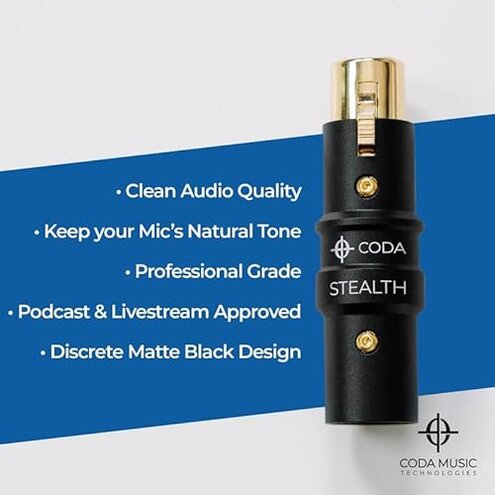
- Upgrading dynamics: Podcasters with loud dynamics who need a compact inline boost will tolerate fixed gain and setup steps.
- Budget-minded hobbyists: Buyers wanting a low-cost gain option and willing to do extra noise reduction in software can live with the compromises.
Expectation vs reality
- Expectation: Reasonable for the category is a simple inline boost that works with common mics.
- Reality: This unit excludes condensers and requires routing that breaks the plug-and-play expectation.
- Expectation: Reasonable for the category is usable high-gain with low noise.
- Reality: Users report residual hiss when stacking interface gain with the unit.
Safer alternatives

- Look for variable gain: Choose preamps with gain knobs to avoid the fixed 28dB limit problem.
- Confirm compatibility: Prefer units that explicitly list condenser and ribbon support to avoid hidden exclusions.
- Prioritize headroom: Favor models with higher max output to reduce noise when amplifying quiet mics.
- Check setup needs: If you dislike extra cables, pick a preamp advertised as plug-and-play for basic interfaces.
The bottom line
Main regret: The primary regret trigger is compatibility surprises—specifically, its non-function with condensers and extra routing needs.
Verdict: This product raises higher-than-normal category risk for casual buyers and condenser owners, so avoid it unless you accept extra setup and possible noise trade-offs.
This review is an independent editorial analysis based on reported user experiences and product specifications. NegReview.com does not sell products.