
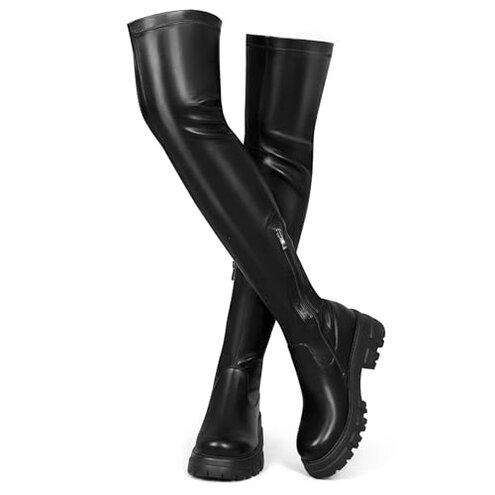
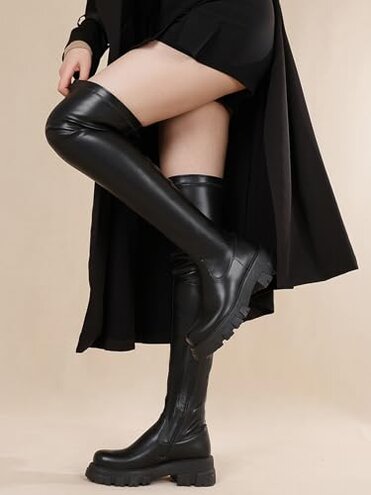
Product evaluated: CouieCuies Black Thigh High Boots For Women Platform Over The Knee High Boots Lug Sole Comfortable Stretch Boots Low Heels Black 8
Related Videos For You
Watch this before you buy knee high boots!
OVER KNEE BOOTS WITH ME!
Data basis: This report is based on dozens of buyer comments collected from written feedback and photo or video-backed impressions during a recent review window. Most feedback came from written reviews, with added context from visual demonstrations, and the clearest patterns centered on fit, comfort, and how the boots looked during actual wear.
| Buyer outcome | CouieCuies boots | Typical mid-range alternative |
|---|---|---|
| First-try fit | Higher risk of calf and thigh fit mismatch, especially if you expect a snug hold. | Usually more predictable through the shaft and top opening. |
| Walking comfort | Mixed comfort, with recurring complaints showing up during longer wear. | More forgiving for routine outings in the same price tier. |
| Stay-up hold | Above-normal risk of sliding or bunching during daily use. | Typically needs less readjustment while walking. |
| Look vs listing | Noticeable risk that the shape or shaft look feels less sleek in person. | Usually closer to expected styling for mid-range fashion boots. |
| Regret trigger | Buying for a specific outfit and finding the fit or leg shape looks off on first wear. | Lower chance of immediate return for styling mismatch. |
Do they actually stay up like over-the-knee boots should?
This is a primary issue and among the most common complaints for this type of boot. The regret usually starts on first wear, when buyers expect a clean, held-up look and instead keep tugging the shaft back into place.
The pattern appears repeatedly during walking, sitting, and outfit changes. Compared with a typical mid-range pair, the extra adjustment feels more disruptive because over-the-knee boots are supposed to stay styled without constant fixing.
- Early sign: The top opening can feel fine at first, then start slouching after a short period of movement.
- Frequency tier: This is a primary complaint, not universal, but persistent across different fit comments.
- Usage moment: It tends to show up during normal errands, dinner wear, or any time you alternate between standing and sitting.
- Visual impact: The boot can shift from sleek to rumpled, which matters more when you bought it for a polished outfit.
- Why it stings: In this category, some movement is normal, but more readjustment than expected creates faster regret.
Is the fit too tricky if your legs are not an exact match?
- Core problem: Fit inconsistency is a primary issue, especially around calf and thigh shape.
- Pattern signal: This comes up repeatedly in feedback that otherwise liked the idea and style.
- When it happens: The mismatch usually shows up on first try-on, before the boots even get a full outing.
- Hidden requirement: You may need a very specific leg shape for the shaft to look right and stay secure.
- Why that matters: Buyers often expect stretch boots to be forgiving, but these seem less forgiving than many mid-range alternatives.
- Common result: Some users get a top opening that feels too loose, while others feel the shaft is too tight in the wrong spot.
- Time cost: That can turn a simple order into trial-and-return effort, which is more frustrating than a normal shoe size issue.
Are they comfortable enough for more than a quick outfit photo?
Comfort is a secondary issue, but it becomes more frustrating when buyers wear them for a full evening instead of a short try-on. The problem usually appears after some walking, when the sole feel and overall support matter more than the look.
The pattern is persistent rather than universal. Compared with a typical mid-range fashion boot, the comfort trade-off feels worse because the chunky, lower-heel look can make buyers expect easier all-day wear.
- Trigger point: Discomfort tends to build during longer sessions, not always in the first few indoor steps.
- Expectation gap: The lug sole look suggests stability, but that does not always translate into easy extended wear.
- Buyer impact: Instead of being an event-to-errands boot, it can end up feeling like a shorter-use pair.
- Category contrast: Many fashion boots trade comfort for style, but this feels less forgiving than expected for a low block heel design.
Do they look as sleek in person as the photos suggest?
- Style mismatch: This is a secondary complaint, but it can be the final reason for a return.
- Pattern scope: It appears across multiple appearance-focused comments, especially from buyers expecting a close, streamlined leg shape.
- Real-world moment: The issue shows up during mirror checks with dresses, skirts, or fitted layers.
- Visible problem: The shaft shape can read more bulky or less smooth than expected once worn.
- Why it hits hard: In this category, buyers often accept small photo differences, but a less sleek silhouette changes the whole outfit.
- Fixability: Styling tricks can help a little, but they do not fully fix a shape that already feels off on your leg.
Illustrative excerpt: “They looked cute standing still, then started sliding once I walked.” Primary pattern.
Illustrative excerpt: “The calf fit was okay, but the top part felt weirdly loose.” Primary pattern.
Illustrative excerpt: “Fine for photos, not the pair I wanted for hours out.” Secondary pattern.
Illustrative excerpt: “The shape looked bulkier on my leg than I expected.” Secondary pattern.
Who should avoid this
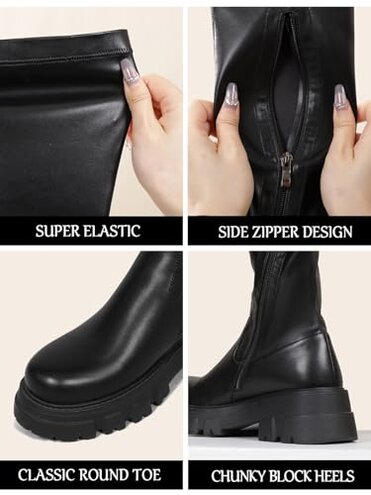
- Avoid it if you need a reliably snug over-the-knee hold for walking, commuting, or events with lots of movement.
- Skip it if you usually struggle with calf or thigh fit, because the stretch design still seems shape-sensitive.
- Pass if you want one pair for long evenings, since comfort complaints become more noticeable with extended wear.
- Look elsewhere if you are buying mainly for a sleek, close-leg silhouette and do not want styling surprises.
Who this is actually good for
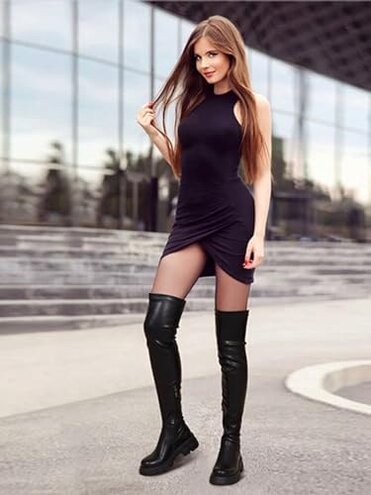
- It fits buyers who wear over-the-knee boots for short outings and can tolerate occasional readjustment.
- It suits shoppers with leg proportions that already work well with stretch shaft boots.
- It works for style-first buyers who care more about the general look than all-night comfort.
- It may suit someone willing to accept a little slouching in exchange for this specific platform-boot style.
Expectation vs reality
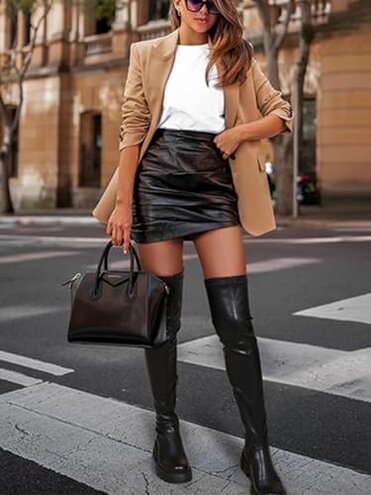
Expectation: A stretch over-the-knee boot should adapt to different legs with only minor adjustment.
Reality: Fit sensitivity appears higher than normal, so the shaft may still feel too loose or awkward depending on leg shape.
Expectation: A low block heel and lug sole should make it easier to wear for longer stretches.
Reality: Comfort limits show up during longer use, which is worse than many buyers reasonably expect for this category.
Expectation: The styled photos suggest a smooth, sleek line.
Reality: In-person shape can look bulkier or less refined once the boots are actually on your legs.
Safer alternatives
- Choose pairs with detailed shaft measurements, because that directly reduces the fit-mismatch problem.
- Prioritize reviews that mention all-night wear, which helps screen out style-only boots with weak comfort.
- Look for designs with stronger stay-up features if sliding is your main concern.
- Check buyer photos on different leg shapes, because that is the fastest way to catch a bulky silhouette risk.
The bottom line
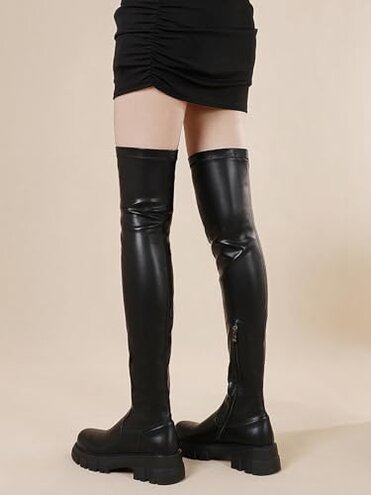
The main regret trigger is buying these for a sleek, secure over-the-knee look and getting a fit that shifts, slouches, or flatters less than expected. That risk feels higher than normal for this category because the problems show up in basic daily wear, not just edge-case use. Verdict: avoid them if fit predictability and stay-up hold matter more than getting this exact style at this price.
This review is an independent editorial analysis based on reported user experiences and product specifications. NegReview.com does not sell products.