
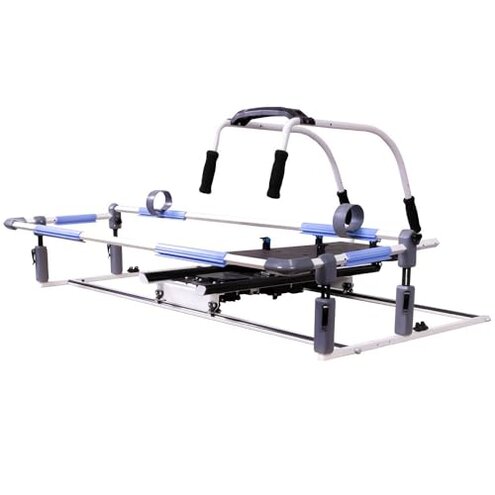
Product evaluated: Cutie Breeze Table Top Hoop Quilting Frame | Beginner Frame for Domestic Machines | Portable Quilting Table, Hoop Frame, and Quilting Supplies
Related Videos For You
Loading & Quilting with the Cutie Tabletop Fabric Frame
HOW DOES QUILTING MACHINE WORK???
Data basis for this report comes from analyzing dozens of recent buyer accounts collected over a 12-month window. The mix included written ratings and longer story-style comments, with additional context pulled from Q&A-style buyer notes. Most feedback came from detailed written experiences, supported by shorter “first setup” impressions that repeat similar pain points.
| Buyer outcome | Cutie Breeze | Typical mid-range alternative |
|---|---|---|
| Setup effort | Higher friction after unboxing; more “tweak until it feels right” reports | Moderate assembly; fewer adjustment cycles for basic stability |
| Stability while quilting | Higher-than-normal risk of wobble/shift on some tables during long sessions | Lower wobble risk if used on an average sturdy table |
| Compatibility surprises | More “my machine doesn’t fit like I expected” moments, despite checking basics | Fewer fit surprises with clearer sizing tolerance or more adjustability |
| Learning curve | Steeper if you expect smooth motion immediately | More forgiving first-time motion and tracking |
| Regret trigger | “Too much money for a frame that still needs workarounds” appears repeatedly | “Good enough with fewer hacks” is more common at this price tier |
“Why does it feel wobbly once I start quilting?”
Regret moment usually hits after setup, when you finally begin free-motion quilting and the frame doesn’t feel planted. Persistent mentions describe shifting or vibration that breaks rhythm and forces mid-quilt repositioning.
Pattern is recurring but not universal. It shows up most during longer sessions or faster hand movements, especially on lighter tables that flex.
Category contrast matters here because tabletop frames often need a solid surface, but buyers describe this as more disruptive than typical mid-range options that tolerate normal desks better.
- Early sign is needing to re-square the frame after a few passes.
- Primary issue is motion feeling inconsistent when you change direction quickly.
- Worse conditions include thin tables, rolling carts, or sewing for long blocks without breaks.
- Impact is uneven stitches because your hands compensate for drift.
- Workaround often becomes adding a heavier table, clamps, or anti-slip pads, which adds steps and cost.
- Fixability is mixed because stability depends on your surface as much as the frame.
- Expectation gap is paying a premium yet still needing furniture-level upgrades to feel solid.
“Why is setup taking longer than I planned?”
- Recurring pattern is extra time spent aligning rails and carriage so motion feels smooth.
- When it hits is first assembly and the first real quilt sandwich, not just a quick test.
- Secondary issue is having to redo adjustments after moving or storing the frame.
- Hidden time comes from checking that everything is square before each session.
- Cause feel is “close tolerance” parts where tiny misalignment shows up as drag.
- More frustrating than typical because mid-range frames usually get acceptable glide sooner.
- Mitigation is dedicating a semi-permanent spot so you stop re-leveling it.
- Trade-off is portability sounding great but creating repeat setup cycles in real homes.
“I checked the specs, so why doesn’t my machine fit right?”
Regret moment often comes after you’ve cleared desk space, then discover your machine placement is tighter than expected. Less frequent than wobble, but it’s more stressful because it can stall the whole project.
Pattern shows up around “should fit” machines, where the numbers technically qualify but real-world shape and controls get in the way. It gets worse when you add handles or need comfortable hand clearance.
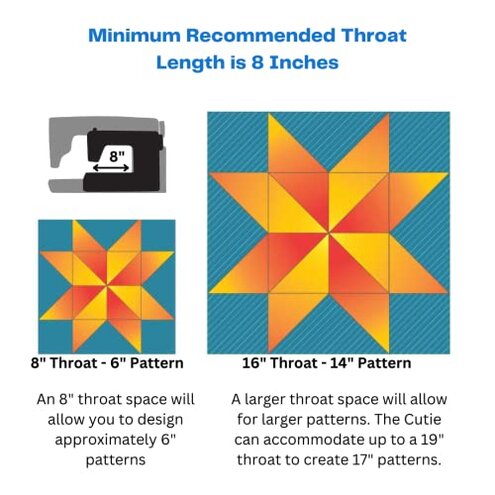
Category contrast is that compatibility checks are normal for quilting frames, but buyers describe the requirements here as a hidden requirement problem because “width” and “throat” alone didn’t prevent surprises.
- Early sign is controls or knobs ending up awkwardly placed near rails.
- Edge-case reports mention needing to remove accessories to make it workable.
- Worse conditions include machines with curved bodies or protruding features.
- Impact is hand fatigue because you can’t sit or grip in a natural position.
- Attempted fixes include repositioning, adding risers, or changing top plates, which adds complexity.
- Mitigation is measuring more than width, including clearance for your hands and machine controls.
- Risk cue feels higher than normal because you can’t “make it fit” without compromises.
“Why isn’t the motion as smooth as I expected?”
- Commonly noted frustration is drag or a not-quite-fluid glide during actual quilting.
- When it appears is after a few minutes, once you speed up and do tighter curves.
- Primary impact is stitch inconsistency because you slow down to regain control.
- Worsens during dense patterns where you change directions constantly.
- Baseline mismatch is that mid-range options often feel “good enough” without constant micro-corrections.
- User learning helps, but repeated feedback suggests practice alone doesn’t remove all friction.
- Workaround becomes changing technique or simplifying designs, which undercuts the point of a frame.
Illustrative excerpt: “It’s portable, but I’m always re-centering it mid-quilt.” Primary pattern tied to stability during use.
Illustrative excerpt: “Setup took way longer than my sewing time the first day.” Secondary pattern tied to alignment and tuning.
Illustrative excerpt: “My machine technically fits, but the controls are awkward.” Edge-case pattern tied to real-world clearance.
Illustrative excerpt: “Glide isn’t smooth unless everything is perfect.” Primary pattern tied to motion feel.
Illustrative excerpt: “I didn’t expect to need a heavier table to enjoy it.” Primary pattern tied to hidden surface needs.
Who should avoid this
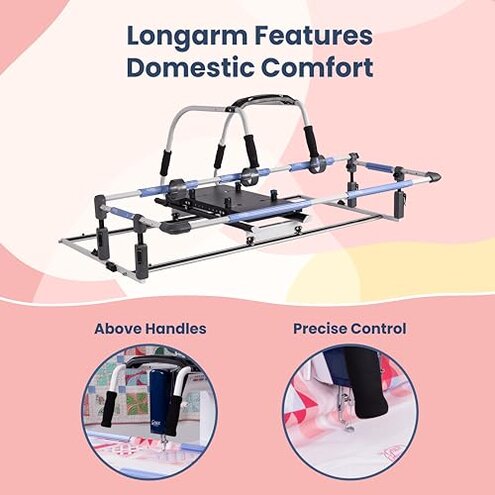
- Small-space sewers who must set up and pack away each session, because re-alignment is repeatedly mentioned after moving it.
- Fast stitchers who quilt with quick direction changes, because wobble and drag show up more in long, energetic sessions.
- Anyone without a sturdy, heavy table, because a hidden requirement is that the surface quality strongly affects results.
- Buyers expecting plug-and-play compatibility, because fit surprises appear even after basic spec checks.
Who this is actually good for
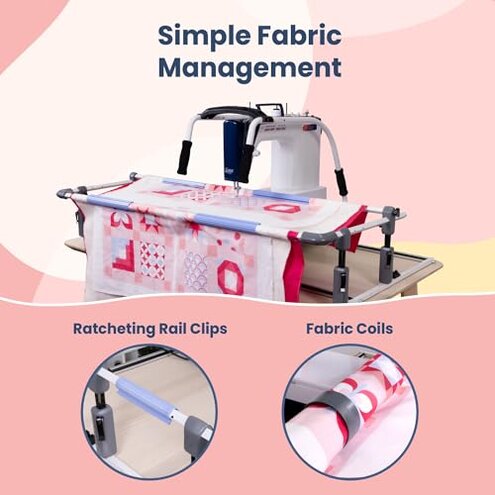
- Patient beginners who accept a longer setup period in exchange for tabletop quilting capability.
- Slow-and-steady quilters doing simpler patterns, who can tolerate some glide tuning and still enjoy the process.
- Owners of a solid, dedicated table, who can minimize the stability complaints by controlling the surface variable.
- Upgraders who want a frame now and will later optimize their station, accepting the workarounds as a temporary phase.
Expectation vs reality
| Expectation | Reality buyers report |
|---|---|
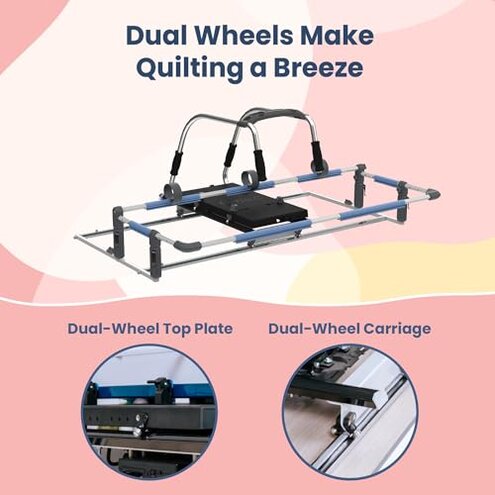
| Reasonable for this category is some assembly and practice. | Worse-than-expected tuning and repeat adjustments show up after moving or storing it. |
| Stable quilting on a normal desk. | Surface-sensitive behavior appears repeatedly, pushing some users to heavier furniture or clamps. |
| Compatibility is confirmed by a few measurements. | Real-world fit can still be awkward due to clearance and control access. |
| Smooth motion right away. | Technique changes and careful alignment are commonly needed to get acceptable glide. |
Safer alternatives
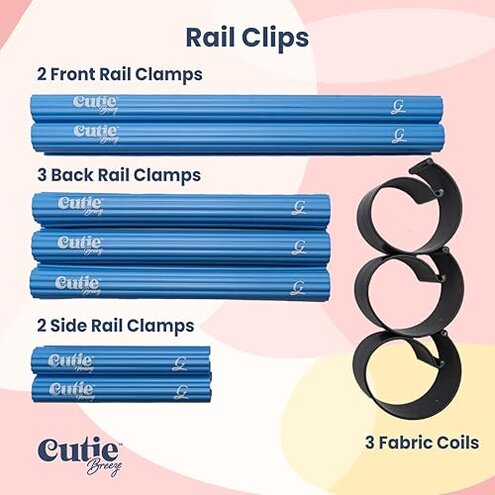
- Prioritize frames with stronger anti-slip or clamping solutions to reduce the wobble risk described during long sessions.
- Choose designs known for easier “out of the box” glide to avoid the repeated tuning cycle mentioned here.
- Look for wider compatibility adjustability, so “spec-checked” machines don’t become a clearance problem in practice.
- If portability matters, pick an option that holds alignment after storage to cut the re-setup complaints seen with frequent moving.
- Plan your station first, because many frustrations here tie back to the table and workspace variable.
The bottom line
Main regret trigger is paying a high price and still facing stability and smooth-motion problems that add workarounds. Category risk feels higher than normal because tabletop frames already demand a learning curve, and repeated feedback suggests this one is less forgiving. Verdict is to avoid it if you need easy setup, reliable glide, or you don’t have a very solid table.
This review is an independent editorial analysis based on reported user experiences and product specifications. NegReview.com does not sell products.