
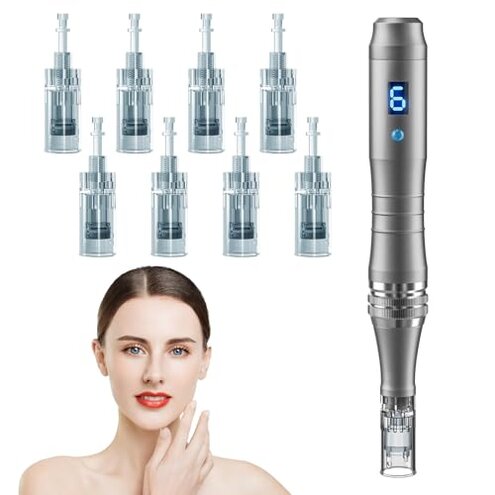
Product evaluated: DermaStamp System 0.25mm, Microneedling Stamp Pen, Derma Stamp Pen, Derma Roller Alternative, Microneedle Micro Needle Skin Care for Men Women
Related Videos For You
How to Use M8 Microneedling Dr. Pen
How To Clean Your Microneedle
Data basis: This report reflects analysis of dozens of shopper feedback items collected from written reviews and star ratings, supported by a smaller set of photo posts, over a recent 12-month window ending this month. Most feedback came from text write-ups, with some users adding images to show packaging, tip condition, and results.
| Buyer outcome | This microneedling stamp | Typical mid-range alternative |
| First-use experience | Less predictable due to recurring confusion about pressure and technique | More guided with clearer instructions and more forgiving design |
| Skin comfort | Higher-than-normal irritation risk when users press too hard or repeat passes | More typical mild redness when used correctly |
| Build consistency | More variable reports of uneven tips or parts feeling cheap | More consistent fit/finish across units |
| Upkeep burden | More fussy cleaning and storage needed to avoid contamination concerns | More standard upkeep with clearer sanitation steps |
| Regret trigger | Early irritation plus uncertainty if you used it “wrong” | Slow results but fewer “did I damage my skin?” moments |
Will this feel harsher than you expected on first use?
Regret moment: You try it gently, then wonder if the redness or sting means you overdid it.
Severity: This is among the most disruptive complaints because it directly affects comfort and confidence to keep using it.
Pattern: The irritation concern appears repeatedly, even if it is not universal.
- When it hits, the discomfort shows up during first use or within the same day after multiple passes.
- Worse if you use extra pressure, stamp the same spot repeatedly, or pair it with strong skincare right after.
- Category contrast, a typical mid-range option is more forgiving because it better limits user error from pressure and angle.
- Early sign, users describe unexpected sting even with the marketed beginner-friendly needle length.
- Fixability, some reduce issues by slowing down, fewer passes, and spacing sessions farther apart, but that adds extra time.
- Hidden requirement, you need a careful routine around sanitation and post-care to avoid turning “mild redness” into a bigger problem.
- Trade-off, stamping can target small areas, but it also makes it easier to overwork one spot compared with more controlled alternatives.
Are you okay with a learning curve that can waste weeks?
Regret moment: You keep changing technique because results are unclear, and you cannot tell if it is working or just irritating.
Severity: This is a primary issue because it causes stop-start usage and inconsistent routines.
Pattern: Confusion about method shows up persistently, especially among newer users.
- When it shows, the friction starts after setup when you realize there is no obvious “right pressure.”
- Feels worse than typical because mid-range competitors often include clearer guidance and more consistent user feedback loops.
- Early sign, buyers describe doing a session and feeling unsure if they did anything productive.
- Common workaround, people end up watching extra tutorials and adding a tracking routine for spacing and passes.
- Time cost, dialing it in can add extra steps each session, including prep, cleaning, and careful aftercare.
- Results risk, inconsistent pressure can mean spotty outcomes because some areas get too much and others too little.
- Not universal, experienced microneedling users report fewer problems, but beginners see the most friction.
- Illustrative excerpt: “I’m doing it, but I can’t tell if it’s helping.” Pattern: Primary learning-curve theme.
What if the unit you get feels inconsistent or flimsy?
Regret moment: You open the box and the stamp feels cheaper than the price suggests.
Severity: This is a secondary issue, but it becomes more frustrating because it ties into safety and hygiene confidence.
Pattern: Build-quality doubts show up less often than irritation, yet they are persistent when mentioned.
- When it appears, complaints tend to happen right out of the package during inspection.
- Worse if you travel with it or handle it often, since frequent cap on/off can make it feel less solid over time.
- Category contrast, mid-range alternatives more often arrive with better consistency across units and clearer QC signals.
- Early sign, users mention uneven feel at contact, which makes them worry about tip alignment.
- Impact, doubt leads to underuse or overcompensation, which can increase user error with pressure.
- Fixability, there is limited DIY fixing beyond returning or replacing, which adds delay and breaks routines.
- Illustrative excerpt: “It doesn’t feel premium for what I paid.” Pattern: Secondary value-and-build theme.
Do you want something low-maintenance, or will cleaning feel like a chore?
Regret moment: You realize each use needs careful cleaning, drying, and storage, or you worry about contamination.
Severity: This is an edge-case regret trigger for casual users, but it can be more annoying than expected.
Pattern: Upkeep complaints are less frequent, yet they appear repeatedly in feedback tied to hygiene anxiety.
- When it hits, the burden shows up after every session when you want to put it away quickly.
- Worse if you share a bathroom, travel, or store it where it can get damp, since that raises sanitation concerns.
- Category contrast, many mid-range options make sanitation feel more straightforward with clearer cleaning steps and storage.
- Hidden requirement, you may need dedicated supplies for cleaning and a safe drying spot, which adds setup friction.
- Impact, if you skip cleaning once, it can create lingering doubt that makes you stop using it.
- Illustrative excerpt: “Using it is quick, but cleaning it is stressful.” Pattern: Edge-case upkeep theme.
Is the price hard to justify if results are subtle?
Regret moment: You see the $89.99 charge and then get slow or unclear progress, especially at the beginner needle length.
Severity: This is a secondary complaint, but it becomes sharper when paired with irritation or learning-curve issues.
Pattern: Value concerns show up recurringly when buyers compare it to simpler alternatives.
- When it shows, value regret usually appears after a few sessions when results do not match expectations.
- Worse if you expected fast visible change from 0.25mm, which is often subtle and gradual in practice.
- Category contrast, mid-range tools often deliver similar “starter” experiences with less sticker shock.
- Mitigation, setting a longer time horizon can reduce disappointment, but it asks for routine discipline.
- Illustrative excerpt: “For this price, I expected it to be simpler.” Pattern: Secondary value theme.
Who should avoid this
- Sensitive-skin shoppers who react easily, because first-use irritation is a primary recurring regret moment.
- Beginners who want plug-and-play, because the learning curve can cause inconsistent pressure and wasted sessions.
- Low-maintenance users, because the tool can demand careful cleaning and storage to feel safe to reuse.
- Value-focused buyers, because the $89.99 price can feel steep if results stay subtle at 0.25mm.
Who this is actually good for
- Technique-driven users who already know pressure control, because they can reduce the irritation risk through consistent method.
- Small-area targeters who prefer stamping over rolling, because they accept the extra care needed to avoid overworking one spot.
- Routine planners who track spacing and aftercare, because they tolerate the upkeep burden as part of the process.
- Travel users who value portability, if they can handle the sanitation setup away from home.
Expectation vs reality

| Expectation | Reality buyers report |
| Beginner-friendly at 0.25mm should feel mild | More irritation than expected can happen with repeat passes and uncertain pressure |
| Reasonable for this category: some redness and care steps | Higher-than-normal anxiety about “did I do damage?” because feedback on technique feels unclear |
| Consistent build for the price | Variable first impressions for some units, which undermines hygiene confidence |
| Simple weekly routine | Extra steps creep in: tutorials, tracking, careful cleaning, and cautious aftercare |
Safer alternatives

- Choose clearer guidance: Pick a microneedling tool with step-by-step instructions to reduce the recurring learning-curve regret.
- Prioritize consistency: Look for options known for unit-to-unit reliability to avoid build-variation anxiety at first unboxing.
- Reduce pressure error: Consider designs that make it harder to over-press, which directly addresses the primary irritation pattern.
- Plan hygiene: If you still want stamping, buy a system with simple cleaning and safer storage to lower upkeep-driven drop-off.
- Start cheaper: If you are experimenting, start with a mid-range price point until you know you can keep the routine.
The bottom line

Main regret trigger is early skin irritation paired with uncertainty about pressure and technique.
Exceeds normal risk because the recurring learning curve can create more user error than typical mid-range alternatives.
Verdict: Avoid if you want a forgiving, low-stress starter tool, or if you dislike strict cleaning routines.
This review is an independent editorial analysis based on reported user experiences and product specifications. NegReview.com does not sell products.