
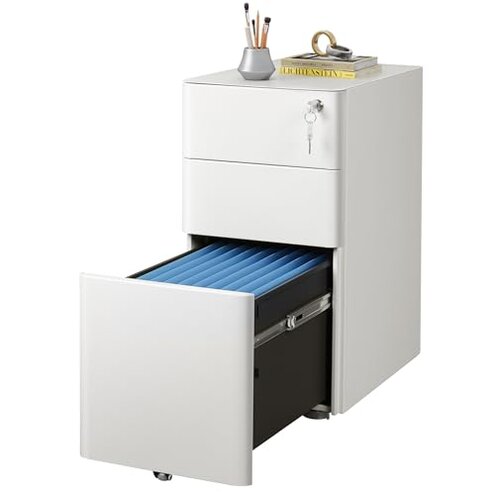
Product evaluated: DEVAISE 3-Drawer Slim Vertical File Cabinet, Fully Assembled Except Casters, Legal/Letter Size, White
Related Videos For You
Assembly Instruction of 4 Drawer Metal File Cabinet by Furnitopper
DEVAISE 3 Drawer Mobile File Cabinet
Data basis: This report summarizes dozens of buyer comments collected from written feedback and photo or video-supported impressions gathered from January 2024 through April 2026. Most feedback came from standard written posts, with smaller support from visual demonstrations that helped confirm setup, fit, and daily-use problems.
| Buyer outcome | DEVAISE cabinet | Typical mid-range alternative |
|---|---|---|
| Desk fit | Narrow footprint helps in tight spaces, but file capacity feels limited faster. | Moderate footprint usually takes more floor space but wastes less drawer depth. |
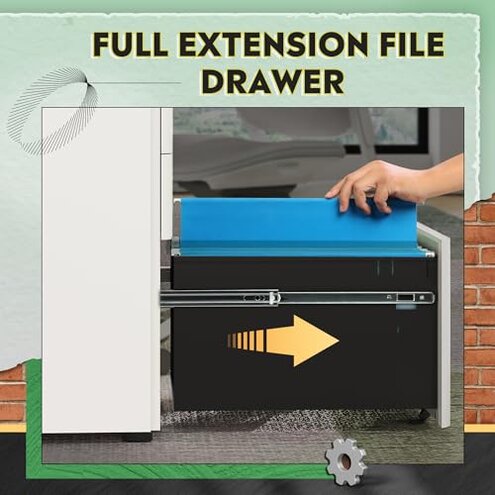
| Drawer access | Full extension sounds convenient, yet alignment complaints appear more disruptive during daily filing. | Smoother use is the category baseline, even if extension is not always as deep. |
| Mobility | Rolling design adds convenience, but stability concerns are a higher-than-normal category risk when drawers are open. | Usually steadier during open-drawer use, even on basic caster models. |
| Locking use | Single lock is convenient only if drawer movement stays consistent. | Simpler locks in this range are often less elegant but more forgiving. |
| Regret trigger | Compact outside but more fussy operation than expected after setup. | Less sleek but usually easier to live with day to day. |
Are you buying this because you want a cabinet that just rolls and works?
Primary issue: The biggest regret point is stability during normal use, not when it sits closed. This appears repeatedly and feels more disruptive than expected for a slim office cabinet.
When it shows up: The problem tends to appear after setup when the cabinet is moved under a desk, pulled forward, or used with a loaded file drawer. The narrow body and mobile design create a trade-off that feels less forgiving than typical mid-range options.
- Pattern: Recurring complaints center on the cabinet feeling less planted once drawers are opened during filing.
- Usage moment: Daily handling makes this worse when users roll it across hard floors or reposition it often.
- Severity cue: This is among the most common complaints because it affects routine access, not just rare edge cases.
- Why it stings: A filing cabinet in this class is reasonably expected to stay calm during normal drawer use, and this one appears less forgiving than that baseline.
- Mitigation: Limiting movement helps, but that undercuts one of the main reasons buyers choose a caster model.
Do the drawers become annoying once the novelty wears off?
Secondary issue: Drawer alignment and smoothness problems are not universal, but they are persistent enough to matter. They usually show up during daily use after the cabinet is loaded instead of in the first few minutes.
Why this feels worse: Small file cabinets often have some resistance, but here the hassle appears more frequent than expected for a fully assembled unit marketed around easy access.
Illustrative excerpt: “Looks neat, but one drawer needs extra force every morning.” Pattern note: This reflects a secondary complaint.
Illustrative excerpt: “Fine empty, frustrating once folders and supplies are inside.” Pattern note: This reflects a primary complaint.
Is the slim shape actually too slim for real filing?
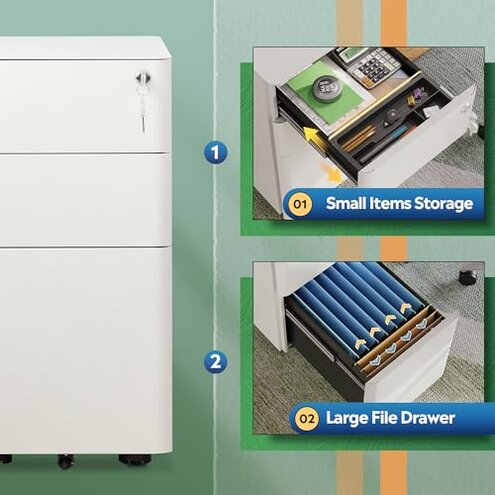
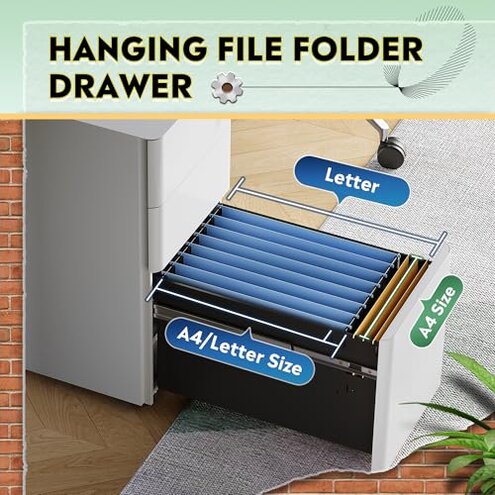
- Space trade-off: The compact width is a selling point, but limited room becomes a primary issue once buyers try to store more than a light paperwork load.
- When noticed: This usually appears after setup when letter, legal, or A4 folders are mixed with office supplies.
- Hidden requirement: You need to be disciplined about what goes where, or the small drawers feel cramped faster than expected.
- Frequency tier: This is a primary issue for people replacing a wider cabinet, even if it is less bothersome for minimal users.
- Category contrast: Slim cabinets always trade capacity for fit, but this one can feel tighter than expected because buyers also give up some ease of access.
- Real impact: Overflow risk pushes users to keep extra items elsewhere, adding extra steps during work.
- Fixability: There is no real fix beyond reducing contents, which defeats the idea of centralized storage.
Is the lock more hassle than protection?
- Core frustration: The locking system only feels useful if all drawers open and close predictably, and that dependency appears repeatedly in buyer frustration.
- When it matters: This becomes noticeable during routine office use when users want quick access to one drawer without fiddling.
- Severity cue: This is a secondary issue, less frequent than stability complaints but more frustrating when it happens.
- Why worse than normal: Mid-range locking cabinets are usually expected to add one simple step, while this can add extra checking and repositioning.
- Hidden requirement: Buyers may need to keep the cabinet carefully leveled and avoid overstuffing drawers for the lock feel to stay consistent.
- Attempted workaround: Using lighter loads may reduce friction, but it also lowers usable storage.
- Illustrative excerpt: “I wanted secure storage, not a tiny daily routine.” Pattern note: This reflects a secondary complaint.
- Illustrative excerpt: “The key works, but the drawers still need babying.” Pattern note: This reflects an edge-case to secondary pattern.
Does “mostly assembled” still hide setup annoyances?
- Expectation gap: Mostly assembled reduces work, but setup friction still appears as an edge-case issue when casters, leveling, and first-use alignment do not feel plug-and-play.
- When it shows up: This happens at first use, especially when buyers expect immediate under-desk use right out of the box.
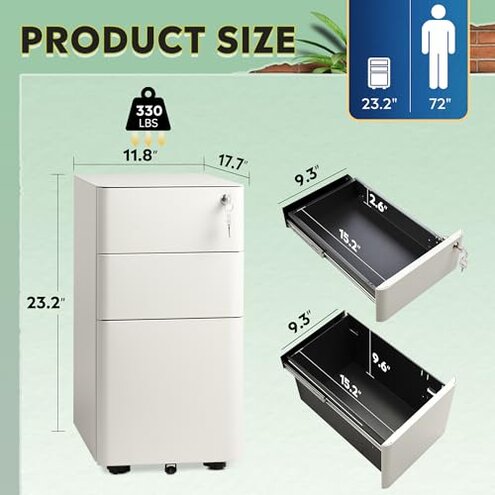
- Why it matters: The cabinet is heavy at 40.92 pounds, so small setup corrections can feel more annoying than with lighter office storage.
- Category contrast: A mid-range prebuilt cabinet is reasonably expected to need minor finishing steps, but this can demand more adjustment time than buyers expect.
- Scope signal: This seems less frequent but persistent, especially among buyers sensitive to small alignment issues.
- Illustrative excerpt: “I thought wheels on and done, but it needed fiddling.” Pattern note: This reflects an edge-case complaint.
Who should avoid this
- Frequent filers: Avoid it if you open drawers many times a day, because stability and smoothness issues exceed normal tolerance for routine office work.
- High-capacity users: Avoid it if you are replacing a wider file cabinet, because the slim format creates faster crowding than many expect.
- Shared spaces: Avoid it if multiple people will use it, because fussy operation becomes more noticeable with different handling styles.
- Set-and-forget buyers: Avoid it if you want a cabinet that needs almost no adjustment after delivery.
Who this is actually good for
- Light-duty users: It can fit buyers storing a small paperwork load who value narrow size more than smooth daily filing.
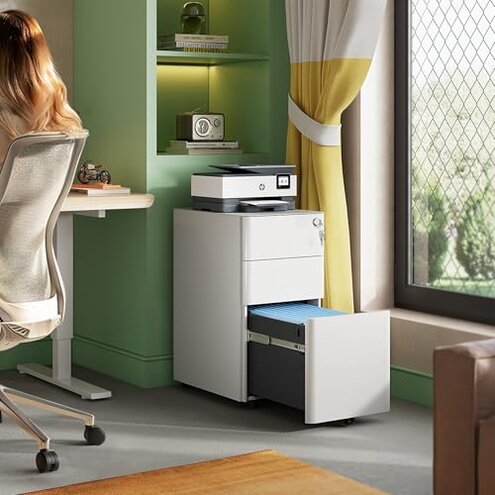
- Tight desks: It makes sense where space limits are severe and the cabinet will stay mostly parked in one spot.
- Occasional locking: It can work for users who need basic lockable storage and can tolerate some extra care in drawer loading.
- Minimal offices: It suits people willing to accept capacity trade-offs to keep a clean, compact setup.
Expectation vs reality
Expectation: A slim rolling file cabinet should save space without adding much hassle.
Reality: Space savings are real, but daily use can become more fussy than a typical mid-range alternative.
Expectation: Reasonable for this category, a fully assembled cabinet should only need quick caster setup.
Reality: Some buyers still face extra adjustment before it feels right under a desk.
Expectation: A lock should add simple security.
Reality: The locking experience depends more on smooth drawer behavior than many shoppers expect.
Safer alternatives
- Choose wider first: If you already fill a standard file drawer, pick a wider cabinet to avoid the tight-capacity regret seen here.
- Prioritize anti-tip design: Look for models with a stronger open-drawer stability focus if you will access files several times a day.
- Check loaded-use demos: Search for real filing videos, not empty product spins, to judge drawer smoothness under normal weight.
- Treat locks carefully: If fast lock-and-unlock use matters, favor cabinets known for simple, forgiving operation rather than compact styling.
- Reduce rolling needs: If the cabinet will stay under one desk, consider a non-mobile unit to avoid the mobility-versus-stability trade-off.
The bottom line
Main regret trigger: Buyers drawn to the slim rolling design can end up frustrated by stability, drawer behavior, and tighter-than-expected real storage. Those problems exceed normal category risk because they show up during routine filing, not just unusual use.
Verdict: Skip this one if you want smooth, forgiving daily operation. It fits only if small size matters more to you than ease of use.
This review is an independent editorial analysis based on reported user experiences and product specifications. NegReview.com does not sell products.