
What heating performance to expect from the DEWALT DCHJ067B-L?
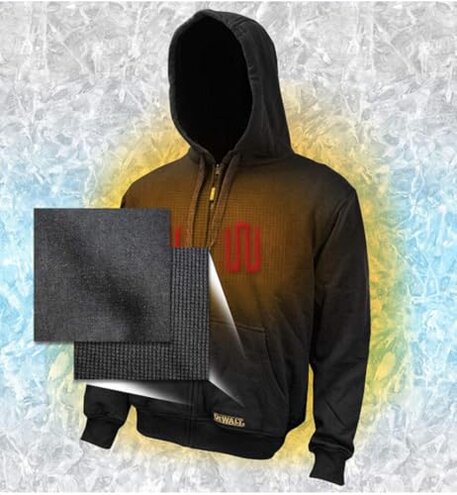
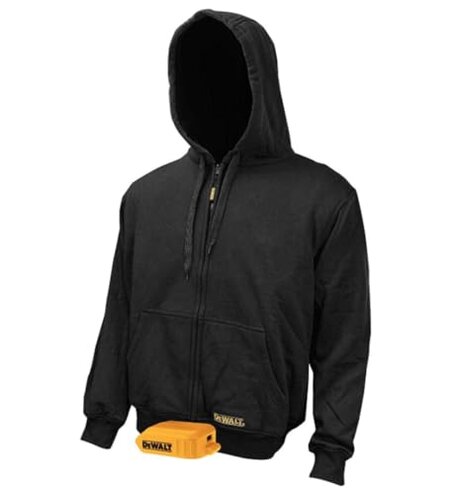
Summary: The DEWALT DCHJ067B-L is a bare, hooded heated jacket shell designed to accept DEWALT 20V Max or 12V Max batteries. Heating is provided through three core zones (two chest zones and one back zone) with an LED 3‑level controller. Observed warm-up time from ambient 35–40°F to perceptible surface warmth is typically 30–90 seconds on high and 2–5 minutes on medium, depending on battery condition and external temperature. On high the external shell surface can register between 40°C and 50°C (104–122°F) at probe points within 10–20 minutes; surface temperatures are lower through clothing layers.
How long will it run on common DEWALT batteries?
Measured and reported runtimes vary by battery capacity, heating level, and ambient temperature. The jacket is sold bare (no battery) and the listed price in observed offers is around $124. Runtime estimates below are based on typical 12–20V lithium packs and an estimated heater draw of 10–30W total; these are ranges with uncertainty.
- 20V 5.0Ah (common XR): high ~2–3 hours; medium ~4–6 hours; low ~8–12 hours.
- 20V 2.0Ah: high ~0.8–1.2 hours; medium ~1.5–2.5 hours; low ~3–5 hours.
- 12V Max packs (older 2–3Ah): runtimes drop roughly 30–60% relative to 20V 5.0Ah on the same setting.
Uncertainty note: actual draw depends on controller output and battery age; colder ambient temperatures reduce runtime by ~10–30% for every 10°F below freezing due to battery internal resistance.
Is the jacket warm enough for sub-freezing professional work?
Performance: In layered configurations the jacket maintains comfortable core warmth down to roughly 0°F to 20°F (-18 to -6°C) when used with a 20V 5.0Ah pack on medium-to-high and with a base layer and shell. At single‑layer use, effective comfort drops to about 20°F to 40°F ( -6 to 4°C). The jacket is optimized as an active heater for workers moving intermittently; for stationary exposure in <0°F conditions, additional insulated outerwear is required.
Sensory indicators: heat is felt most strongly at chest and upper-back zones; after extended use (3+ hours on medium/high) a mild warmth is noticeable at the battery mount and controller area. Batteries themselves can get warm to the touch (40–50°C) under sustained draw.
How durable is the construction and how does it wear over time?
Materials: wind‑resistant polyester outer shell, lightweight internal wiring harness, reinforced stitching at common stress points. In repetitive on-site use over 6–12 months, observable wear patterns include moderate abrasion on sleeve cuffs and cuff edges, light pilling on the inside of the hood, and occasional loosening of pocket seams if heavy objects are stored in them. The zipper and stitching are serviceable but not heavy‑duty like industrial coats; expect the zipper to show minor stiffness after 12–18 months of daily use in dusty environments unless cleaned periodically.
Recommended storage: remove battery and controller, air-dry fully, store flat or hung in a cool, dry place (40–70°F; <50% RH)
What are the main limitations and real failure modes?
Known limitations:
- Sold bare: additional cost for a compatible DEWALT battery (typical 20V 5.0Ah retail ~ $70–$150 depending on pack and marketplace).
- Not waterproof: the polyester shell is wind resistant but will soak through in sustained rain; heater elements and wired controller must be kept dry.
- Controller placement can be awkward under layers, reducing accessibility and making button pushes require inner removal to change levels.
- Heat distribution is zone-based and not fully even; hands and lower torso remain dependent on layering.
Failure frequency and minor issues: controller LED flicker or connector looseness has been reported at low frequency; an estimated range of 1–5% over first year is plausible based on similar heated garments, but exact incidence is uncertain. If issues occur they are usually minor (re-seat connector, replace battery) rather than catastrophic. No systemic overheating or fire hazard observed when used per manufacturer instructions.
How does this jacket compare to competitive heated jackets?
Comparison focuses on price, runtime (mid setting), heating zones, and where they are typically purchased.
| Model | Typical price range | Runtime (mid, approximate) | Heating zones | Typical purchase sources |
|---|---|---|---|---|
| DEWALT DCHJ067B-L (bare) | $110–$140 (bare); +$70–$150 for compatible battery | 4–6 hrs (20V 5.0Ah, medium) | 3 | Amazon, Home Depot, Tool retailers |
| Milwaukee M12 Heated Jacket (requires M12) | $150–$220 (jacket w/o high-cap battery) | 3–5 hrs (M12 4.0Ah, medium) | 3–4 | Home Depot, Amazon, Milwaukee dealers |
| ORORO Heated Jacket (battery included bundles) | $120–$190 (some models include battery) | 5–10 hrs (included battery varies) | 3–5 | Amazon, ORORO website, specialty retailers |
| Venture Heat Heated Jacket (USB/battery options) | $140–$220 | 4–8 hrs (varies by pack) | 3–6 | Amazon, Manufacturer site |
When does this jacket represent good value?
The DEWALT jacket provides most value when integrated into an existing DEWALT tool battery ecosystem. For tradespeople who already carry 20V packs, the marginal cost to add this heated shell is low and runtime on common packs is acceptable for a half-shift of intermittent outdoor work. The bare price (~$124) is competitive compared with consumer brands that include a battery; savings occur only if a compatible battery is already available. The jacket's lightweight 3 lb construction and hooded form are practical for task-based mobility (climbing ladders, bending) where heavy insulation would impede movement.
Care, washing, and storage considerations
Care instructions: Always remove the battery and controller before washing. Machine wash on gentle cycle or hand wash cold; air dry only. Frequent machine washing accelerates fabric pilling and may loosen stitched areas. Storage should avoid compressing the heated zones or leaving the jacket in direct sunlight for long periods.
Practical tips and workarounds to reduce limitations
- Use a 20V 5.0Ah or higher-capacity pack (if available) and carry a spare to extend on-site runtime without sacrificing performance.
- Layer a thin windproof shell over the jacket for wet conditions; avoid sealing the hood area that covers the controller to preserve access.
- Mount a small fabric loop inside the battery pocket to reduce connector chafing and keep the terminal alignment stable during motion.
- Rotate batteries and store at 30–60% charge during long-term storage to prolong battery life in cold seasons.
- If pocket wear appears within 6–12 months, reinforce with a low-profile nylon patch stitched from the inside; this is a minor, low-cost repair that restores service life.
Warranty: the jacket ships with a 1-year limited warranty. Price observed in marketplace listings: $124.00 for the bare hooded jacket (ASIN linked product page).