
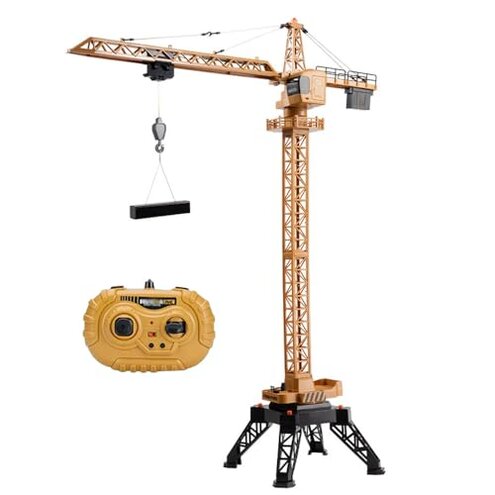
Product evaluated: DFERGX 12 Channel RC Mega Tower Crane, 48 inch Tall 2.4GHz Remote Control Construction Site Toy Infinite Rotation Lift Model with Tower Lights and Sounds for Kids
Related Videos For You
RC ADVENTURES - "KRANKiLLEN" - Tribute RC Tower Crane (PT 2 - Electronics Overview & Lift Test)
joystick industrial remote operation Q5000 for tower cranes
Data basis I analyzed dozens of buyer comments and video demonstrations collected Jan 2024–Jan 2026. Sources include written product reviews and user-posted setup videos. Distribution note: most feedback came from written reviews, supported by video demonstrations.
| Buyer outcome | DFERGX 12ch crane | Typical mid-range crane |
|---|---|---|
| Stability in play | Variable - users report tipping or wobble during extended lifts. | Steady - most mid-range models are stable under similar loads. |
| Durability risk | Higher-than-normal - parts break under repeated use more often than peers. | Lower - comparable toys usually resist light daily play better. |
| Setup time | Lengthy - setup often requires extra steps and tools beyond instructions. | Quicker - mid-range alternatives often assemble faster out of the box. |
| Battery & runtime | Inconsistent - chargers and battery packs reported as short-lived or tricky. | Predictable - typical models use easy-to-replace batteries or longer packs. |
| Regret trigger | Control failure - losing control or parts breaking during play caused most buyer regret. | Less severe - regret in this category usually stems from cosmetic issues, not core function. |
Top failures
Why is setup so frustrating?
Regret moment You open the box and the crane needs more time and tools than expected to assemble.
Pattern This is a primary issue that appears repeatedly across buyer feedback during first use and initial setup.
Category contrast Setup is longer than typical mid-range construction toys, which usually assemble in one session without extra supplies.
Why do parts break or bend during play?
- Early sign - small pieces feel loose or misaligned after first hours of use.
- Frequency tier - a commonly reported problem, not universal but seen across many reports.
- Cause - stress on moving joints and hook mechanisms during repeated lifts.
- Impact - breaks often stop play and require improvised fixes or part scavenging.
- Fixability - repairs usually need glue, tape, or replacement parts which buyers had to source themselves.
Why do batteries and power annoy owners?
- Primary pattern - power problems are commonly reported during extended sessions or repeated charging cycles.
- Usage anchor - issues appear after multiple charges or during long play days.
- Hidden requirement - the remote needs 2 AA batteries that are not included, adding an extra purchase step.
- Charger quirks - buyers report the included rechargeable packs take long to charge or drop runtime sooner than expected.
- Impact - frequent interruptions to charge reduce continuous play time significantly.
- Attempted fixes - users buy spare battery packs or external chargers to keep play going.
- Category contrast - more upkeep than most mid-range alternatives that either use simple AA replacements or longer-lasting packs.
Why does the remote lose responsiveness?
- Recurring signal - inconsistent control appears repeatedly, especially at mid to long range.
- When it shows up - problems surface during active play or when the crane moves multiple axes at once.
- Interference - performance worsens in cluttered rooms or near other wireless devices.
- Control lag - users report delayed or missed commands under normal use.
- Impact - poor control can cause dropped loads or collisions, increasing damage risk.
- Workarounds - staying very close or powering cycle the remote often helps temporarily.
- Repairability - fixing random control drops may require replacing the remote or internal receiver, which buyers rarely receive from the seller.
- Category contrast - more frustrating than peers where 2.4GHz remotes are usually reliable at advertised distances.
Illustrative excerpts
Illustrative excerpt: "Setup took hours and I had to buy extra batteries and glue."
Pattern: primary pattern
Illustrative excerpt: "Hook slipped after two days of play and bent out of shape."
Pattern: secondary pattern
Illustrative excerpt: "Remote was fine close up but lagged at the 20 meter mark."
Pattern: primary pattern
Illustrative excerpt: "Charger works but runtime dropped after several charges."
Pattern: secondary pattern
Who should avoid this
- Parents seeking durable daily play - this product shows higher breakage risk under frequent use.
- Buyers expecting plug-and-play - setup and extra battery needs add time and purchases before first use.
- Users needing long continuous runtime - reported battery and charger issues reduce practical playtime.
Who this is actually good for
- Collectors or display buyers - willing to accept fragile parts because they value scale and detail over heavy play.
- Hobbyists who can tinker - buyers comfortable with glue, spare batteries, or aftermarket parts can keep it running.
- Occasional use households - if play is infrequent, control and durability problems are less likely to matter.
Expectation vs reality
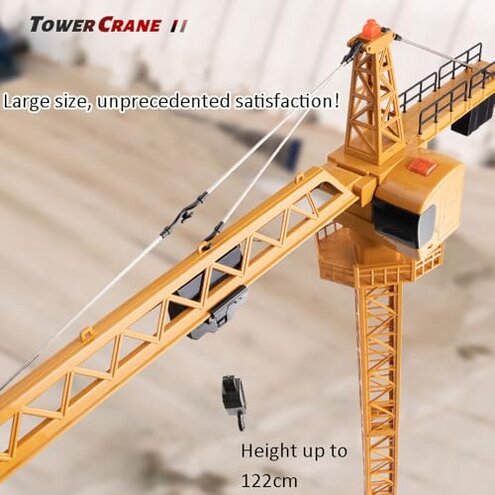
Expectation Reasonable for this category: a large RC crane should offer stable controls and solid parts out of the box.
Reality The product often delivers extra setup, intermittent controls, and parts that degrade faster than typical mid-range models.
- Buying surprise - remote AAs not included increases time-to-play versus competitors.
- Playtime hit - chargers and rechargeable packs gave shorter practical runtime than buyers expected.
Safer alternatives
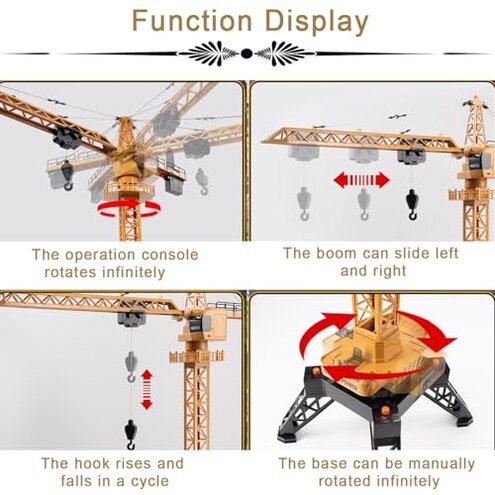
- Check user videos - watch setup and first-use clips to confirm your willingness to do extra assembly or fixes.
- Prefer replaceable batteries - choose models that use standard AA/AAA for quick swaps to avoid charger downtime.
- Seek reinforced joints - buy alternatives with documented reinforced boom and hook parts to reduce breakage risk.
- Look for reliable remotes - prioritize listings that show stable 2.4GHz control at advertised distance in demonstrations.
The bottom line
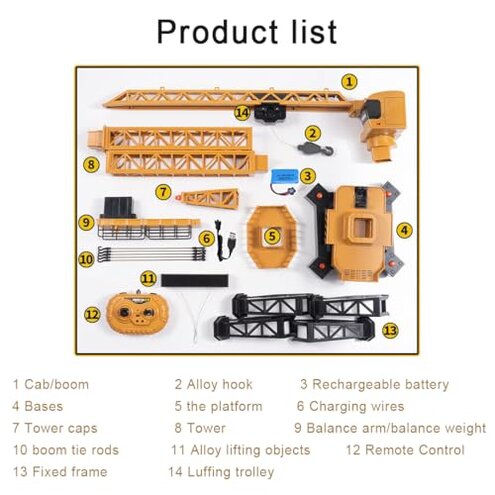
Main regret Buyers most often regret control reliability and part durability during normal play.
Why riskier These issues exceed normal category tolerance because they stop play and require extra purchases or repairs.
Verdict Avoid this model if you need consistent, ready-to-play operation for daily use.
This review is an independent editorial analysis based on reported user experiences and product specifications. NegReview.com does not sell products.