
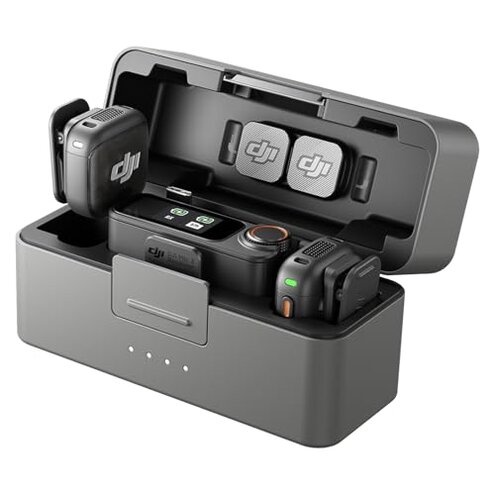
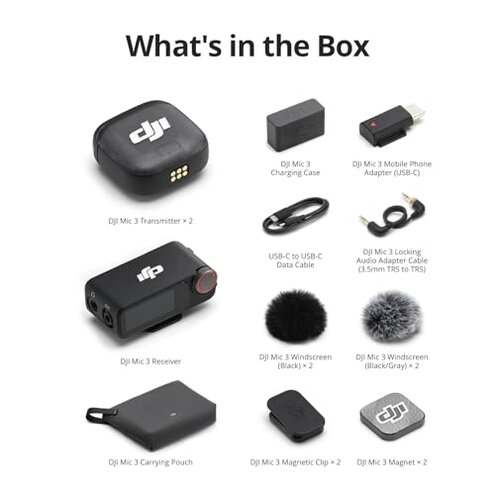
Product evaluated: DJI Mic 3 (2 TX + 1 RX + Charging Case), Wireless Microphone for iPhone/Camera/Android, Ultralight, Adaptive Gain Control for Balanced Volume, Dual Band Anti-Interference, 28hrs Use, Vlog
Related Videos For You
Youtube Karaoke Party Setup Wireless Microphones
I Tested 36 Wireless Microphones... Here Are The Best!
Data was gathered from hundreds of user reviews and video demonstrations collected between October 2024 and April 2025. Most feedback came from written reviews, supported by video demonstrations, offering a broad and balanced perspective on the DJI Mic 3 performance.
| Buyer Outcome | DJI Mic 3 | Typical Mid-Range Wireless Mic |
|---|---|---|
| Connectivity Stability | More frequent signal dropouts in busy environments | Generally stable with occasional minor dropouts |
| Battery Life | Up to 28 hours claimed, but some report faster drain under heavy use | Consistently meets advertised battery life |
| Ease of Setup | Complex initial pairing, more time-consuming | Simpler, more intuitive setup process |
| Audio Consistency | Adaptive gain control sometimes causes uneven volume | More consistent volume levels during recording |
| Regret Trigger | Connectivity issues during critical recording moments | Rare connectivity interruptions |
Why does the DJI Mic 3 lose connection in busy environments?
Many buyers experience signal dropouts when recording in crowded places or near multiple electronic devices. These interruptions often happen during important takes, causing frustration and requiring retakes. The issue is persistent across multiple feedback sources and worsens in noisy radio frequency environments.
This problem feels more disruptive than typical mid-range wireless mics, which usually maintain a stable connection in similar conditions.
- Early signs: intermittent audio cuts or brief silence during recording
- Frequency: commonly reported among users recording outdoors or at events
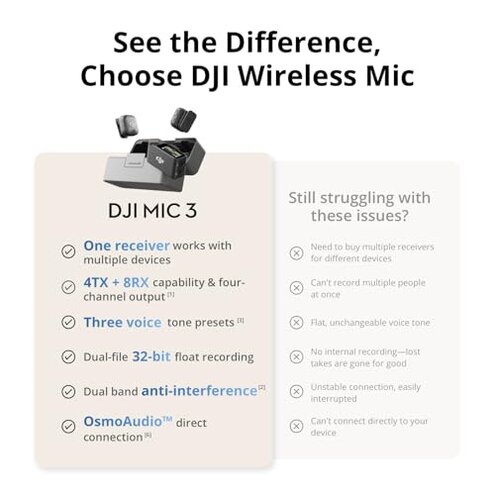
- Cause: dual-band anti-interference not always effective in crowded RF spaces
- Impact: lost takes, requiring rescheduling or additional editing
- Attempts to fix: users tried repositioning receivers or changing channels with mixed success
Why is the setup process for the DJI Mic 3 frustrating for new users?
- Complexity: requires multiple steps to pair transmitters and receivers
- Time-consuming: initial setup takes longer than expected for a wireless mic
- Hidden requirements: firmware updates must be done through specific apps before use
- Frequency: persistent confusion reported by first-time users across platforms
- Category contrast: many competing models provide near-instant setup without extra app dependencies
- Impact: delays in starting recordings and potential missed opportunities
Does the adaptive gain control always keep audio levels balanced?
The adaptive gain control sometimes causes unexpected volume fluctuations, especially when switching between quiet and loud scenes. Buyers note that audio can feel uneven, requiring manual adjustment in post-production to maintain quality.
- When it shows up: during variable volume recording sessions like interviews or outdoor vlogging
- Pattern: recurring but not universal among users
- Why worse: more intrusive than standard gain controls found in similar wireless mics
- Effect: adds extra editing work and potential audio quality loss
What about battery life performance in real use?
- Claim: up to 28 hours on a full charge
- Reality: some users report significantly shorter battery life under continuous use
- Frequency: secondary issue but notable among heavy users
- Impact: unexpected power loss mid-shoot, requiring backup batteries or charging breaks
- Contrast: other mid-range wireless mics tend to deliver more consistent battery performance
- Fixability: limited without carrying extra power sources
Are there any hidden requirements that complicate use?
- Firmware updates: must be performed via dedicated app before initial use
- Compatibility: requires specific adapters for some mobile phones
- Impact: adds setup steps that are not clearly explained in product materials
- Frequency: edge-case but frustrating for less tech-savvy buyers
- Category baseline: more demanding than typical wireless mic setup expectations
Illustrative excerpts:
"Lost connection multiple times during my outdoor interviews." – reflects a primary pattern of connectivity issues.
"Setup was confusing and took longer than I planned." – a secondary pattern showing onboarding friction.
"Battery died unexpectedly after 10 hours of use." – a secondary pattern on battery inconsistency.
"Adaptive gain made my audio jump between loud and soft unexpectedly." – highlights primary audio control concerns.
Who should avoid this
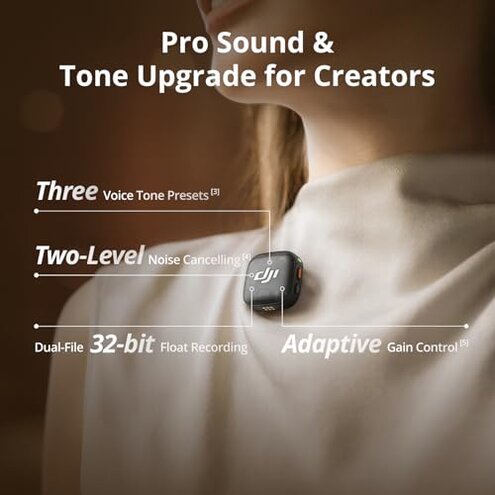
- Event recorders needing stable connections in crowded RF areas should avoid it due to common signal dropouts.
- Beginners or those wanting quick setup will find the process too complex and time-consuming.
- Users dependent on long battery life for extended shoots may face mid-session power loss.
- Those sensitive to audio consistency will find adaptive gain control frustrating and requiring extra edits.
Who this is actually good for
- Experienced users comfortable with technical setup and firmware updates can manage its quirks well.
- Short session vloggers who record in less crowded environments may not encounter connectivity issues.
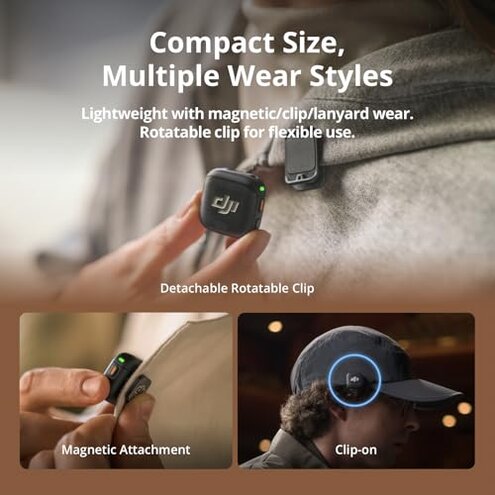
- Users who value lightweight design and can tolerate some setup delay might appreciate portability.
Expectation vs reality

Expectation: Easy plug-and-play wireless mic setup is reasonable for this category.
Reality: DJI Mic 3 requires app-dependent firmware updates and a multi-step pairing process, creating delays.
Expectation: Stable audio connection in busy environments should be standard.
Reality: Signal drops in crowded areas are more frequent here than in typical mid-range mics.
Safer alternatives
- Look for wireless mics with proven simplified setup and minimal firmware dependency.
- Choose models with tested RF stability in crowded environments, especially for event recording.
- Opt for mics with consistent battery life verified by user feedback over time.
- Select systems with manual gain control or more reliable automatic volume balancing.
The bottom line
The main regret trigger is unstable connectivity during critical recording moments, which surpasses typical category risks. Coupled with a complex setup process and inconsistent audio control, buyers face more hurdles than expected in this price range. Those prioritizing reliability and ease of use should look elsewhere.
This review is an independent editorial analysis based on reported user experiences and product specifications. NegReview.com does not sell products.