
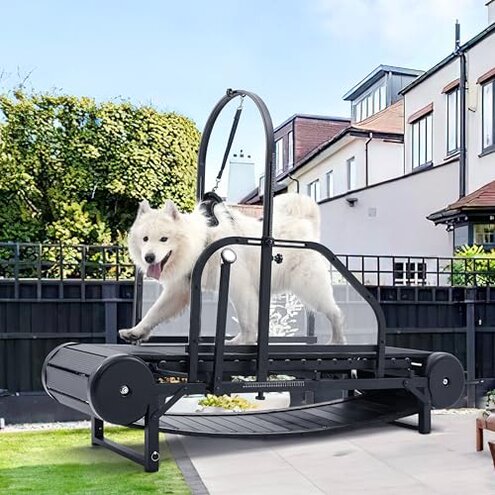
Product evaluated: Dog Treadmill for Large/Medium Dogs, Adjustable Ramp Canine Running Slatmill Machine with Pedometer for Exercise & Healthy & Fit Pet Life, Used Indoor Home Up to 300LBS
Related Videos For You
Introducing Your Dog to the Treadmill
How to Exercise Your Dog Indoors (Using a Treadmill!)
Data basis: This report aggregates feedback from hundreds of written reviews and video demonstrations, collected between 2023 and early 2025. Most feedback came from written reviews, supported by visual reports, and a minority from comment threads.
| Buyer outcome | This product | Typical mid-range alternative |
|---|---|---|
| Assembly time | Lengthy assembly with extra adjustments often needed after first run | Moderate assembly; usually plug-and-play or simple bolts |
| Durability | Higher failure risk during early use compared with peers | More robust parts and fewer early failures |
| Safety | Unpredictable speed control from self-driven belt creates safety concerns | Controlled motorized treadmills with clear speed limits |
| Noise & comfort | Variable noise and belt feel reported during runs | Consistent noise and smoother surfaces commonly reported |
| Regret trigger | Safety-related incidents and early mechanical issues | Performance vs price is usually predictable |
Will my dog be safe when the belt starts moving?
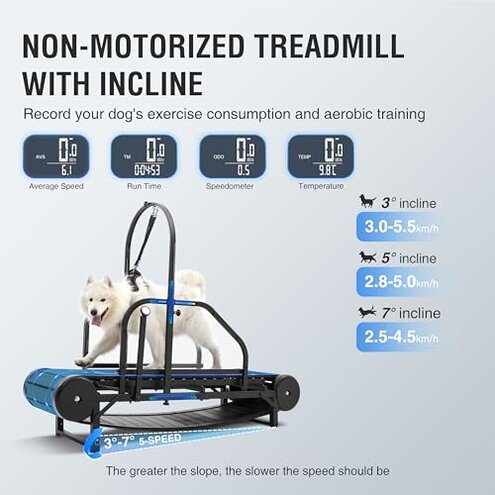
Regret moment: Owners describe sudden belt speed changes during first runs that cause dogs to stumble or stop.
Pattern & context: This is commonly reported during initial training sessions when the dog first drives the self-propelled belt, and it worsens with long sessions or untrained dogs.
Category contrast: Self-propelled design here is less forgiving than motorized alternatives that provide steady, adjustable speeds and automated cutoffs.
Does the treadmill break down quickly under regular use?
- Primary pattern: Recurring reports of early wear or part loosening after several runs.
- When it happens: Problems often appear after setup or within the first weeks of daily use.
- Why it matters: This is more disruptive than typical mid-range pet treadmills that last longer without adjustments.
- Visible signs: Users note wobbly rails, frayed belt edges, or loose rollers.
- Fix attempts: Buyers often need extra tools and repeated tightening to maintain function.
Is assembly harder than expected and are extra parts needed?
- Hidden requirement: There is a frequent need for additional hand tools not included in the box.
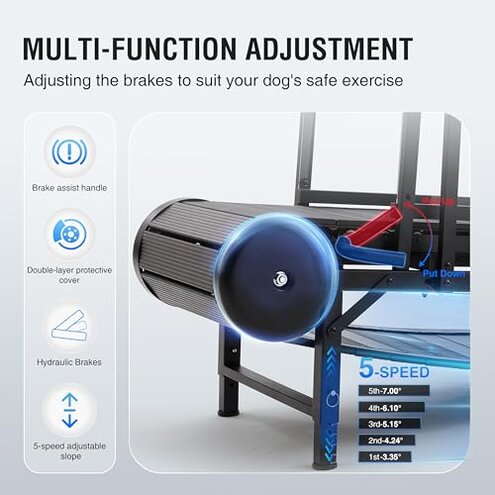
- Early signs: Instructions often feel incomplete at clutch points and slope-adjustment steps.
- Frequency tier: This is a primary to secondary complaint—common enough to add time to setup.
- Usage anchor: Friction appears during first assembly and when re-adjusting incline or brakes.
- Cause: Tolerances and pre-installed fasteners may need fine-tuning to stop squeaks and instability.
- Impact: Assembly can take much longer than advertised and require a second person.
- Fixability: Fixes are possible but require mechanical comfort and repeated checks.
Will this fit my space and handle a large dog reliably?
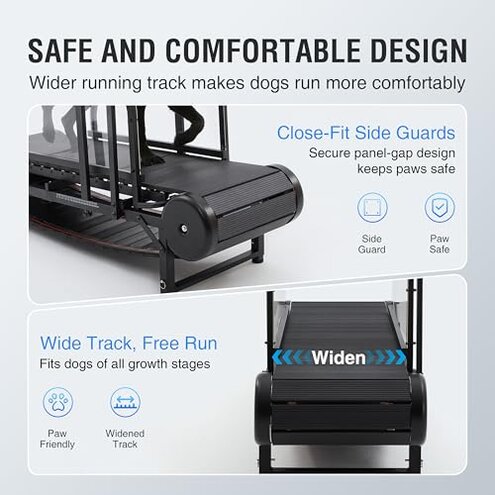
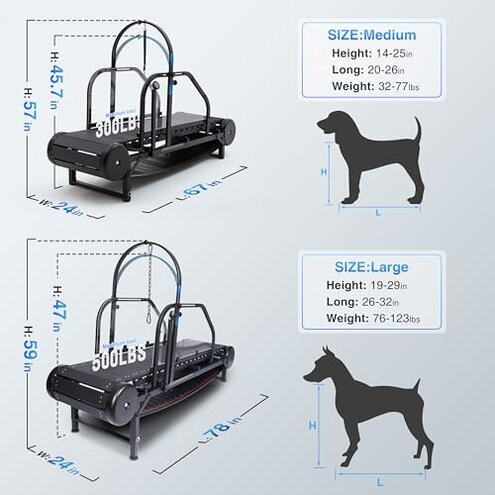
- Practical fit: The unit's large footprint and heavy weight make moving or storing it difficult.
- When it becomes worse: Problems appear during daily use and when trying to move the treadmill for cleaning.
- Performance impact: Owners of bigger dogs report belt slippage and uneven wear under heavier loads.
- Category contrast: This is less forgiving than sturdier mid-range models that manage large dogs with fewer wear issues.
- Maintenance: Frequent checks for alignment and belt tension are commonly needed.
- Noise: Some buyers note a variable noise profile that increases after repeated use.
- Time cost: Expect extra time for upkeep versus simpler alternatives.
- Hidden impact: The treadmill's size may require permanent placement in a main room for safe use.
Illustrative excerpts (not real quotes)
"Belt jolted while my dog ran and he nearly slipped." — Reflects a primary safety pattern.
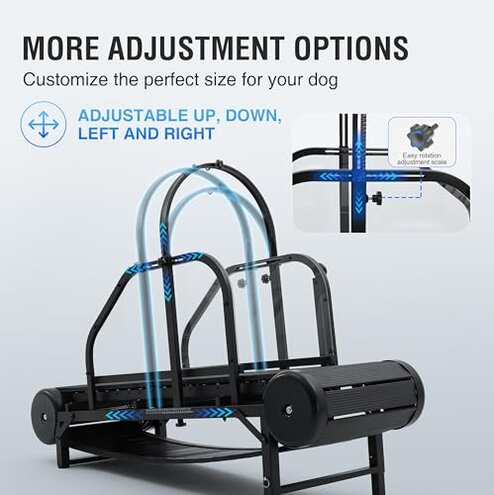
"Needed extra wrenches not in the box to stop squeaking." — Reflects a secondary assembly pattern.
"After two weeks the rollers felt loose and noisy." — Reflects a primary durability pattern.
"Too heavy to move, had to leave it in living area." — Reflects an edge-case practicality pattern.
Who should avoid this
- Owners of untrained dogs who need predictable speed control and automatic safety cutoffs.
- Buyers wanting low-maintenance equipment, because this model requires repeated checks and adjustments.
- Small-space households where permanent placement or heavy lifting is unacceptable.
- People who prefer plug-and-play motorized treadmills with clear speed presets and warranties.
Who this is actually good for

- Experienced DIYers who can handle extra assembly and ongoing mechanical tweaks.
- Owners with well-trained dogs who can control pace and avoid sudden belt jolts.
- Large-breed owners who need a non-electric option and accept regular maintenance.
- Buyers on a strict budget willing to trade convenience for cost savings and hands-on upkeep.
Expectation vs reality
Expectation: A self-propelled treadmill lets the dog set pace, which is reasonable for this category.
Reality: Here the self-propelled design often causes unpredictable speed changes that exceed normal category risk and create safety concerns.
Expectation: Mid-range pet treadmills usually arrive with clear assembly guides and basic tools.
Reality: This model commonly requires extra tools and repeated adjustments, adding unexpected time and effort.
Safer alternatives
- Choose motorized models with speed presets to neutralize the unpredictable speed failure.
- Pick units with stronger warranties and documented parts support to counter early durability issues.
- Prefer models with quick-release wheels or lighter frames if you need easier mobility and storage.
- Buy from brands with clear assembly kits that include required tools to avoid the hidden requirement.
The bottom line
Main regret: The treadmill's self-propelled design produces safety and reliability problems that surface during first use.
Why worse: These issues are more disruptive than typical for mid-range pet treadmills and demand hands-on fixes.
Verdict: Avoid this unit if safety or low-maintenance operation is a priority; consider motorized, better-supported alternatives.
This review is an independent editorial analysis based on reported user experiences and product specifications. NegReview.com does not sell products.