
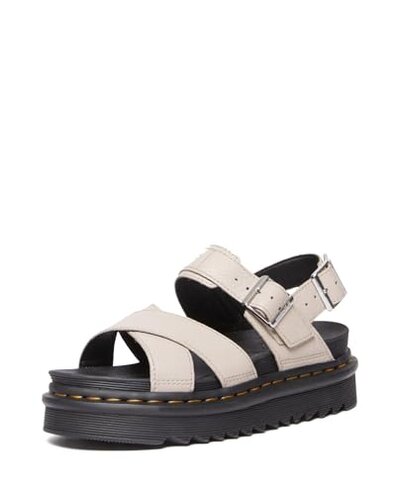
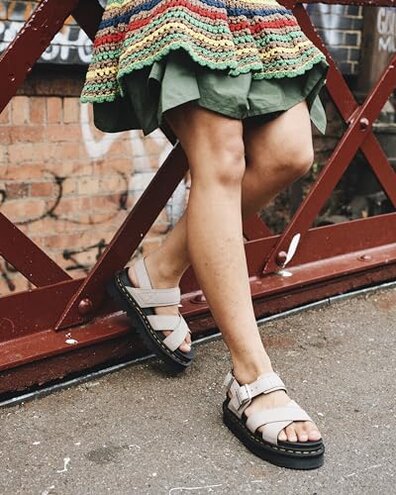
Product evaluated: Dr. Martens Unisex Voss II, Vintage Taupe Pisa, 8 Women/7 Men
Related Videos For You
Comfiest Walking Sandals Try-On Haul & Review, Birkenstocks, Chacos, Keen, ECCO + more!
How to Break in Leather Sandals
Data basis for this report comes from analyzing dozens of shopper comments collected from written reviews and star-rating notes over a multi-month window leading up to early 2026. Most feedback leaned toward short written impressions, with supporting details appearing in longer wear-update posts that describe what happens after repeated use.
| Buyer outcome | Dr. Martens Voss II | Typical mid-range sandal |
| Comfort on first wear | Higher risk of rubbing before break-in | Moderate risk, usually softer out of box |
| Fit consistency by size | Higher variance reported across feet types | More predictable for most shoppers |
| All-day wear support | Mixed comfort after long walking | More forgiving cushioning in many options |
| Strap reliability over time | Secondary risk of hardware/strap annoyance | Lower rate of “fiddly” closures |
| Regret trigger | Blisters plus “can’t-return” wear marks after one outing | Less likely to become unwearable after first day |
Why do these hurt your feet faster than you expect?
Regret moment tends to show up on the first long outing, when rubbing turns into hot spots and you realize you can’t “walk them into comfort” quickly.
This pattern appears repeatedly in feedback and is described as persistent for some foot shapes rather than universal.
Category contrast: some sandals need break-in, but the reported intensity feels more disruptive than a typical mid-range casual sandal.
Worsens when you wear them for long sessions, in warm weather, or on days with lots of steps.
- Early sign is rubbing on the top strap within the first hour.
- Primary issue is blister risk during first wear, especially with bare skin.
- Hot spots show up faster when you walk on concrete or hard floors.
- Not universal because some buyers report comfort quickly, but others never get there.
- Mitigation commonly mentioned is socks or bandages, which adds extra steps for a sandal.
- Fixability is limited if rubbing comes from where the straps sit on your foot.
- Hidden cost is the “trial wear” risk because visible wear can change return options.
Why does the sizing feel unpredictable?
- Recurring theme is that “my normal size” doesn’t land consistently.
- When it hits is during the first try-on, before you even leave the house.
- Primary issue is a fit that’s either too long in the footbed or too tight at the straps.
- Worsens for wide feet, high insteps, or people between sizes.
- Category contrast is that many mid-range sandals offer more adjustability or clearer sizing behavior.
- Workaround often becomes ordering multiple sizes, which adds time and return hassle.
- Watch for heel hanging off slightly or toes crowding, which predicts pain on longer walks.
Are the straps and buckles annoying in daily use?
- Secondary issue shows up as “fiddly” fastening during daily on-and-off.
- Not constant for everyone, but it appears repeatedly across short feedback notes.
- When it happens is when you adjust for swelling during hot days.
- Worsens if you need frequent micro-adjustments to prevent rubbing.
- Impact is slower exits and re-fastening, which matters for travel and errands.
- Category contrast is that many mid-range sandals prioritize quick, easy closures.
- Mitigation is setting a “sweet spot” and leaving it, but that can reduce stability.
- Durability worry comes up when buyers feel they must tug hard to secure the fit.
Do they feel heavy or tiring on long walks?
- Persistent comments describe fatigue after extended walking rather than short errands.
- When it shows is after a few hours, especially on travel days.
- Primary pain is foot tiredness that builds, not just a brief pinch.
- Worsens on hard surfaces and when you’re doing “all-day” wear.
- Category contrast is that many mid-range walking sandals feel lighter or more cushioned for distance.
- Trade-off is style and a sturdy feel, but some buyers expected easier comfort.
Illustrative excerpts below are not direct quotes and are provided to show the pattern.
- Illustrative: “Cute, but the top strap shredded my skin on day one.” Primary pattern tied to early rubbing.
- Illustrative: “My usual size fit long, yet the straps felt tight.” Primary pattern tied to sizing variance.
- Illustrative: “I kept adjusting the buckle and still couldn’t stop sliding.” Secondary pattern tied to closure friction.
- Illustrative: “Fine for errands, but my feet were done after hours walking.” Secondary pattern tied to long-wear fatigue.
- Illustrative: “I had to pad the strap every time, which defeated the point.” Primary pattern tied to hidden upkeep.
Who should avoid this
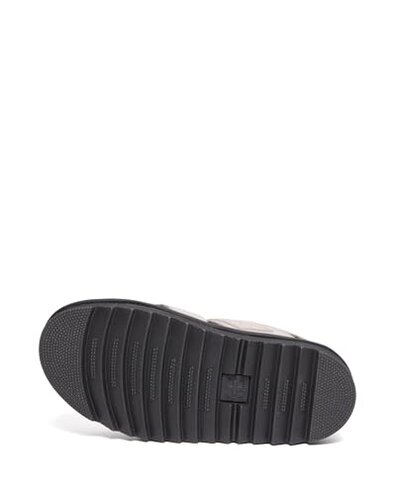
Wide feet or high insteps should be cautious because fit variance is a primary complaint and gets worse when straps land in the wrong spot.
Travel walkers who need all-day comfort may regret the fatigue reports that show up after hours on hard surfaces.
Blister-prone buyers should avoid because early rubbing is among the most common frustrations and can ruin the first outing.
Low-maintenance shoppers should skip if you don’t want padding, socks, or “test wear” planning as a hidden requirement.
Who this is actually good for
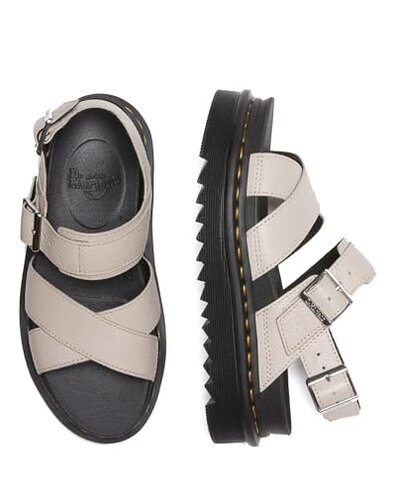
Style-first buyers who wear sandals for short outings can tolerate the break-in risk because the pain trigger usually appears on long walks.
Already-familiar Doc-style fans may accept strap stiffness and plan a gradual wear-in schedule.
Occasional wear users who mostly drive and do light walking can tolerate the long-wear fatigue pattern.
Patient fitters willing to try sizes and adjust straps carefully can reduce the sizing regret trigger.
Expectation vs reality
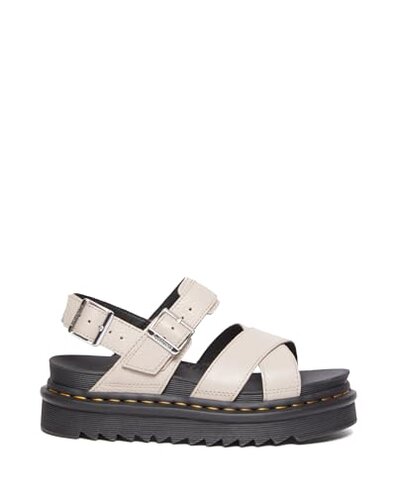
- Expectation: reasonable for this category is comfort after a short break-in. Reality: repeated feedback suggests rubbing can stay intense for some feet.
- Expectation: sizing should be predictable within one try-on. Reality: the fit variance pattern pushes some buyers into multi-size ordering.
- Expectation: buckles should be set-and-forget. Reality: recurring notes describe fiddly adjustments during daily use.
Safer alternatives
- Prioritize sandals with softer strap lining or padded contact points to neutralize the primary rubbing failure.
- Choose brands with wider width options or clearer sizing guidance to reduce the fit-variance regret trigger.
- Look for quick-adjust closures like Velcro straps to avoid daily buckle fiddling.
- Pick a walking-focused footbed if your use case is hours on concrete, since fatigue reports rise with long sessions.
- Buy from sellers with easy returns so “test wear” doesn’t become a costly hidden requirement.
The bottom line
Main regret trigger is early rubbing that turns into blisters during the first real wear.
Higher-than-normal risk comes from the combination of fit variance and comfort that can stay stubborn past a typical break-in window.
Verdict: avoid if you need predictable sizing and long-walk comfort without extra padding or careful trial wear.
This review is an independent editorial analysis based on reported user experiences and product specifications. NegReview.com does not sell products.