
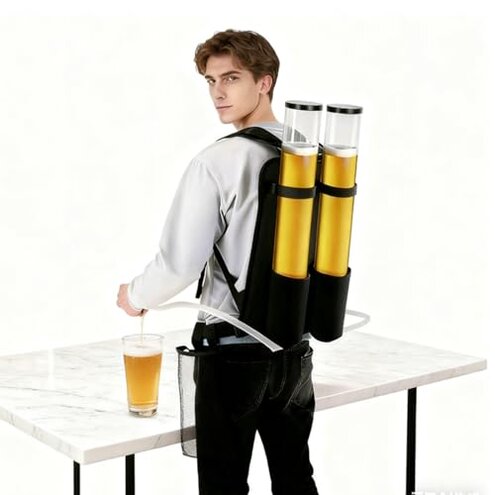
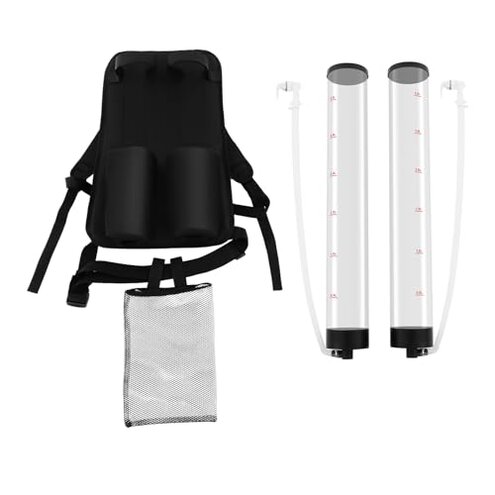
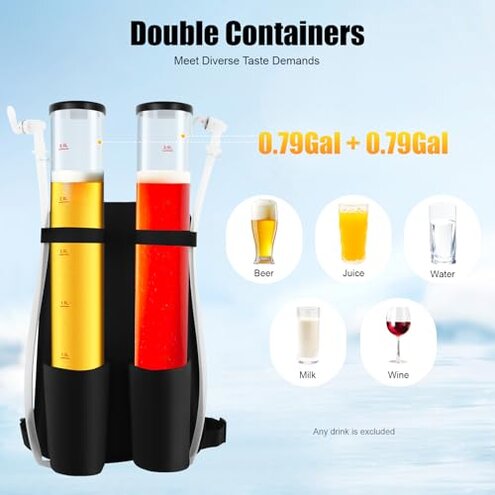
Product evaluated: Dual Tank Double Drink Dispenser,Beverage Dispenser Backpack Beer liquid Shot Gun for Club Bar Party Beer Tool,Portable Dual Barrel Beverage Liquid Liquor Beer Backpack Dispenser 3L + 3L
Related Videos For You
Swag Daddy Backpack Drink Dispenser Review - SwagDaddy
Cleaning instruction
Data basis: This report used dozens of buyer notes and product demonstrations collected between 2023 and Feb 2026, with most feedback from written reviews and a supporting share from video demonstrations.
| Outcome | This product | Typical mid-range alternative |
|---|---|---|
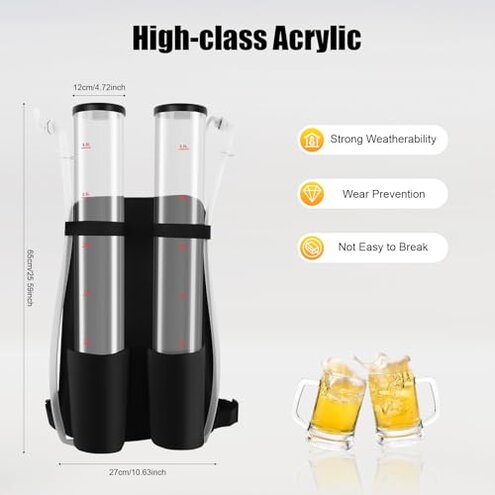
| Capacity | High-capacity: Two 3L tanks offer large volume but increase handling complexity. | Balanced: Most mid-range units use one tank under 4L for simpler handling. |
| Leak risk | Higher risk: Leaks and loose seals are a primary complaint appearing repeatedly. | Lower risk: Comparable models emphasize sealed fittings and tested taps. |
| Cleaning effort | Heavy upkeep: Disassembly and deep cleaning are commonly required after use. | Moderate upkeep: Many mid-range dispensers allow easier surface cleaning and access. |
| Comfort & balance | Unstable load: Weight and strap design make long wear uncomfortable and wobbly. | More ergonomic: Alternatives spread weight or use simpler carry options. |
| Regret trigger | Primary: Leak + hard cleaning together produce the strongest buyer regret. | Typical: Mid-range products usually present one manageable trade-off instead of both. |
Top failures
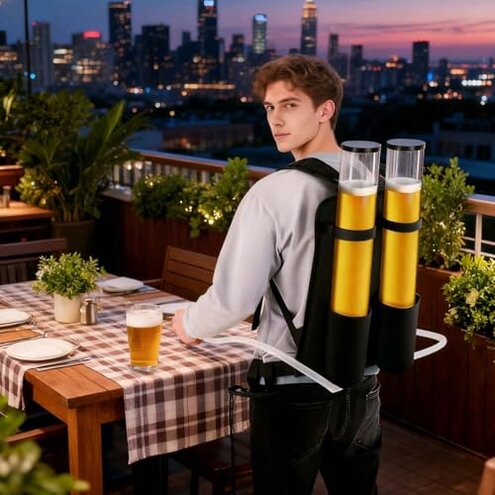
Why am I finding wet spots and sticky floors after first use?
Leak problem (primary issue): Many buyers report leaking from seals and hose connections during first setup and first pour.
When it shows up: Leaks commonly occur at first fill, after transport, and worsen during long sessions when tanks jostle.
Worse than normal: This is more disruptive than typical mid-range dispensers because two tanks double the failure points and increase cleanup time.
Why does pouring feel inconsistent or spray unexpectedly?
- Flow control pattern: Tap flow is a recurring complaint and appears repeatedly in buyer notes.
- Usage anchor: Problems show up during continuous pouring and when switching between the two tanks.
- Cause hint: Loose fittings and simple tap design are often blamed in user feedback.
- Impact: Inconsistent pours cause spills, messy shots, and unpredictable serving speed at parties.
- Fixability: Some buyers temporarily reduce flow by angling hoses, but that adds steps and slows service.
Why does cleaning become a weekend task instead of a quick rinse?
- Hidden requirement: Deep disassembly is commonly required to avoid mold and taste transfer after repeated use.
- Frequency tier: This is a secondary but persistent issue for regular users or those serving sugary drinks.
- Early signs: Cloudy hoses and lingering odors often appear after a few uses without full cleaning.
- Cleaning cause: Narrow hose runs and tight tank joints trap residue and need brushes or soak cycles.
- Time cost: Owners report cleaning taking significantly longer than typical single-tank dispensers.
- Category contrast: Most mid-range dispensers are easier to access and disinfect, so this model demands more upkeep.
- Attempted fixes: Buyers recommend boiling or bleach soaks, which carry extra steps and risk if done wrong.
Why does it feel heavy, unstable, or fragile during use?
- Balance issue: Straps and frame are reported as uncomfortable on prolonged wear and when tanks are full.
- When it worsens: Problems worsen during long events, walking crowds, or when tanks are partly filled and slosh.
- Fragility signal: Scratches and crack reports appear across several feedback types after transport.
- Edge-case pattern: This is less frequent than leaks but more frustrating when it occurs because repair is difficult.
- Impact on use: Reduced mobility, extra caution while moving, and occasional need to offload drinks to a stable cooler.
- Workaround: Users often carry backup containers or empty one tank to reduce sway, adding prep steps.
- Category contrast: Mid-range backpack dispensers usually offer better load distribution and more robust fittings.
- Hidden cost: Replacing cracked parts may require specialty pieces not included with the unit.
Illustrative excerpts (not real quotes)
Excerpt: "Tanks leaked at first fill and soaked the back of a table." — primary pattern
Excerpt: "Tap sprays unpredictably when I try to pour two shots quickly." — secondary pattern
Excerpt: "Cleaning the hoses took longer than I expected before the next event." — secondary pattern
Who should avoid this
- Those needing reliability: Avoid if you expect leak-free service for public events because leaks are a top complaint.
- Busy hosts: Avoid if you want low-maintenance gear; cleaning and upkeep exceed typical expectations.
- Long-wear servers: Avoid if you need comfortable, stable carry during long shifts or crowded venues.
Who this is actually good for
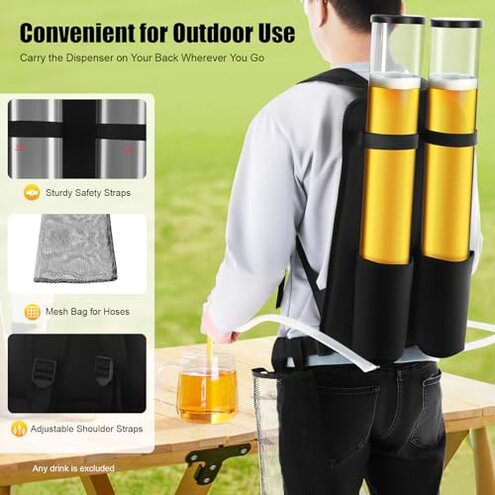
- Occasional party hosts: Good if you use it rarely and accept hand-cleaning and careful transport.
- Short event use: Suitable for single short sessions where you can monitor taps and avoid rough handling.
- DIY fixers: Works for users willing to modify seals, add clamps, or use extra cleaning tools to reduce issues.
Expectation vs reality
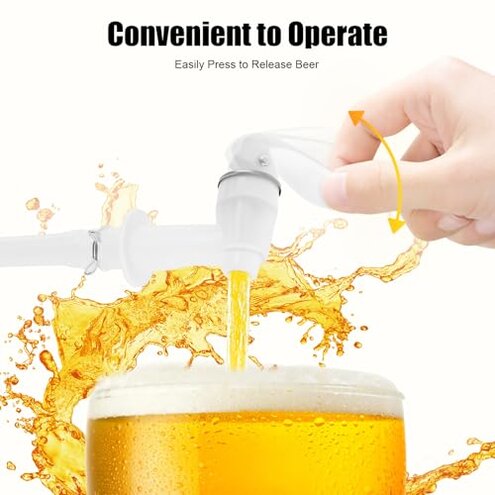
Expectation: Reasonable for this category is a portable dispenser that pours reliably and cleans easily.
Reality: This unit often produces leaks, inconsistent pouring, and heavier cleaning than is reasonable for mid-range options.
Why it matters: Multiple small failures combine into real regret when you host events or use it frequently.
Safer alternatives
- Choose sealed fittings: Pick models with tested compression fittings to neutralize the leak failure.
- Single-tank option: Consider one large tank to reduce failure points and simplify cleaning.
- Ergonomic carry: Look for padded, weight-distributing straps to avoid balance and comfort problems.
- Easy-disassembly: Favor units with removable hoses and wide openings for faster, safer cleaning.
The bottom line
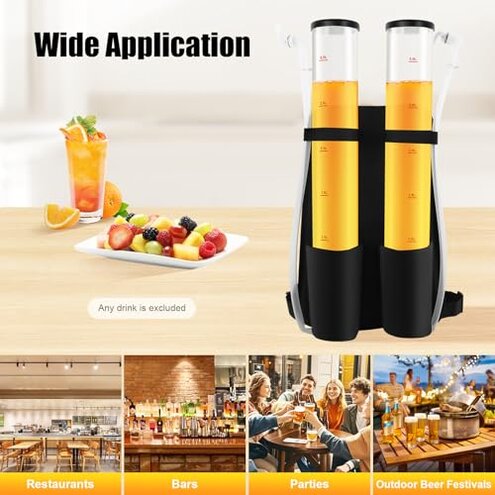
Main regret: The combination of leaks and hard-to-clean parts is the core buyer complaint that creates the strongest regret.
Why worse: Two tanks multiply risk points and increase upkeep compared with typical mid-range dispensers.
Verdict: Avoid this unit if you need reliable, low-maintenance beverage service for events without time for fixes.
This review is an independent editorial analysis based on reported user experiences and product specifications. NegReview.com does not sell products.