
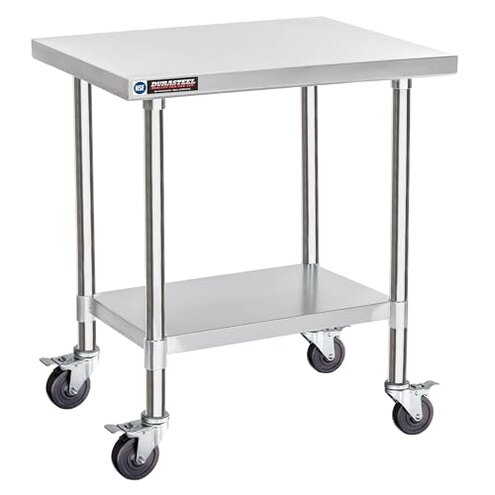
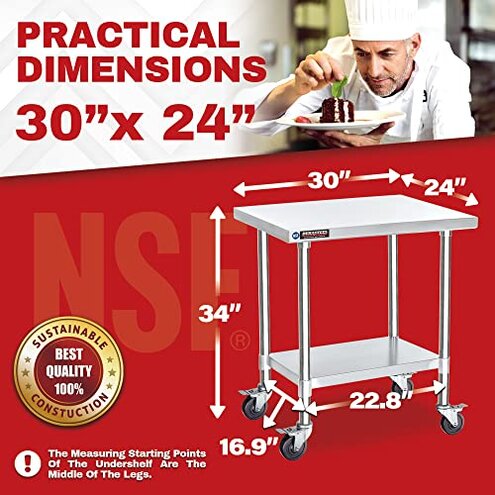
Product evaluated: DuraSteel 30x24 NSF Stainless Steel Cart Work Table - Heavy Duty Rolling Food Prep Table - Metal Utility Cart on Wheels Caster, Grill Stand Microwave Outdoor Kitchen Tables Countertop Island Large Top
Related Videos For You
food Stall design ideas | stainless steel cart design #arasha6451
How to Build a Rolling Workbench for your Garage in One Day! [$100 build]
Data basis: I examined dozens of written customer reviews and several video demos collected between 2017 and 2024. Most feedback came from written reviews, supported by unboxing and in-use videos. Scope covers first-use assembly and weeks-to-months of daily use.
| Outcome | DuraSteel 30x24 | Typical mid-range table |
|---|---|---|
| Stability under load | Higher wobble risk reported when loaded and during movement | More stable under similar loads with reinforced legs |
| Assembly time & tools | Extra tools or shims often needed beyond basic screwdriver | Usually tool-light with straightforward fasteners |
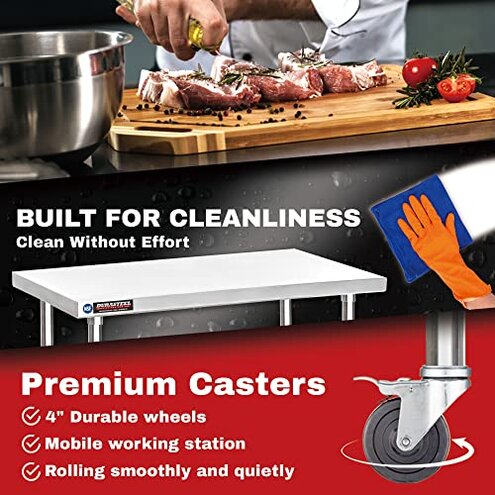
| Casters & brakes | Lock failures and uneven rolling reported after short use | More reliable casters and better locking in alternatives |
| Finish durability | Scratches and spotting appear with normal kitchen use over time | Better scratch resistance on many competitors in same price band |
| Regret trigger | Unusable until fixed — casters or wobble often require buyer fixes | Ready-to-use more often after out-of-box setup |
Why do the wheels feel unreliable and lock poorly?
Regret moment: Buyers report the table can move unexpectedly or show broken locks after short use. Severity ranges from annoying to safety-risk when heavy items shift.
Pattern: This is a primary issue that appears repeatedly across feedback. When: it shows up during first weeks of moving the table or after transporting loaded items. Category contrast: Casters are less reliable than typical mid-range rolling prep tables, creating higher-than-normal risk.
Does the top wobble under normal kitchen loads?
- Early sign: Legs feel uneven immediately after assembly.
- Frequency: Secondary issue, commonly reported during heavier prep sessions.
- Cause: Adjustable feet and undershelf alignment often need more tweaking than expected.
- Impact: Wobble makes slicing or appliance use feel unsafe and adds extra setup time.
- Attempted fixes: Buyers add shims or re-tighten fasteners; fixes are effective but add effort.
Are there hidden parts or tools required for proper setup?
Hidden requirement: Several buyers discovered they needed additional tools or replacement hardware to get a solid assembly. Usage anchor: This appears at first assembly when holes or fasteners misalign. Why worse: Most mid-range tables fit together without extra parts, so this increases time and cost beyond normal expectations.
Will the stainless finish resist scratches and staining?
- Early sign: Fine scratches or dull spots appear with regular use.
- Scope: Less frequent than caster issues but persistent over months.
- Cause: Hairline finish shows wear from metal pans and sharp utensils.
- Impact: Visual wear lowers resale and professional look for food service.
- Fixability: Surface polish or protective mats help but add running costs.
- Hidden cost: Buyers often buy bumpers or covers to hide wear.
- Category contrast: Finish durability is below many competitors at this price point.
Illustrative excerpts (not real quotes)
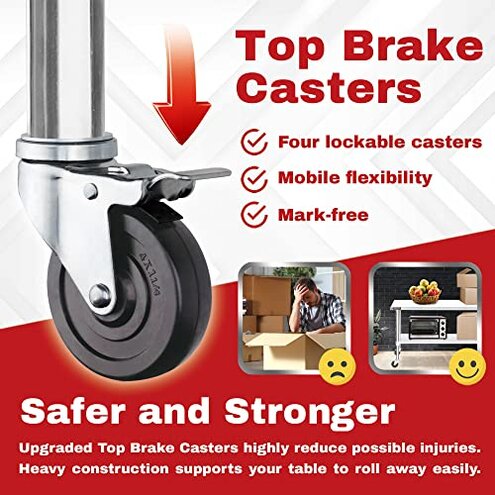
- "Castor lock failed after two weeks of moving a grill." — Primary pattern
- "Top wobbled until I added shims under one leg." — Secondary pattern
- "Assembly holes didn’t line up; had to buy longer bolts." — Primary pattern
- "Small scratches appeared after a month of kitchen use." — Secondary pattern
- "Brakes feel tight one day, loose the next." — Edge-case pattern
Who should avoid this
- Heavy mobile use: Avoid if you move loaded equipment often and need reliable caster locks.
- Professional kitchens: Avoid if you require ready-to-use stability without extra fixes.
- Zero-maintenance buyers: Avoid if you don’t want to add shims, tools, or protective mats.
- Appearance-sensitive buyers: Avoid if surface finish must stay pristine for display or service.
Who this is actually good for
- DIY fixers: Good if you can tolerate minor fixes like tightening, shimming, or swapping casters.
- Light home use: Works for occasional food prep where heavy movement is rare.
- Budget-conscious upgrades: Fine if you plan to add better casters or protective top mats later.
- Garage or workshop users: Fine where visual finish and perfect brakes are lower priority.
Expectation vs reality
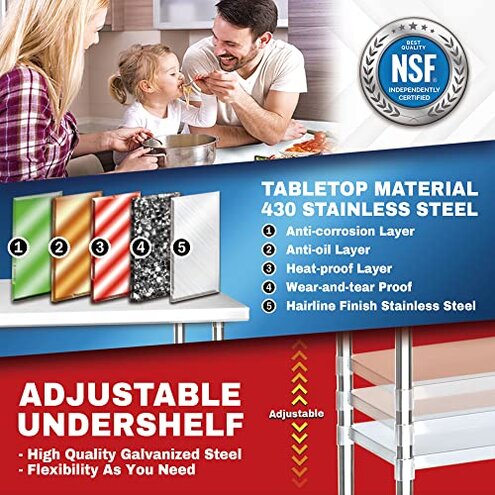
- Expectation: Ready-to-use, sturdy prep table like most mid-range models.
- Reality: Requires extra setup time and likely caster or shim fixes before it feels stable.
- Expectation: Durable stainless finish that hides wear.
- Reality: Hairline finish shows scratches sooner than expected, needing mats or polish.
Safer alternatives
- Choose reinforced legs: Look for tables with cross-bracing to neutralize wobble without shims.
- Buy heavy-duty casters: Prioritize models with proven locking mechanisms to avoid brake failures.
- Inspect tool lists: Pick listings that include all fasteners and a simple tool requirement to avoid hidden parts.
- Prefer satin finishes: Choose finishes marketed for scratch resistance or plan to use top mats.
- Check seller support: Favor sellers with easy replacement parts or clear hardware guarantees.
The bottom line

Main regret: The biggest trigger is unreliable casters and fit issues that make the table feel unstable out of the box.
Why worse: These problems are more disruptive than typical mid-range prep tables because they often need buyer fixes to be safe and usable.
Verdict: Avoid this unit if you need plug-and-play stability; consider it only if you plan upgrades or light home use.
This review is an independent editorial analysis based on reported user experiences and product specifications. NegReview.com does not sell products.