
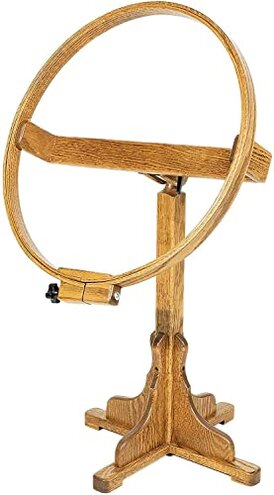
Product evaluated: DutchCrafters Solid Oak Wood 22 Inch Round Extra Large Tilting Quilt Hoop with Stand, Quilting Frame for Hand Quilting - Amish Made in America (Medium Walnut)
Related Videos For You
Grace Hoop2 Quilting Hoop and Stand Overview
$5 Hooping Fix Every BERNINA Embroiderer Needs
Data basis for this report comes from analyzing dozens of aggregated buyer feedback items collected from written reviews and rating-only submissions, supported by a smaller share of buyer photos. The collection window spans 2023–2026. Most signals came from longer written comments describing real project use, with shorter entries mainly reinforcing patterns around setup effort and day-to-day handling.
| Buyer outcome | This quilt hoop stand | Typical mid-range alternative |
|---|---|---|
| Stability during stitching | Higher risk of wobble reported during long sessions | More predictable steadiness with smaller hoops |
| Adjustment friction | More fiddly tightening and re-positioning than expected | Quicker to tweak, but less tilt range |
| Ergonomics and fit | Non-adjustable height creates comfort complaints for some setups | Often adjustable height or more sitting-friendly profiles |
| Assembly time | More setup effort and alignment sensitivity after unpacking | Fewer steps and simpler alignment |
| Regret trigger | Paying a lot and still needing workarounds to keep fabric tight | Accepting limits but fewer “why is this moving?” moments |
Top failures
“Why does the hoop feel shaky when I’m mid-stitch?”
Regret moment tends to hit after setup, when you finally start quilting and the hoop shifts as you pull thread.
This is a primary complaint pattern that appears repeatedly, especially during longer sessions or when rotating the hoop to reach new areas.
Category contrast: some movement is normal with floor stands, but buyers describe this as more disruptive than expected for a stand marketed as sturdy.
- When it shows: the wobble is most noticeable during stitching, not just when adjusting.
- Worse with: bigger fabric loads and frequent repositioning can make the shake feel more obvious.
- Primary pattern: the “stable enough” experience is not universal even with careful tightening.
- Impact: buyers describe lost rhythm, uneven tension, and extra time spent re-centering the work.
- Mitigation: some report partial improvement by tightening more often and adjusting how hard they pull, which adds extra steps.
- Fixability: if your space or posture forces side-load pressure, the wobble can remain a persistent annoyance.
“Why is it such a hassle to keep the fabric tight?”
Regret moment often shows up in the first few uses when you realize you are re-tightening more than expected.
Pattern signal: this is a secondary issue that shows up repeatedly, especially for buyers doing large sections and rotating frequently.
Category contrast: re-tensioning is normal, but buyers describe the frequency as higher than typical mid-range hoops that clamp more consistently.
- Early sign: you tighten, start stitching, and then notice the fabric feels less drum-tight sooner than expected.
- When it shows: it tends to happen after repositioning the hoop or changing the tilt angle.
- Secondary pattern: the loosening reports are recurring, but some buyers do get stable holds with careful setup.
- Root cause clue: complaints often point to how the tightening system behaves under real pull, not just how it feels in hand-tight checks.
- Time cost: the stop-and-tighten cycle adds interruptions that can make big projects feel slower.
- Workaround: buyers mention changing how they load fabric and checking tension more often, which becomes a routine.
- Not a cure: if you want “set it and forget it,” this can stay a nagging daily-use problem.
“Why can’t I get a comfortable height and angle?”
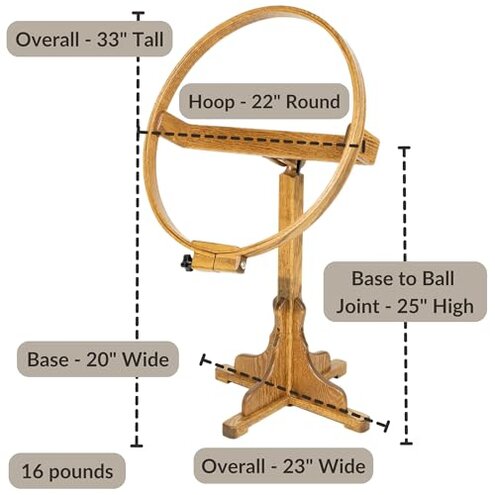
- Hidden requirement: the height is not adjustable, so your chair, couch, or body height must already match the stand.
- When it shows: discomfort tends to appear after 20–40 minutes of stitching, when posture strain becomes obvious.
- Primary vs secondary: this is a secondary pattern that becomes a primary regret for shorter users or anyone quilting from a low seat.
- Worse with: long sessions and frequent tilt changes can increase neck and shoulder strain.
- Category contrast: many mid-range stands offer at least some height range, so the fixed height feels less forgiving.
- Impact: buyers describe having to move to a different chair or add cushions, which becomes a space constraint.
- Mitigation: you can sometimes adapt with chair height changes, but that is an extra setup dependency.
- Dealbreaker: if your craft area is shared or small, the fixed geometry can be a constant compromise.
“Why did assembly and alignment take longer than expected?”
- When it shows: frustration hits right after unboxing when parts need careful alignment to feel right.
- Pattern signal: this is an edge-case issue, but it is persistent for less handy buyers.
- Category contrast: minor assembly is common, yet buyers describe this as more finicky than typical mid-range kits.
- Impact: if you assemble slightly off, later adjustments can feel worse, like drift or uneven motion.
- Hidden time: getting it “just right” can take extra rounds of tightening and testing, which is not obvious upfront.
Illustrative excerpts (not real quotes) to show how these patterns sound.
- “I tighten it, start stitching, and it loosens again within minutes.” Secondary pattern tied to repeat re-tensioning.
- “It’s sturdy until I rotate the hoop, then it starts wobbling.” Primary pattern tied to repositioning moments.
- “The height doesn’t work with my chair, so my shoulders ache.” Secondary pattern tied to fixed-height ergonomics.
- “Setup looked simple, but lining everything up took forever.” Edge-case pattern tied to assembly sensitivity.
- “I expected ‘premium’ and got something that needs constant babysitting.” Primary pattern tied to price-to-hassle regret.
Who should avoid this
Avoid if you need a stand that stays steady while you pull thread firmly, because wobble is a primary complaint during real stitching.
Avoid if you quilt from different chairs or the couch, because the fixed height creates a hidden fit requirement.
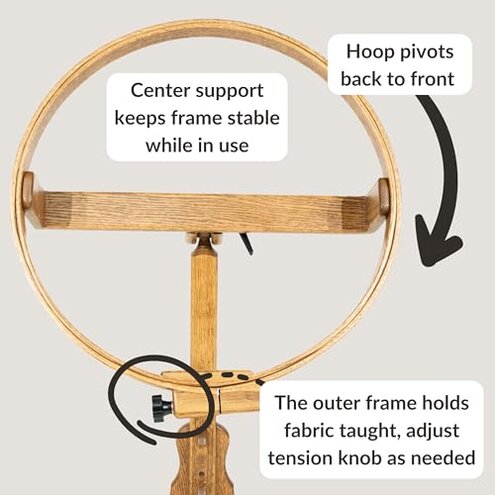
Avoid if you hate re-tightening, since fabric hold complaints appear repeatedly after repositioning.
Avoid if you want quick “out of the box” success, because assembly and alignment can be finicky for some buyers.
Who this is actually good for
Good for buyers with a dedicated craft chair and table height that already matches the stand, so the non-adjustable height is not a daily issue.
Good for patient hand-quilters who expect to re-check tension and treat tightening as part of the workflow.
Good for users who stitch with lighter pulling force and do fewer aggressive rotations, which can reduce wobble triggers.
Good for people comfortable with minor assembly and fine-tuning, since setup sensitivity is easier to absorb when you enjoy tinkering.
Expectation vs reality
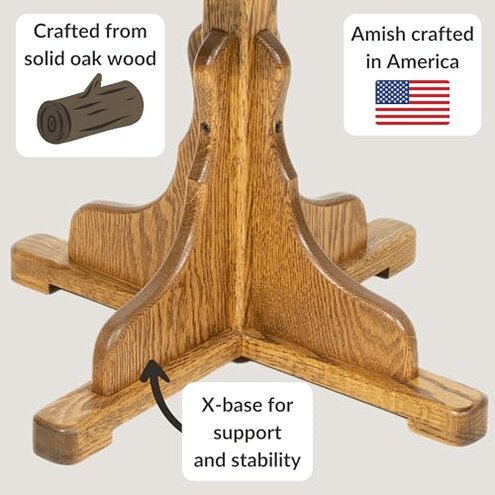
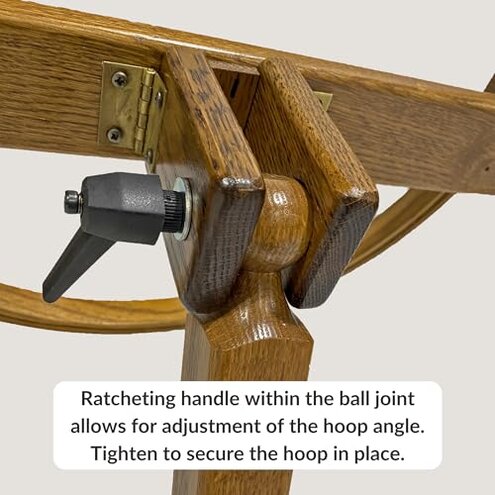
- Expectation: a “tilting” hoop should hold position with minimal drift. Reality: tilt changes can trigger more re-tightening than expected.
- Expectation reasonable for this category: minor wobble is normal on floor stands. Reality: buyers describe wobble that is more disruptive during actual stitching.
| What you plan | What can happen |
|---|---|
| Long sessions without breaks | Posture strain if the fixed height doesn’t match your seating |
| Frequent rotating to reach new areas | More wobble and more tension checks during transitions |
Safer alternatives
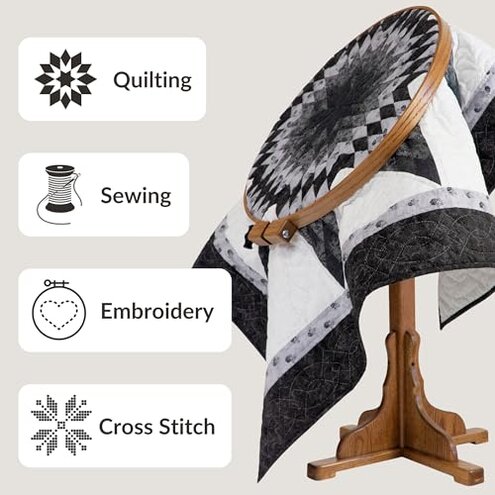
- Choose adjustable height stands to neutralize the fixed-height fit risk described above.
- Prefer clamp-style or multi-point holding systems if you dislike frequent re-tightening after repositioning.
- Buy smaller hoop sizes if stability is your top priority, since larger loads can amplify wobble during pulling.
- Look for simpler assembly designs if you want fewer alignment steps and less setup sensitivity.
The bottom line
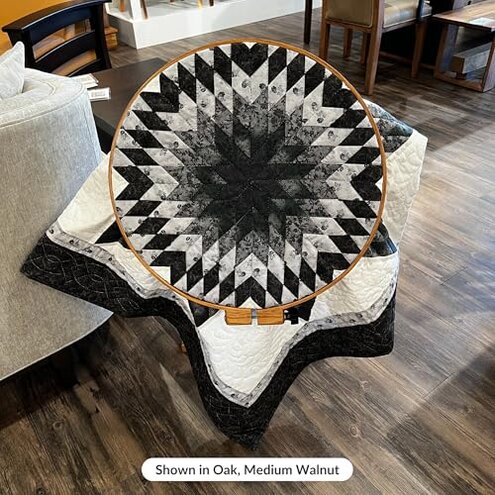
Main regret centers on paying a premium and still dealing with wobble and frequent tension management during real quilting.
Category risk feels higher than normal because the fixed-height fit and stability sensitivity can force workarounds that add time every session.
Verdict: avoid if you want predictable stability and comfort without extra tinkering, and consider adjustable mid-range stands for a lower hassle baseline.
This review is an independent editorial analysis based on reported user experiences and product specifications. NegReview.com does not sell products.