
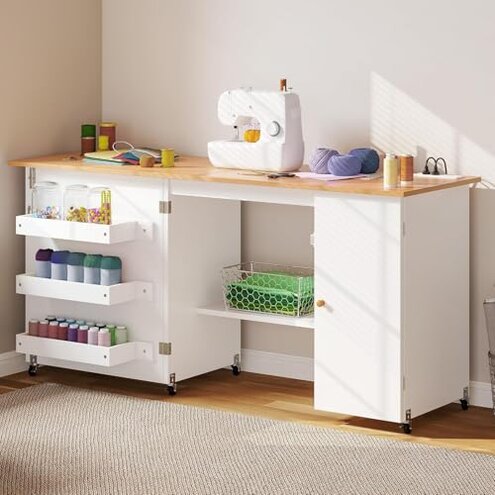
Product evaluated: DWVO Folding Sewing Table w/Charging Station, Sewing Table with Storage, Multi-Craft Desk with Lockable Casters, Magnetic Doors, Hidden Storage
Related Videos For You
How to Install the Folding Sewing Table Storage Shelves and Lockable Casters | HW66623 #costway #how
Sewing Table Safety Check
Data basis: This report summarizes findings from dozens of buyer-written reviews, short video demonstrations, and product Q&A collected between Nov 2025 and Feb 2026, with most feedback coming from written reviews supported by video demos.
| Outcome | DWVO | Typical mid-range table |
|---|---|---|
| Stability under load | Higher risk — wobble reported during sewing and leaning. | Lower risk — most mid-range tables remain steady for regular sewing. |
| Assembly time & clarity | Longer setup — unclear instructions and extra steps commonly reported. | Typical — clearer manuals and fewer missing parts complaints. |
| Charging station reliability | Inconsistent — occasional power issues or weak ports reported. | Variable — some tables have integrated power, usually reliable. |
| Storage usability | Mixed — shelves and magnetic doors praised but alignment problems noted. | Better engineered — smoother drawer/cabinet fit on many alternatives. |
| Regret trigger | Immediate — wobble or power faults during first uses often led to returns. | Less immediate — issues usually surface after longer use. |
Top failures
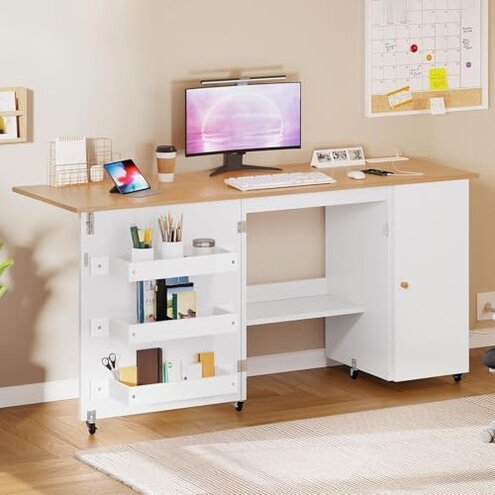
Why does the table wobble and feel unsafe when I sew?
Regret moment: Buyers report the table wobbles under sewing machines or when leaning, creating a tense first-use experience.
Pattern: This is a primary complaint that appears repeatedly across written and video feedback.
Usage context: The issue shows up during first use and worsens with long sewing sessions or when working with heavier machines.
Category contrast: Stability is worse than expected for mid-range sewing tables, making setup and sewing more stressful than typical alternatives.
Is assembly going to be a long, frustrating chore?
- Confusing instructions: Many buyers report unclear labels and steps, which lengthen assembly time.
- Missing tools: The product commonly requires extra tools or hardware not in the box, a hidden requirement for buyers.
- Two-person need: Several buyers found two people are helpful, increasing setup effort.
- Category note: Assembly difficulty is more than average compared with mid-range options that include full tool kits or clearer diagrams.
Will the charging station reliably power my devices and machine accessories?
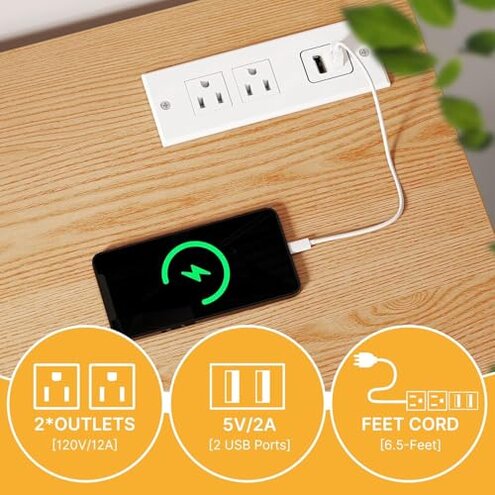
- Intermittent power: Reports of unstable USB or AC output appear repeatedly in user feedback.
- First-use failures: Problems often show up on first use or within a few weeks of daily use.
- Undersized ports: Some buyers describe weak charging performance under load, especially when multiple ports are used.
- Repair burden: Fixes typically require contacting support or returning the unit, adding extra time and hassle.
- Secondary pattern: This is a secondary issue — less frequent than wobble but more frustrating when it occurs.
- Contrast: Charging reliability is less consistent than many mid-range integrated stations, which are usually plug-and-play.
Are the storage doors, shelves, and casters likely to cause trouble?
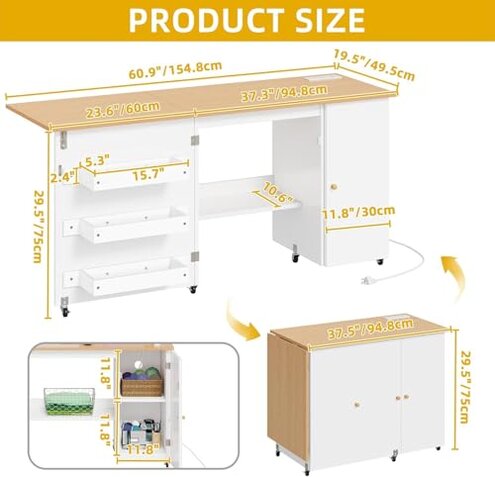
- Loose alignment: Magnetic doors can sit off-kilter after assembly, affecting cabinet usability.
- Caster problems: Wheels are reported to track poorly or lock unpredictably during moves.
- Wear signs: After repeated use, buyers note squeaks or minor loosening at joints.
- Hidden requirement: Some owners add extra bracing or tighten fasteners regularly to maintain fit.
- Edge-case faults: Few users report cabinet door magnets failing entirely, a less common but real problem.
- Impact: These issues add ongoing maintenance beyond what many mid-range buyers expect.
- Fixability: Most fixes are DIY but require time and basic tools, increasing ownership cost.
Illustrative excerpts
Excerpt: "Table shudders when my sewing machine runs, felt unsafe to sew." — primary pattern.
Excerpt: "Instructions skipped a bolt and no allen key included, wasted time." — secondary pattern.
Excerpt: "USB port stopped charging one phone after two weeks of daily use." — secondary pattern.
Excerpt: "Cabinet door misaligned after moving the table once." — edge-case pattern.
Who should avoid this
- Heavy-machine users: Avoid if you need a rock-solid workspace for heavy sewing machines due to the wobble risk.
- Low-effort assemblers: Avoid if you want an out-of-box setup without extra tools or a second person because assembly is more demanding.
- Reliable power users: Avoid if you depend on the integrated charging station for daily charging of multiple devices because power is inconsistent.
Who this is actually good for
- Light crafters: Good for casual sewing or craft projects that do not stress the table with heavy machines; they can tolerate some wobble.
- DIY improvers: Good for buyers comfortable with basic fixes who will reinforce joints or retighten hardware to handle alignment issues.
- Space-limited users: Good if you need compact storage and mobility and can accept occasional maintenance on casters and doors.
Expectation vs reality
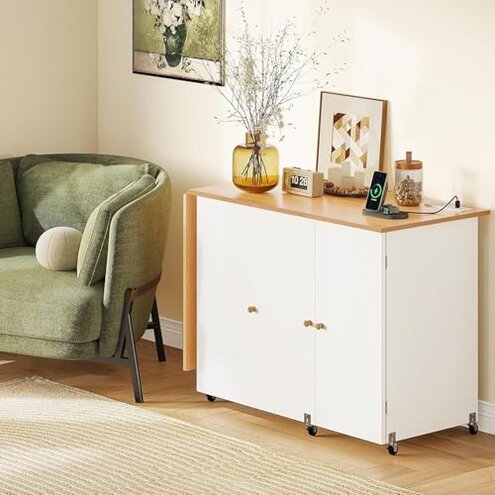
Expectation: A mid-range folding sewing table should be stable enough for regular sewing machines.
Reality: The DWVO model shows a higher wobble frequency during sewing, exceeding typical category tolerance.
Expectation: Integrated charging will be plug-and-play and reliable.
Reality: Charging performance is inconsistent for some buyers, adding return risk and downtime.
Safer alternatives
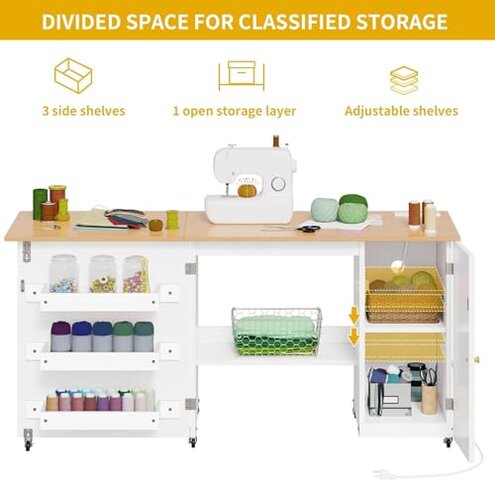
- Look for reinforced frames: Choose tables with explicit reinforced legs or cross-bracing to reduce wobble.
- Prefer full tool kits: Pick models that include a complete assembly kit and clearer instructions to avoid hidden tools needs.
- Test power first: Check return policy and test the integrated charging on arrival before heavy use.
- Check caster design: Favor tables with lockable, heavy-duty casters that reviewers praise for smooth movement.
The bottom line
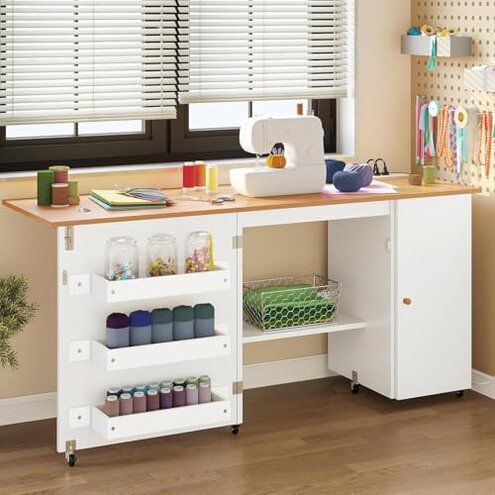
Main regret: The combination of wobble and sporadic charging faults is the most common reason buyers return this table.
Why worse: These issues surface early and are more disruptive than typical mid-range alternatives, adding setup time and risk.
Verdict: Avoid this model if you need a dependable, ready-to-use sewing station; consider sturdier, better-documented alternatives instead.
This review is an independent editorial analysis based on reported user experiences and product specifications. NegReview.com does not sell products.