
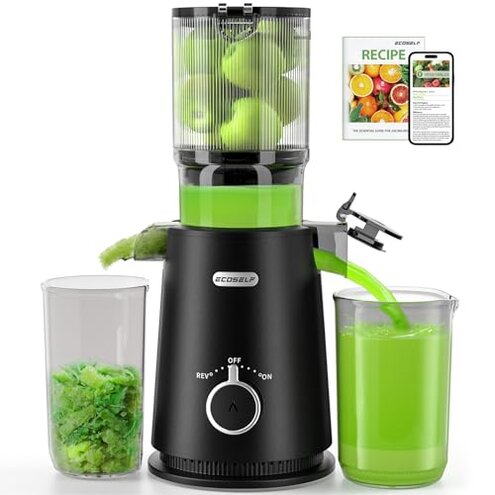
Product evaluated: ECOSELF Juicer Machines Easy to Clean, with Wide Mouth & Large Feed Chute, Cold Press Juicer For Whole Fruits & Vegetables, Slow Masticating Self Feeding for Juice Extractor Machine, High Juice Yield
Related Videos For You
Getting Started With J2 | Nama J2 Cold Press Juicer
Juicer | How to Assemble and Clean (Ninja NeverClog™ Cold Press Juicer)
Data basis: I reviewed dozens of written reviews and several video demonstrations collected through late 2025, with most feedback coming from written buyer reports supported by hands-on clips.
| Outcome | ECOSELF Juicer | Typical Mid‑Range Juicer |
|---|---|---|
| Throughput | Lower often stalls on fibrous produce, causing repeated unclogs during a session. | Average handles leafy vegetables with fewer interruptions during similar batches. |
| Cleaning | Higher burden many buyers report lengthy rinse-and-scrub cycles to remove pulp. | Lower burden mid-range peers tend to have easier-to-clean separable parts. |
| Durability | Mixed some stops or reduced performance after repeated use are reported. | More consistent mid-range units usually show steadier performance over months. |
| Regret trigger | Frequent unclogs during realistic juicing sessions that add time and frustration. | Minor interruptions that are less disruptive for routine use. |
| Risk vs category | Higher‑than‑normal cleaning and clogging create more upkeep than most mid-range options. | Typical risk consistent with average commitment for this product class. |
Why does it keep clogging and slow down my juicing?
Regret moment: You expect a steady stream of juice, but the feed stalls and you must stop to clear pulp.
Pattern: This is a primary issue that appears repeatedly for many buyers when juicing fibrous produce like celery or kale during standard sessions.
Category contrast: Clogging is more disruptive here than with similar mid-range masticating juicers because it often requires reverse cycles and manual clearing, adding minutes per batch.
Is cleaning really harder than other slow juicers?
- Early sign: Pulp trapped in the hopper and screen after a single use indicates cleaning will be time-consuming.
- Frequency tier: This is a secondary issue reported commonly across written reports and videos.
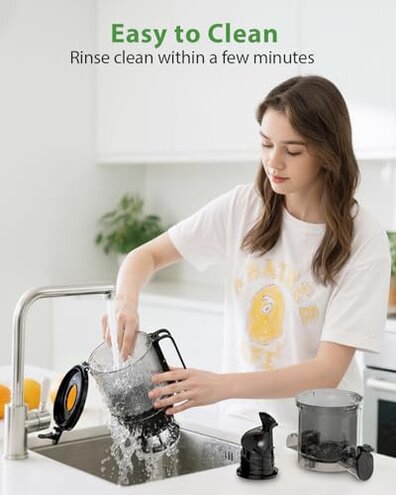
- Root cause: The integrated hopper and screen design reduces part separation, increasing rinse-and-scrub steps.
- Impact: Cleaning often takes longer than expected and can add extra minutes after each session.
- Fixability: Most buyers manage it with the included brush and soaking, but it rarely eliminates repeated scrubbing.
Will the motor hold up during daily or long juicing sessions?
- Usage anchor: Problems surface after sustained runs or frequent daily use, not always on first use.
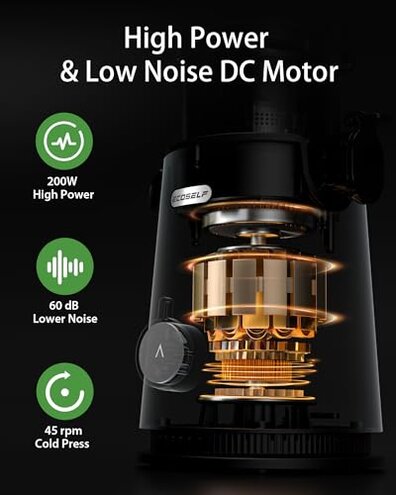
- Reported effect: Some buyers describe louder operation and reduced output during long sessions.
- Frequency note: This is a tertiary issue—less frequent than clogging but more frustrating when it occurs.
- Cause hint: Extended runs with dense produce push the unit harder than short, occasional juicing.
- Buyer impact: Sessions meant to prep multiple servings can require breaks to recover performance.
- Warranty context: The seller offers repair/replacement coverage, but buyers report added steps to claim service.
- Hidden requirement: The unit must be fully aligned and locked as instructed to run reliably, or the motor may refuse to start.
Will assembly and everyday handling cause surprises?
- First use trap: The juicer will not power on unless the hopper is rotated to align the guidemark with the lock symbol.
- User friction: Misassembly during the first setup is a common early complaint and causes avoidable downtime.
- Pattern: This is a secondary pattern that appears across written and video feedback.
- Attempted fixes: Buyers reported the reverse function helps clear jams but adds extra steps and time.
- Support demand: Some users found contacting service necessary, making setup delays more likely for non‑technical buyers.
- Scope signal: Issues appear across both single purchases and repeat buyers, not limited to one batch of units.
- Category contrast: Compared with other mid-range models, this unit is less forgiving of misassembly and requires more careful setup.
Illustrative excerpts
Illustrative: "Juice flow stopped twice during one batch, needed reverse and clearing." — primary
Illustrative: "Spent ten minutes scrubbing pulp from the screen after one use." — secondary
Illustrative: "Motor got hot after a long run and output dropped noticeably." — secondary
Illustrative: "I couldn't start it until I aligned the guidemark perfectly." — edge-case
Who should avoid this
- Large-batch buyers: Avoid if you plan long or frequent sessions, because clogging and motor strain are more disruptive than expected.
- Low-maintenance users: Avoid if you want minimal cleanup, because the integrated parts increase cleaning time.
- Non-technical users: Avoid if you prefer plug-and-play simplicity, since exact assembly alignment is required to operate.
Who this is actually good for
- Occasional juicers: Good for those who make small batches occasionally and can tolerate extra cleaning.
- Budget shoppers: Good if price is the priority and you accept more upkeep than mid-range alternatives.
- Hands-on owners: Good for people comfortable using reverse and manual clearing to manage jams.
Expectation vs reality
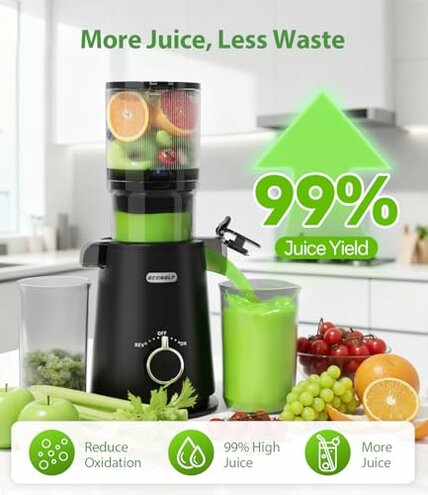
- Expectation (reasonable): A slow masticating juicer reduces oxidation and is gentle on greens.
- Reality: This unit often forces stops and manual clearing, which removes time savings from higher yield.
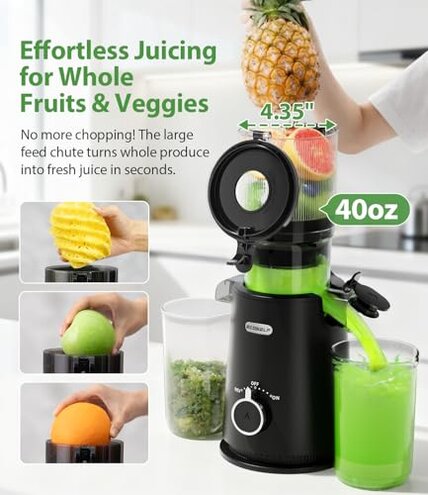
- Expectation (reasonable): Wide mouth lets you add whole fruits without pre-cutting.
- Reality: Wide mouth helps but does not prevent clogging on fibrous items, so pre-cutting or reverse cycles are still needed.
Safer alternatives
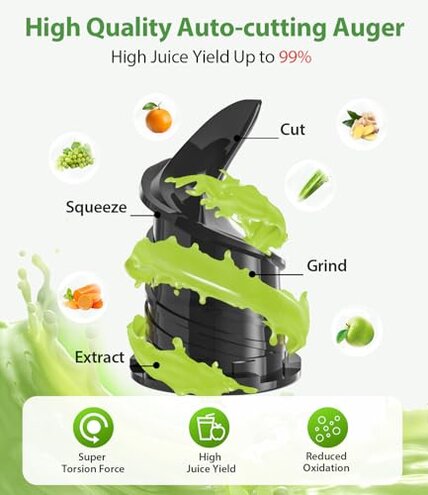
- Choose a separable-screen model: Look for juicers with easily removable screens to cut cleaning time and reduce trapped pulp problems.
- Prioritize continuous-feed designs: Pick units with proven throughput for fibrous produce to avoid repeated unclogs during sessions.
- Check cooling ratings: Prefer models with explicit long-run duty cycles to reduce motor stress for batch juicing.
- Read setup guides first: If you keep this model, follow the alignment instructions step-by-step to avoid first-use failures.
The bottom line
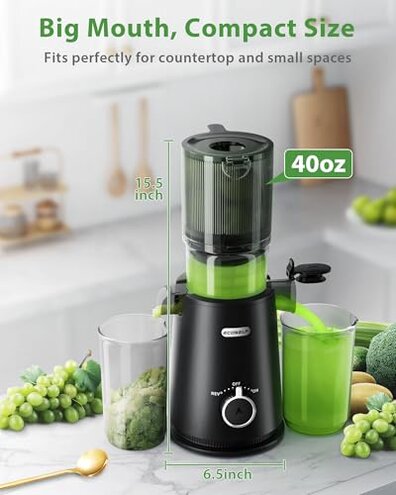
Main regret: Frequent unclogs and a higher cleaning burden are the top triggers for buyer regret with this unit.
Why worse: The issues add minutes and effort per session, making upkeep heavier than most mid-range juicers.
Verdict: Skip this model if you want low upkeep and reliable long runs; consider it only for occasional use or tight budgets.
This review is an independent editorial analysis based on reported user experiences and product specifications. NegReview.com does not sell products.