
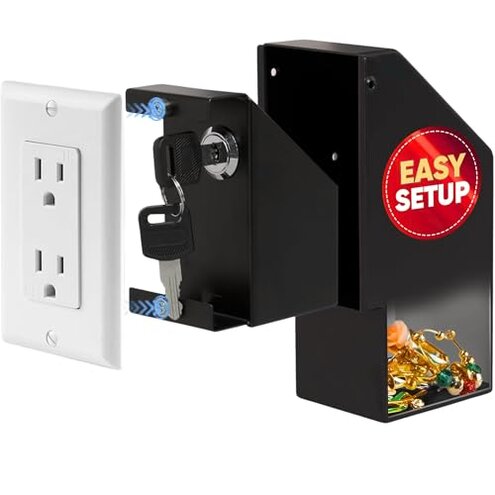
Product evaluated: Elder Welder® Electrical Outlet Hidden Wall Safe | 100% Real Wall Plate Included | Easy to Install | Hidden Safe for Money | Wall Safes Between Studs | Secret Storage | Invisible Safe
Related Videos For You
Where to Hide a Safe - Best & Worst Places to Hide a Safe in Your House
Install a Hidden Wall Safe
Data basis: Dozens of written reviews and several video demonstrations were reviewed between 2021 and Jan 2026. Most feedback came from buyer-written comments, supported by unboxing and setup videos. Source mix leans heavily on written reports with some filmed installation checks.
| Outcome | Elder Welder | Typical mid-range alternative |
|---|---|---|
| Installation ease | Tool need: Often requires drywall cutting and extra tools beyond simple swapping. | Tool need: Usually fits standard boxes with minimal cutting or hardware. |
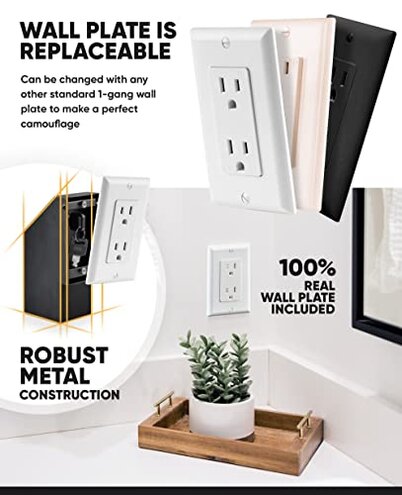
| Visual stealth | Mismatch risk: Plate color/fit reportedly draws attention more often than expected. | Match risk: Mid-range units typically blend with common outlet finishes. |
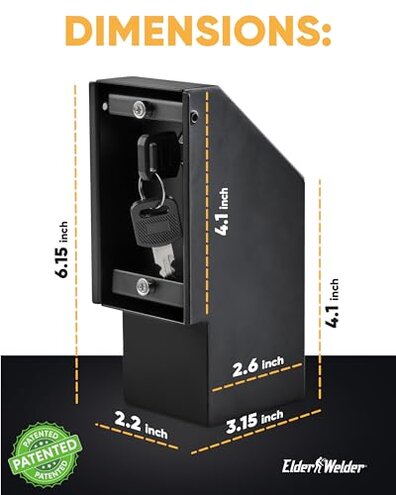
| Internal capacity | Small volume: 30 cubic inches limits what you can store securely. | Medium volume: Alternatives often offer larger cavities or modular layouts. |
| Durability | Fragility reports: Some buyers reported loose latches or thin seams after use. | Sturdier build: Typical mid-range options emphasize firmer closures and thicker plates. |
| Regret trigger | High: Fit and stealth failures lead to buyer regret sooner than usual. | Lower: Mid-range regret often limited to minor finish differences. |
Top failures
Will it actually fit behind my outlet and between studs?
Regret moment: Buyers report discovering the unit is too deep or mis-sized during the first install attempt. Severity is high because it stops the product from being used at all.
Pattern: This is a primary issue seen repeatedly in installation reports. Usage anchor: Appears during the first fit check and worsens when walls have non-standard stud spacing.
Category contrast: More disruptive than typical outlet diversions because many mid-range units allow small adjustments; this product often needs extra drywall work or different tools.
Does the plate look like a normal outlet or stand out?
- Early sign: Plate color or finish mismatch visible the moment you compare to nearby outlets.
- Frequency tier: This is a common complaint across written feedback and videos.
- Cause: Plate edges and screw placement can differ from standard plates, making it noticeable.
- Impact: The intended concealment is reduced, increasing detection risk by curious visitors.
- Fix attempts: Buyers report painting or swapping plates, which adds extra time and cost.
Will I actually be able to store what I need inside?
- Capacity limit: The 30 cubic inch cavity is small compared with what many buyers expected for a wall safe.
- Usage anchor: Problem appears when trying to store larger items like passports, thick wallets, or multiple bundles of cash.
- Frequency tier: This is a primary constraint mentioned in most sizing complaints.
- Impact: Buyers often need a second storage location, negating the secrecy benefit.
- Workaround: Some fold or remove items to force-fit them, which raises wear and time costs.
- Category contrast: Worse than many mid-range options that offer modular or deeper cavities for real valuables.
Is installation truly simple, or are there hidden steps and missing hardware?
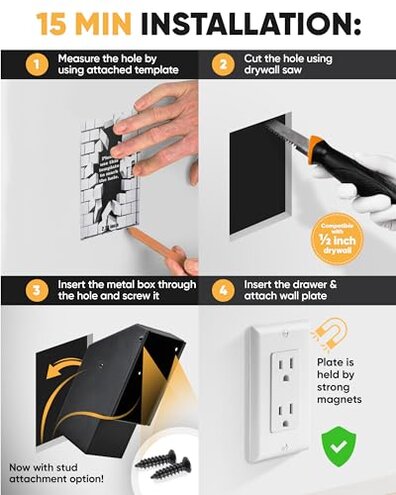
- Hidden requirement: Several buyers report needing to cut drywall or buy extra mounting screws and spacers.
- When it shows up: This appears during first installation and when repositioning the unit later.
- Frequency tier: This is a secondary pattern but persistent enough to frustrate DIY buyers.
- Impact: Adds unexpected time, tools, and skill requirements for a product sold as "easy" to install.
- Attempts: Buyers try to reuse old outlet boxes or make custom brackets; results vary.
- Fixability: Fix requires extra parts or professional help, increasing total cost.
- Category contrast: More installation friction than typical plug-in diversion safes and some mid-range recessed models.
Will the door or latch last under normal use?
- Early sign: Users notice loose latch movement after repeated opening and closing.
- Usage anchor: Problem becomes visible after the first few weeks of daily access.
- Frequency tier: This is a secondary durability complaint in several reports.
- Cause: Thin seams and light internal parts are cited as wear points.
- Impact: A floppy door reduces stealth and can lead to failure when relying on it for safe storage.
- Attempts: Some buyers reinforce with tape or glue, which is a temporary and imperfect fix.
- Category contrast: Less robust than many mid-range safes that use firmer closure systems.
Illustrative excerpts (not actual quotes)
Excerpt 1: "The box was too deep; I had to cut the drywall to fit it." — Primary pattern
Excerpt 2: "The plate color didn't match my other outlets and stood out." — Primary pattern
Excerpt 3: "Couldn't fit my passport flat, had to fold it." — Secondary pattern
Excerpt 4: "Latch feels loose after a few weeks of opening." — Secondary pattern
Who should avoid this
- Buyers needing larger storage: If you want to store passports, multiple wallets, or bigger items, this model's small capacity will frustrate you.
- Non-DIY users: If you cannot cut drywall or use extra tools, avoid this due to the hidden installation steps.
- Users needing perfect camouflage: If you require an invisible outlet, the plate mismatch risk is unacceptable.
Who this is actually good for
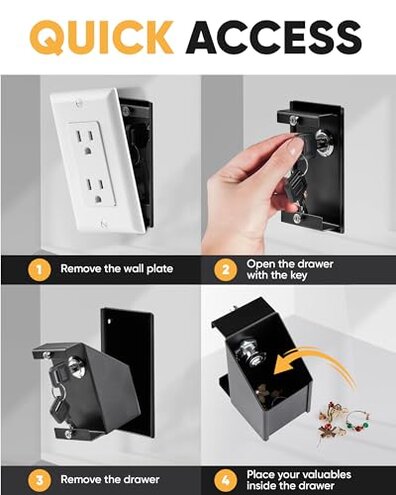
- Minimal item stasher: Good for buyers who only need to hide a few small items and accept the 30 cu in limit.
- Handy DIYers: Works for people comfortable cutting drywall and sourcing small hardware who accept the installation trade-off.
- Budget concealment: Useful for those prioritizing low-cost diversion over long-term durability or perfect stealth.
Expectation vs reality
- Expectation (reasonable for this category): A hidden wall outlet should be easy to fit into a standard box. Reality: This model often requires extra cutting and parts, increasing install time and cost.
- Expectation: The plate will blend with other outlets. Reality: Color and edge fit can make it stand out and defeat concealment.
- Expectation: The cavity stores small valuables comfortably. Reality: The 30 cubic inch volume is restrictive and forces compromises.
Safer alternatives
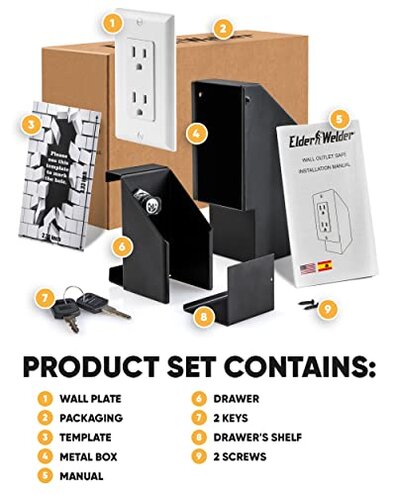
- Choose deeper models: Look for recessed safes with larger internal volume to neutralize the small capacity problem.
- Prefer adjustable plates: Pick units that advertise matching plates or adjustable trim to avoid the plate mismatch issue.
- Buy complete kits: Select products that include mounting brackets and screws to avoid the hidden hardware requirement.
- Test-fit first: Measure stud spacing and outlet box depth before buying to prevent the fit failure.
The bottom line
Main regret: The biggest trigger is a combination of fit and stealth failures that stop the product from doing its core job. Why it exceeds category risk: These problems occur during first use and often need extra work or parts, which is more disruptive than typical mid-range diversions. Verdict: Avoid if you need reliable concealment or a plug-and-play install.
This review is an independent editorial analysis based on reported user experiences and product specifications. NegReview.com does not sell products.