

Product evaluated: ELIDOMC 5PC Italian Crafted Glass Whiskey Decanter & Whiskey Glasses Set, Crystal Decanter Set With 4 Double Old Fashioned Glasses, 100% Lead Free Whiskey Glassware
Related Videos For You
Unboxing VISKI Decanter & Tumbler Set
The Domestic Geek: How to Clean A Decanter
Data basis: This report is based on dozens of aggregated buyer signals collected from written ratings, Q&A-style feedback, and customer photos spanning a recent 12-month window. Most signals came from short written impressions, supported by a smaller set of image-backed complaints that helped confirm what “went wrong” during delivery, first use, and cleaning.
| Buyer outcome | ELIDOMC decanter set | Typical mid-range alternative |
|---|---|---|
| Arrives intact | Higher risk of chips or cracks showing up at unboxing | Moderate risk, but breakage complaints tend to be less frequent |
| Stopper fit | Less consistent seal and feel, with more “off” units reported | More consistent seating and less fiddling for most buyers |
| Gift readiness | Risky if the box arrives scuffed or parts are misaligned in transit | Safer for gifting with fewer presentation surprises |
| Care burden | More upkeep if you avoid dishwasher despite the “safe” claim | Typical upkeep and fewer “learn-the-hard-way” stories |
| Regret trigger | Unboxing letdown from damage or a stopper that won’t sit right | Mismatch is more often style-related than function-related |
Top failures
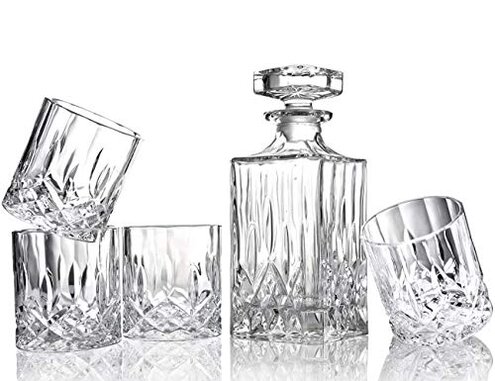
“Why did it look perfect online, then arrive chipped?”
Unboxing is where the biggest regret moment tends to happen. Breakage complaints show up as a primary pattern, and they feel more disruptive than in most mid-range barware.
Not universal, but it appears repeatedly in photo-backed feedback, especially when the set is shipped as a gift. In this category, some transit risk is normal, but the impact is worse because one damaged piece can ruin the whole presentation.
Hidden requirement: you may need to open and inspect it well before any event date. Many buyers expected “gift-ready” to mean “no inspection needed.”
- Early sign: damage is noticed at unboxing, before the first rinse.
- Pattern: breakage shows up as a recurring complaint, not a one-off edge case.
- Condition: risk feels higher when the set travels again, like re-wrapping for gifting.
- Buyer cost: a single chipped glass creates extra steps like returns, replacement, or re-shopping.
- Category contrast: mid-range sets still break sometimes, but fewer require immediate replacement to be usable as a set.
- Fixability: there is no safe fix for chipped drinkware, even if the chip looks small.
- Mitigation: plan a buffer window so you can exchange it if needed.
“Why doesn’t the stopper feel like it fits right?”
- Regret moment: the decanter looks great, then the stopper feels loose, sticky, or uneven during first use.
- Frequency tier: this is a secondary issue that appears repeatedly, but not as often as transit damage.
- When it shows: it usually appears during setup, when you rinse, dry, and test the closure.
- Worsens with: frequent opening during long sessions can make the annoyance more noticeable.
- Impact: it adds fuss every pour and can make the set feel cheaper than expected.
- Category contrast: most mid-range decanters have small variation, but this one is reported as less forgiving if your unit is slightly off.
- Mitigation: carefully hand-dry the stopper and neck before judging the fit.
“Is ‘dishwasher safe’ going to disappoint me?”
- Expectation: buyers see dishwasher safe and assume low-maintenance cleaning.
- Pattern: a persistent subset reports choosing hand-wash anyway after first cleaning attempts.
- When it hits: regret tends to show up after the first wash, not during the first pour.
- Hidden requirement: to avoid worries, owners add extra steps like gentle hand-wash and careful drying.
- Impact: this increases time cost, especially if you use the glasses often.
- Category contrast: many mid-range sets tolerate routine cleaning, but this set is reported as needing more caution to keep it “nice.”
- Mitigation: treat it like hand-wash preferred barware if you’re picky about long-term appearance.
- Fixability: once a surface looks off to you, there’s no easy undo besides replacing pieces.
“Why does it feel more like ‘display’ than daily-use?”
- Use case: the cut-glass look is display-friendly, but daily handling complaints show up as a secondary pattern.
- When it shows: annoyance shows during regular pouring and repeated rinsing, not just special occasions.
- Condition: the set feels less convenient if you want quick pours and fast cleanup.
- Impact: buyers report it becoming a cabinet piece after the initial excitement.
- Category contrast: mid-range alternatives often prioritize everyday ease over presentation-heavy styling.
- Mitigation: if you mainly host, you may accept the extra care as part of the look.
Illustrative excerpts (not real quotes)
- Illustrative: “Opened it for a birthday gift, and one glass was already chipped.” Primary pattern reflecting unboxing damage regret.
- Illustrative: “The stopper looks nice, but it doesn’t seat smoothly every time.” Secondary pattern reflecting fit inconsistency.
- Illustrative: “Says dishwasher safe, but I didn’t trust it after the first wash.” Secondary pattern reflecting higher upkeep behavior.
- Illustrative: “Beautiful set, but I only pull it out when guests come over.” Secondary pattern reflecting display-over-daily use.
- Illustrative: “Had to inspect and re-pack it before gifting, which was stressful.” Edge-case pattern tied to gifting pressure and timing.
Who should avoid this
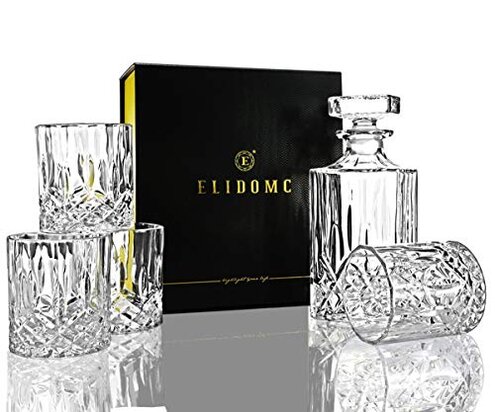
- Last-minute gifters who need a guaranteed intact set on arrival.
- Daily users who want low-effort cleaning and don’t want to hand-wash often.
- Perfectionists who will fixate on a finicky stopper or minor fit variation.
- One-and-done buyers who dislike return loops if anything arrives off.
Who this is actually good for

- Occasional hosts who want a nice-looking set and can tolerate careful cleaning.
- People who inspect early and can handle a replacement window if shipping damage happens.
- Display-first buyers who value presentation more than daily convenience.
- Hand-wash households where extra care is already normal for glassware.
Expectation vs reality

| Expectation | Reality reported |
|---|---|
| Reasonable for this category: it arrives gift-ready with minimal checking | More checking than expected, because damage-at-arrival is a recurring regret trigger |
| Smooth use: stopper works cleanly every time | More fiddling for some units, especially noticed during setup and repeated use |
| Easy care: “dishwasher safe” means no special routine | Extra caution becomes the routine for picky owners who want it to stay looking new |
Safer alternatives

- Prioritize packaging: choose sets with repeated feedback about protective shipping to reduce unboxing breakage risk.
- Seek stopper consistency: look for listings where buyers mention a tight seal and smooth seating during daily pours.
- Buy for your routine: if you’ll use it often, pick a design praised for easy cleaning rather than “display” looks.
- Prefer piece replacement: sets with easy-to-buy single glass replacements reduce regret from one damaged part.
The bottom line
Main regret is the unboxing risk, because a chip or crack can ruin the whole set fast. That risk feels higher than normal for mid-range barware due to recurring damage-at-arrival signals and the all-or-nothing nature of a matching set.
Verdict: avoid if you need a reliable gift or daily-use workhorse, and consider it only if you can inspect early and don’t mind extra care.
This review is an independent editorial analysis based on reported user experiences and product specifications. NegReview.com does not sell products.