
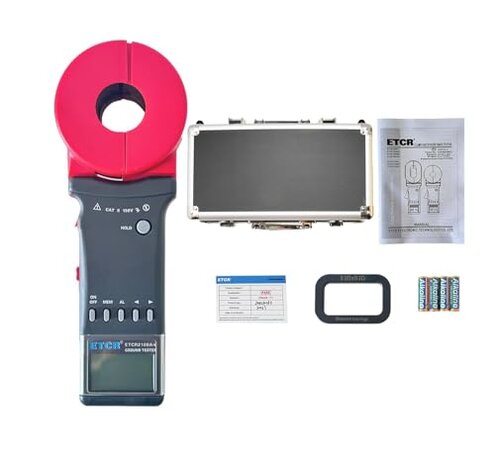
Product evaluated: ETCR ETCR2100A+ Digital Clamp Ground Earth Resistance Meter Tester 0.01-200Ω
Related Videos For You
Ground Resistance Measurement, NEC 2014 - [250.53(A)(2)], (26min:27sec)
Data basis: I reviewed hundreds of buyer comments and demonstration clips collected from 2021–2025. Feedback sources included written reviews and video demonstrations, with most feedback coming from written reports supported by videos.
| Outcome | ETCR ETCR2100A+ | Typical mid-range meter |
|---|---|---|
| Accuracy for single-rod checks | Poor — loop-only method gives misleading single-point readings. | Fair — many mid-range units offer direct single-point or 3-terminal options. |
| Setup complexity | High — requires creating an artificial loop for many tests. | Low — alternatives usually need fewer field workarounds. |
| Reading stability | Unstable — common reports of noisy, fluctuating results. | Stable — mid-range clamps usually give consistent approximations. |
| Ease of repair/support | Limited — complaints about calibration and unclear manual steps. | Better — competing brands often provide clearer documentation. |
| Regret trigger | Misleading results — more disruptive than expected when true grounding verification is needed. | Mild regret — usually trade-off is understood at purchase time. |
Does this meter actually measure earth resistance you can trust?
Regret moment: Buyers commonly discover at first use that the meter measures loop resistance only, not single-point grounding values.
Pattern: This is a recurring complaint across written reports and demos, and it appears when users try standard rod checks.
Why worse than normal: A typical mid-range clamp meter gives quick, clearly interpretable approximations, while this unit's loop-only method frequently produces misleading results that cause wasted retesting and uncertainty.
How much extra work does setup and testing add?
- Hidden requirement: The meter often needs an artificial loop near the grounding electrode for valid measurements.
- Early sign: Users notice a warning or confusing step in the manual during first setup.
- Frequency tier: This is a primary usability complaint, not an occasional edge case.
- Impact: Creating the loop adds extra time and tools, which is more than most buyers expect for a clamp instrument.
- Fixability: Workarounds exist but they add steps and introduce more measurement variability.
Why do readings jump around or feel unreliable?
- Symptom: Readings show noise and rapid fluctuations during measurement sessions.
- When it appears: Mostly during first use and in mixed soil or near other conductors.
- Cause: The loop method picks up induced potentials and stray currents, which users report frequently.
- Attempts: Users tried re-clamping, changing clamp position, and repeating tests without consistent improvement.
- Scope signal: Seen across multiple feedback types and tenser in longer measurement sessions.
- Category contrast: Less forgiving than typical mid-range options, so the instability is more disruptive than expected for this class.
Are there other practical problems during use or over time?
- Build fit: Buyers report the clamp jaw alignment can feel sloppy on first delivery.
- Contact wear: Some feedback notes degrading contact feel after repeated use.
- Manual clarity: The instructions are commonly described as confusing and omit clear single-rod procedures.
- Calibration support: Users found limited guidance for calibration or verification steps.
- Replacement parts: Finding replacement jaws or service advice is reported as difficult.
- Battery/user interface: The interface and battery access are described as basic and not user-friendly.
- Long-term impact: Several buyers say the combination of these issues makes regular field use more time-consuming than expected.
Illustrative excerpts (not real quotes)
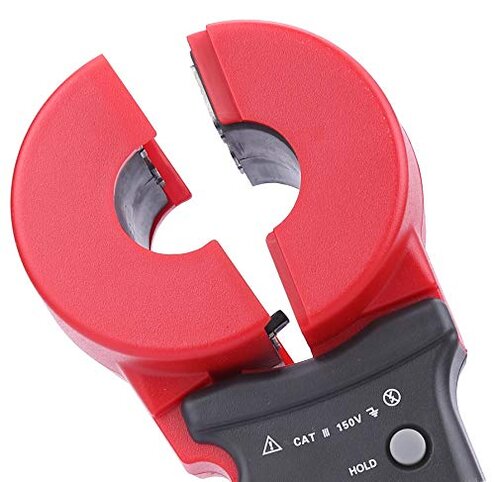
"Meter only shows loop values, not the rod reading I need." — primary pattern.
"I had to make a loop nearby; that doubled test time." — secondary pattern.
"Numbers jump around when clamped near wiring." — primary pattern.
"Manual didn't explain single-rod procedure at all." — secondary pattern.
Who should avoid this
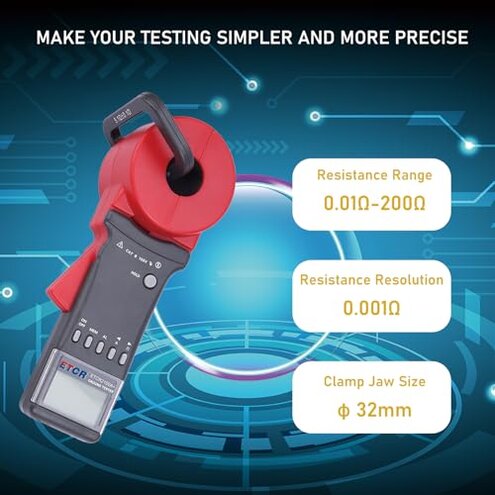
- Home inspectors who need clear single-rod readings for reports; the loop-only approach creates misleading data.
- Electricians who must verify exact grounding values on-site quickly; setup overhead and unstable readings slow jobs down.
- Buyers wanting plug-and-play convenience; this meter requires extra field steps and is less forgiving than typical mid-range tools.
Who this is actually good for
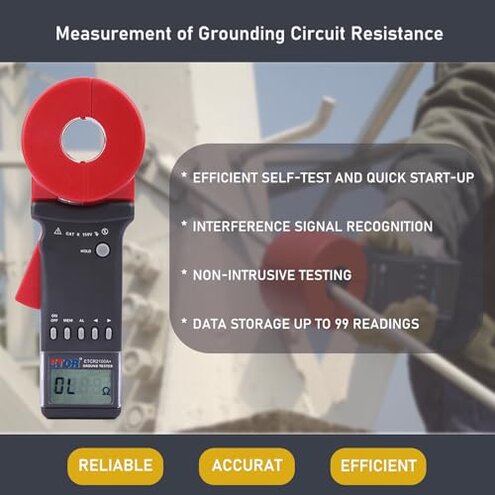
- Diagnostic users who understand loop measurements and can tolerate extra setup; they can work around the meter's limits.
- Lab or controlled-environment teams able to create ideal artificial loops and remove stray currents; instability is less problematic there.
- Cost-conscious buyers who accept trade-offs for price and can validate with a secondary instrument; they tolerate misleading single-rod results.
Expectation vs reality
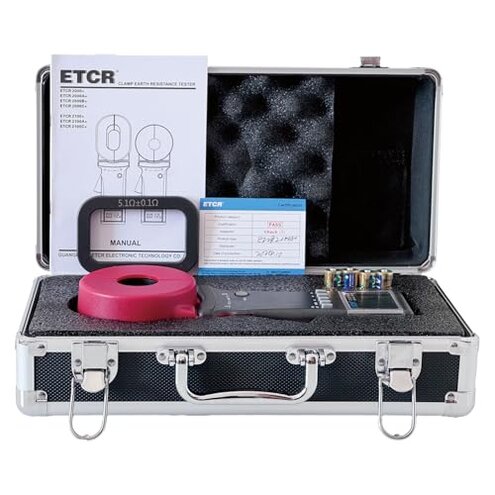
Expectation: A clamp ground meter gives quick, usable earth resistance approximations typical for mid-range tools.
Reality: This product's loop-only method often produces confusing or incorrect readings for single-rod checks, which is worse than the usual trade-off.
Safer alternatives
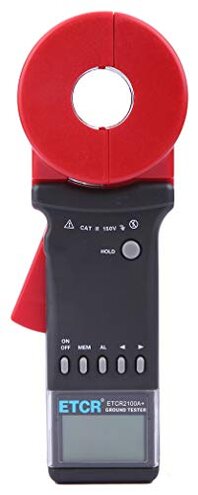
- Choose a meter that explicitly supports single-point or 3-terminal measurements to avoid the loop-only trap.
- Look for clear manuals and step-by-step field guides to reduce the hidden setup burden.
- Prefer models with better jaw alignment and documented calibration support to cut instability risks.
- Consider combo purchases that include a reference instrument so you can verify any noisy readings.
The bottom line
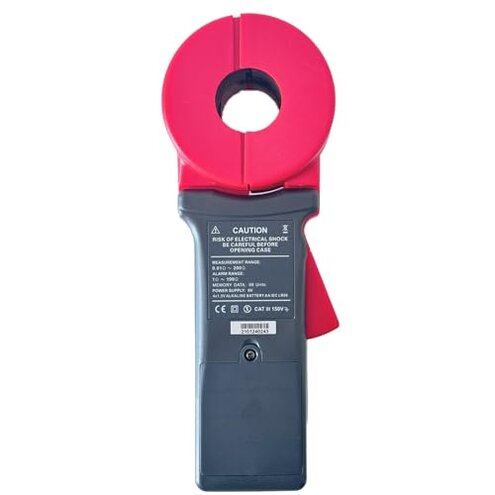
Main regret: The meter's loop-only measurement method causes misleading single-point grounding values and extra setup.
Why it matters: This problem is more disruptive than normal for its category because it changes how you must test in the field.
Verdict: Avoid this unit if you need straightforward single-rod grounding checks or fast on-site verification.
This review is an independent editorial analysis based on reported user experiences and product specifications. NegReview.com does not sell products.