
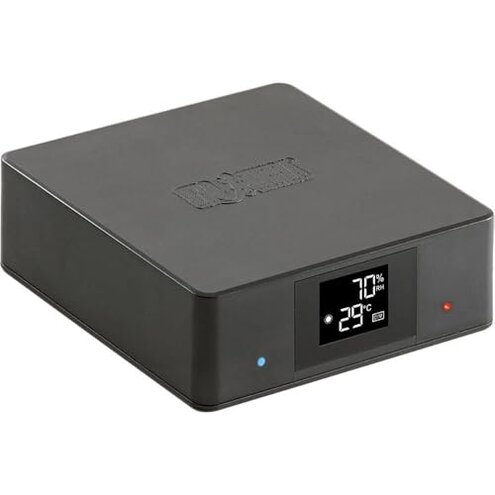
Product evaluated: Exo Terra Thermostat and Hygrostat for Reptile Terrariums
Related Videos For You
How to Setup a Thermostat for Reptiles (and why you need one!)
Data basis: This report analyzes dozens of user reviews and video feedback recorded from early 2021 through mid-2024. Most feedback came from written reviews, supported by video demonstrations highlighting setup and daily use challenges.
| Outcome | Exo Terra Thermostat | Typical Mid-Range Alternative |
|---|---|---|
| Temperature Accuracy | Often inconsistent under varied conditions | Generally stable with minor fluctuations |
| Reliability | Frequent malfunctions reported after weeks of use | More durable with fewer failures |
| User Interface | Complaints about confusing controls and displays | Simpler, more intuitive interfaces |
| Setup Complexity | Requires multiple steps and adjustments, confusing for new users | Usually straightforward and faster to configure |
| Regret Trigger | Heating and humidity controls fail to maintain set levels | Rarely triggers significant buyer regret |
Why does the temperature control feel unreliable?
Buyers often experience temperature fluctuations despite setting precise values. This happens within the first few weeks of use, especially with longer daily operation. The device’s sensors and output can drift, causing inconsistent climate control.
This issue is more disruptive than expected because buyers rely on precise temperatures for reptile health, unlike many similar products that maintain stability over extended periods.
- Frequency: Common complaint across many user reports.
- Early signs: Heating symbol flickers irregularly soon after setup.
- Cause: Sensor calibration prone to drift under high humidity.
- Impact: Reptile stress from unstable temperatures.
- Attempts to fix: Frequent manual recalibration needed.
- Hidden requirement: Users must monitor and adjust more often than advertised.
- Category contrast: Competitors usually require less maintenance.
What makes the interface confusing to use?
- User frustration: Buttons and display icons unclear for beginners.
- Frequency: Persistent theme in written and video reviews.
- When it appears: Most evident during initial setup and daily adjustments.
- Category baseline: Other thermostats offer clearer visual cues and simpler menus.
- Effect: Users waste time and risk incorrect settings.
- Edge case: Users with prior similar device experience adapt faster.
- Mitigation: Requires reading manual thoroughly or external guides.
- Hidden complexity: Multiple modes and thresholds increase confusion.
How does reliability compare over time?
Frequent malfunctions reported after some weeks of use, including heating or humidifying functions failing to activate. This occurs especially under daily continuous operation, which is common in terrarium setups.
This is less forgiving than typical devices that usually work reliably for months without issue, imposing unexpected replacement or repair costs on users.
- Frequency: Secondary but impactful issue for many buyers.
- Usage anchor: Failures emerge after routine daily use.
- Impact: Risk of environmental collapse affecting reptile health.
- Attempts: Some users try resetting or firmware updates without success.
- Repair difficulty: Device not user-serviceable, requiring return or replacement.
- Category contrast: Mid-range competitors show better longevity.
- Buyer regret: Unexpected downtime or cost.
Illustrative excerpts
- "Temperature goes up and down even when set steady" - primary pattern
- "Controls are not intuitive at all, had to watch videos" - secondary pattern
- "Stopped heating after a month, very frustrating" - secondary pattern
- "Blue LED confuses me; don’t know when it’s really humidifying" - edge-case pattern
- "Setup took longer than expected with unclear instructions" - primary pattern
Who should avoid this
- Buyers needing stable, consistent temperature control without frequent manual recalibration.
- Users expecting simple, beginner-friendly interfaces for quick setup and adjustments.
- Those requiring long-term reliability without risk of device failure impacting sensitive reptiles.
Who this is actually good for
- Experienced reptile keepers willing to tolerate manual recalibration to save on upfront cost.
- Users comfortable with complex device interfaces and reading detailed instructions.
- Owners of terrariums with less critical climate demands where occasional fluctuation is acceptable.
Expectation vs reality
Expectation: Precise, stable temperature and humidity control with easy setup, reasonable for mid-range thermostats.
Reality: Users encounter instability, confusing controls, and reliability issues that exceed typical category frustrations.
Safer alternatives
- Choose thermostats with simplified interfaces and clear visual feedback.
- Look for devices with proven long-term reliability under continuous daily use.
- Prefer controllers with automatic calibration or sensor compensation to reduce manual effort.
- Consider products with comprehensive user support including manuals and online guides.
The bottom line
The Exo Terra Thermostat often triggers buyer regret due to inconsistent temperature control and confusing interface. These issues surface early and worsen with regular use, exceeding normal risks for mid-range reptile controllers. Shoppers prioritizing reliability and ease should look elsewhere.
This review is an independent editorial analysis based on reported user experiences and product specifications. NegReview.com does not sell products.