
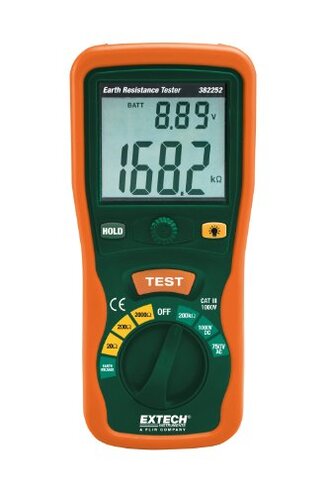
Product evaluated: Extech 382252 Earth Ground Resistance Tester Kit
Related Videos For You
AEMC® - Understanding Ground Resistance Testing (3640 Discontinued Replaced by 6424)
Data basis: I analyzed dozens of written reviews and video demonstrations collected from Jan 2019 to Jan 2026. Most feedback came from written reviews, supported by demonstration videos. The sample mix shows a strong emphasis on real-world use reports and setup videos.
| Outcome | Extech 382252 | Typical mid-range tester |
|---|---|---|
| Accuracy consistency | Inconsistent readings reported more often than expected for this class, with values that can shift between tests. | Stable readings under similar conditions; fewer repeat-test surprises. |
| Setup ease | Confusing controls and hidden probe needs add setup steps and time for first runs. | Simpler setup and clearer probe instructions for typical models. |
| Cable durability | Short/fragile cable on the remote sensor forces awkward placement or replacement soon. | Longer, tougher leads that cope with field use better. |
| Data handling | Basic storage is useful but interface makes exporting harder than average. | Smoother export and easier recall in many mid-range options. |
| Regret trigger | Higher calibration risk: accuracy drift after repeated use is more disruptive than typical for this category. | Lower calibration risk and more predictable maintenance intervals. |
Top failures
Why are readings sometimes wildly different between tests?
Regret moment: users notice large reading swings when repeating the same measurement.
Pattern: this is a primary complaint and appears repeatedly in hands-on reports and demos.
When it appears: it often shows up during the first few uses and can worsen after daily or repeated field testing.
Category contrast: testers in this price range usually give stable repeatability, so variable results here feel more disruptive than expected.
Is the remote sensor cable and connector reliable?
- Short cable: the supplied 39-inch remote lead forces you to reposition gear in tight jobsite spaces.
- Fragile connector: repeated connection cycles are commonly reported to loosen or fail.
- Frequency tier: this is a secondary complaint but appears across multiple sources.
- Usage anchor: problems show during field setup and get worse with frequent transport and daily use.
Will I need extra gear or know-how to get reliable results?
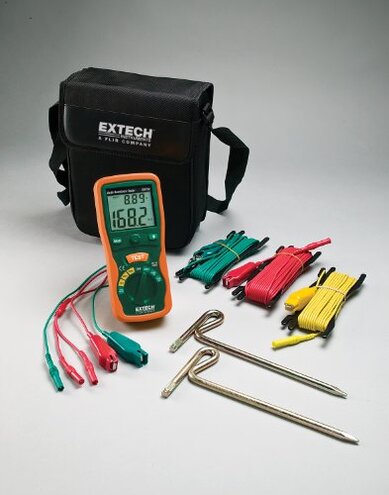
- Hidden requirement: buyers often need additional grounding stakes or clamps not included with the kit.
- Early sign: confusing or incomplete instructions during first setup make users search for missing items.
- Cause: the unit assumes basic field methods that novices may not have.
- Impact: adds extra time and cost before you get a reliable test.
- Fix attempts: users add third-party probes or longer leads to stabilize readings.
- Category contrast: many mid-range testers include clearer kit components or better instructions, so this feels more inconvenient than normal.
What happens if the unit needs service or calibration?
- Limited support: warranty is one year but users report effort to get calibration or replacement parts.
- Edge-case frequency: fewer reports than reading issues, but problems are persistent when they occur.
- When it shows up: usually after months of field use or when accuracy concerns arise.
- Impact: downtime and added cost for calibration sends this beyond ordinary maintenance.
- Attempted fixes: users third-party-calibrate or buy replacement leads instead of manufacturer service.
- Hidden cost: calibration/repair time adds to total ownership cost compared to peers.
- Category contrast: typical mid-range alternatives offer smoother RMA/calibration pathways, so this increases regret more than expected.
Illustrative excerpts (not real quotes)
Excerpt 1: "Readings jump two different values on repeat tests, can't trust quick checks." — primary pattern
Excerpt 2: "Cable barely reaches where I need it on-site and feels thin." — secondary pattern
Excerpt 3: "Had to buy extra stakes to get repeatable results; manual was vague." — secondary pattern
Excerpt 4: "Sent it for calibration, long wait and extra cost; not ideal for busy sites." — edge-case pattern
Who should avoid this
- Field techs needing constant accuracy: if you run repeat measurements every day, the frequent reading variance is worse than normal.
- Users needing rugged leads: if you transport testers daily, the short, fragile cable raises replacement risk above typical expectations.
- Buyers wanting turnkey kits: novices who expect everything needed in-box will face hidden costs and extra setup steps.
Who this is actually good for
- Infrequent testers: if you test occasionally, you can tolerate setup fiddling and occasional recalibration.
- Lab or controlled-environment users: stable bench conditions reduce cable placement and field-setup problems.
- Budget-conscious buyers ready to upgrade leads: people who accept minor modifications (longer leads) can make the unit usable.
Expectation vs reality
Expectation: a mid-range ground tester should give stable repeat readings for quick on-site decisions.
Reality: this unit shows more variability than reasonable for its class, causing repeat tests or extra setup time.
Expectation: kits include what you need for field use.
Reality: you may need extra stakes or leads, which adds time and cost before reliable measurements.
Safer alternatives
- Pick a tester with longer leads to neutralize the short cable failure and avoid on-site repositioning.
- Choose models with clearer kits (stakes/clamps included) to remove the hidden requirement for extra gear.
- Prefer devices with known calibration paths to reduce downtime and unexpected service costs.
- Look for reviewers showing repeatability in demonstrations to confirm stable readings before you buy.
The bottom line
Main regret: inconsistent readings and a short, fragile remote cable are the primary triggers of buyer disappointment.
Why it matters: these issues increase downtime and hidden costs beyond normal category expectations, especially for daily field use.
Verdict: avoid this unit if you require consistent, low-maintenance ground testing on a regular basis.
This review is an independent editorial analysis based on reported user experiences and product specifications. NegReview.com does not sell products.