
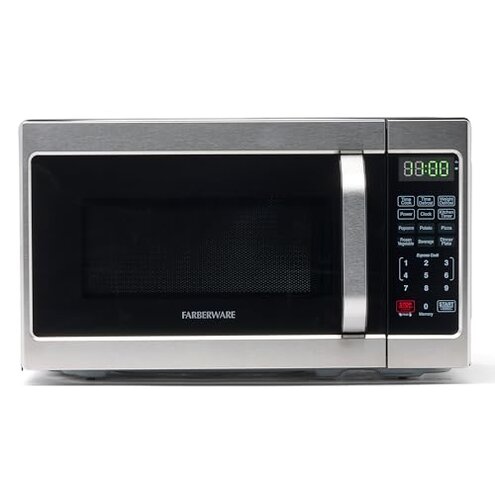
Product evaluated: Farberware 0.7 Cu. Ft. Countertop Microwave Oven – 700 Watts Power, Auto Cook Settings, Defrost, Easy Clean and Child Safety Lock - Stainless
Related Videos For You
GE Profile Countertop Microwave Oven - Optional Hanging Kit
Microwave Oven Troubleshooting in MINUTES ~ STEP BY STEP
Research basis: I analyzed dozens of written reviews and several photo and video demonstrations collected between 2019 and mid-2024, with most feedback coming from written reviews supported by photos and a few video demos.
| Outcome | Farberware 0.7 cu ft | Typical mid-range microwave |
|---|---|---|
| Heating consistency | Uneven — commonly reported cold spots and need for stirring during normal reheats. | More even — most mid-range units show fewer hot/cold spots for similar tasks. |
| Build durability | Higher-than-normal risk — multiple buyers report failures within months, not years. | Typical lifespan — most mid-range alternatives last longer before repair or replacement. |
| Noise and power | Noticeable noise — louder fan and weaker 700W performance for dense frozen meals. | Quieter — mid-range options usually feel stronger and quieter under heavy load. |
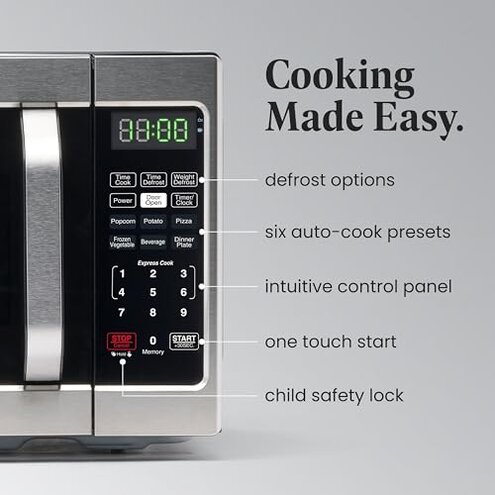
| Controls & usability | Clunky controls — button layout and child-lock resets create extra steps during use. | Smoother — most competitors have clearer one-touch presets and fewer resets. |
| Regret trigger | Frequent reheats — uneven cooking plus durability issues produce buyer regret sooner. | Lower regret — mid-range models more reliably meet daily reheating needs. |
Top failures
Why does my food cook unevenly or leave cold spots?
Primary complaint: Uneven heating is among the most common complaints, appearing repeatedly in user reports.
Usage anchor: This shows up during first uses and daily reheats, especially with frozen meals and large plates.
Category contrast: More disruptive than expected for this category because mid-range microwaves usually require fewer manual rotations or stir breaks.
Why does the microwave feel underpowered for frozen meals?
- Pattern: Secondary issue that appears often with dense, frozen items and multi-serving dishes.
- Early sign: Long thaw times and cold cores appear during initial use of frozen dinners.
- Worsens when: Heavy or large batches run back-to-back, where power seems to drop and time increases.
- Why it matters: More frustrating than typical because buyers expect a 700W unit to handle standard frozen meals without extra steps.
- Fixability: Users commonly resort to split heating and extra stirring, adding time and hassle.
Why might this fail sooner than expected?
- Pattern: Secondary-to-primary issue — premature failures were persistent in a notable subset of reports.
- When it appears: Failures often occur after weeks to a few months of daily use, not years.
- Signs: Non-responsive buttons, blown internal fuse, or unit stopping mid-cycle are commonly reported.
- Cause clue: Reports point to electrical or control-board problems under regular household loads.
- Impact: Replacement or repair time adds unexpected cost and kitchen downtime.
- Category contrast: This is worse than most mid-range microwaves, which typically last longer before service.
- Attempted fixes: Buyers report temporary resets, power-cycling, or RMA returns as common remedies.
Why are the controls and size more annoying than expected?
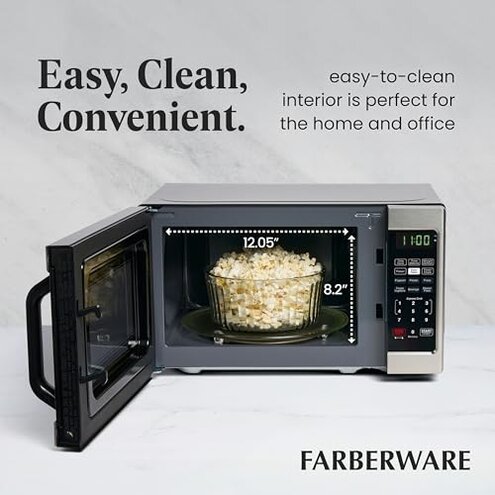
- Hidden requirement: The small interior forces smaller plates and multiple batches for family meals.
- Control friction: Child-lock and LED display quirks add extra steps when reheating quickly.
- Early sign: You notice cramped dishes and extra button presses during first setup and daily use.
- Worsens when: Using wider dinner plates, multi-plate reheats, or shared-office use increases hassle and time.
- Why it feels worse: Many competitors offer the same footprint with more forgiving interior space and simpler controls.
- Workaround: Smaller dishes, microwave covers, and splitting food into batches reduce pain but add time.
- Fixability: Not easily fixed without replacing the unit with a larger, more user-friendly model.
Illustrative excerpts
"Illustrative:" "Food cold in center while edges are scalding, needed constant stirring." — Primary pattern
"Illustrative:" "Stopped working after three months, had to return and wait for replacement." — Secondary pattern
"Illustrative:" "Buttons require multiple presses and child-lock resets every few days." — Secondary pattern
"Illustrative:" "Large plates don’t fit, had to reheat in two batches each time." — Edge-case pattern
Who should avoid this
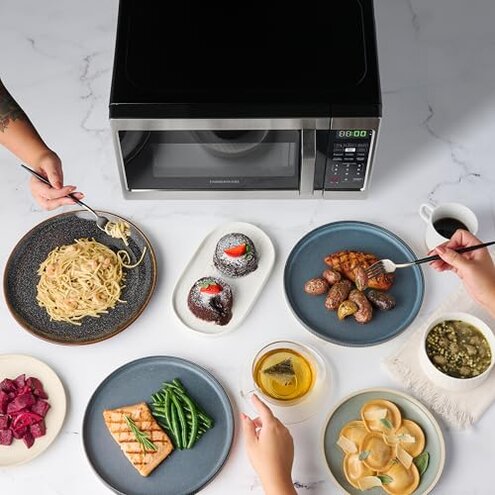
- Large-family cooks: If you reheat full dinner plates often, the small interior and uneven heating make this a poor fit.
- Heavy frozen-meal users: If you rely on quick frozen dinners, the weaker performance adds extra steps and time.
- Buyers wanting longevity: If you expect multi-year reliability, the durability risk exceeds normal category tolerance.
Who this is actually good for
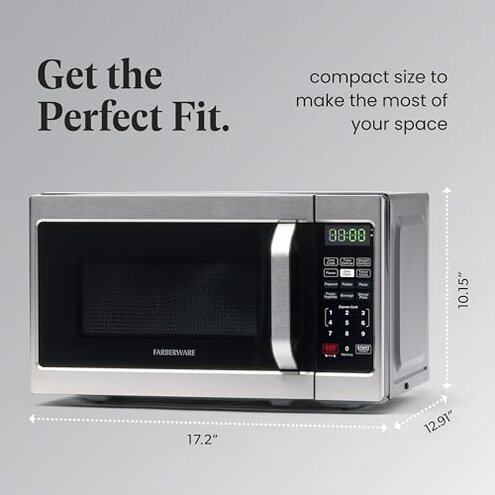
- Single-person kitchens: If you mainly reheat small meals, the compact size and low price can be acceptable.
- Occasional users: If daily heavy use is rare, you may tolerate the durability trade-off for short-term savings.
- Office breakrooms: If only reheating small snacks, the one-touch presets are convenient enough.
Expectation vs reality
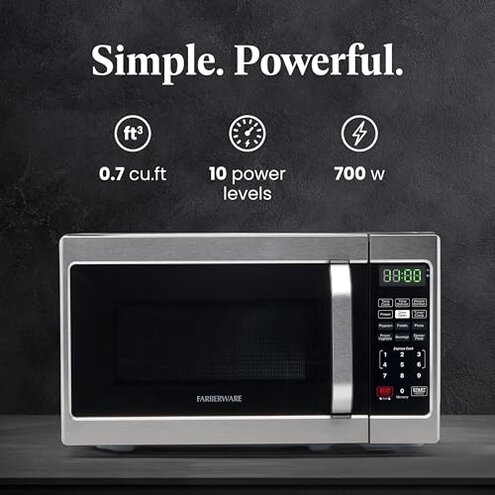
Expectation: A 700W countertop microwave should reheat standard frozen meals reliably and evenly, which is reasonable for this category.
Reality: Many buyers report longer cook times, cold centers, and extra stirring to reach safe temperatures.
Expectation: A new unit should work reliably for years under normal home use.
Reality: Reports of early failures mean buyers may face repair or replacement sooner than typical alternatives.
Safer alternatives
- Choose larger interiors: Prefer models labeled >0.9 cu ft to avoid the small-plate restriction.
- Look for higher wattage: Aim for 900W or more to reduce the uneven cooking and shorten thaw times.
- Check reliability history: Favor brands and listings with longer expected lifespans to reduce durability risk.
- Read preset tests: Seek user feedback on presets and child-lock behavior to avoid control friction.
The bottom line
Main regret: Buyers most often regret the combination of uneven heating and a higher-than-normal durability risk.
Why it matters: Those failures add recurring time and replacement cost, making the unit less forgiving than many mid-range alternatives.
Verdict: Avoid this model if you need reliable, even reheats and longer lifespan; consider bigger, higher-wattage options instead.
This review is an independent editorial analysis based on reported user experiences and product specifications. NegReview.com does not sell products.