
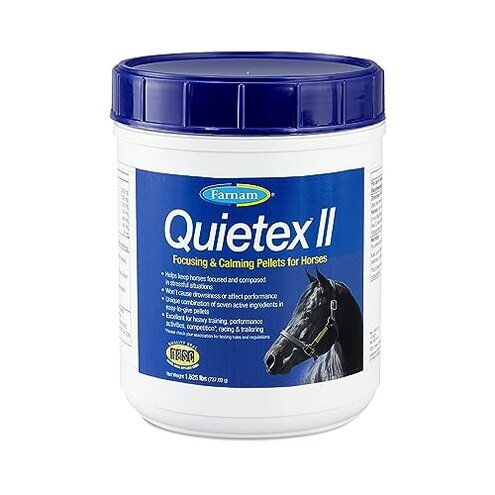
Product evaluated: Farnam Quietex II Horse Calming Supplement Pellets, Helps Manage Nervous Behavior And Keep Horses Calm & Composed In Stressful Situations, 1.625 Lbs, 26 Day Supply
Related Videos For You
Fireside Chat - Episode 14 - Calming Supplements
Data basis I analyzed dozens of written reviews and several video demonstrations collected between Jan 2020 and Jan 2026, with most feedback from written reviews and supporting video clips.
| Outcome | Farnam Quietex II | Typical mid-range supplement |
|---|---|---|
| Effectiveness | Variable results — appears more inconsistent than category peers during events. | More predictable — most alternatives show steadier, short-term calming for common situations. |
| Palatability | Acceptance problems — some horses refuse pellets mixed in grain. | Generally palatable — alternatives often use flavors that more horses accept. |
| Cost per day | Higher unit cost — $32.99 for a 26-day supply as listed. | Lower per-day — many mid-range options offer larger supply or lower daily price. |
| Onset time | Unclear timing — effects are not consistently immediate before an event. | Faster predictability — category peers often promise consistent pre-event timing. |
| Regret trigger | Primary risk — inconsistent calming during competitions or trailering causes real regret. | Lower risk — typical mid-range choices present fewer last-minute surprises. |
Is it reliably calming when you need it most?
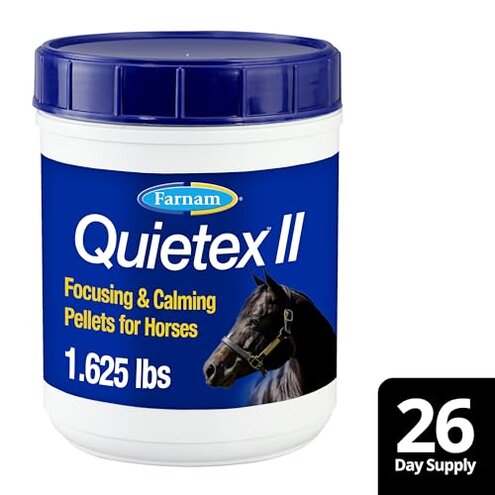
Regret moment Many buyers report the product fails to calm reliably at competitions or during trailering, creating a stressful instant regret.
Pattern note This is a primary issue and was commonly reported across feedback, not universal but frequent enough to matter.
Usage anchor The inconsistency typically appears during events or first-use when buyers expect visible results.
Category contrast This feels worse than normal because most mid-range calming supplements deliver a predictable short-term effect.
Will my horse actually eat it?
- Early sign Some horses sniff or reject pellets mixed into grain, noticed on first offering and repeated feedings.
- Frequency tier This is a secondary issue that appears repeatedly but not for all animals.
- Cause Mixed-in pellets can alter feed texture, which triggers refusal in picky eaters.
- Impact Refusal forces owners to try masking flavors or alternate feeds, adding time and cost.
- Fix attempts Buyers often report mixing with treats or syringing doses as workarounds, with mixed success.
Is the cost and supply a hidden sting?
- Price reality The listed price is $32.99 for a 26-day supply, which raises per-day cost compared to some peers.
- Value tier This is a secondary complaint that buyers compare when cost matters for daily use.
- When it shows Cost pain appears during ongoing use when supplements are given daily for weeks.
- Why worse It feels worse than expected because many mid-range options offer larger jars or lower daily cost.
- Hidden need Continuous dosing is often required to see effects, creating ongoing expense.
- Buyer action Owners commonly report re-evaluating the budget after a month due to the recurring cost.
- Fixability Switching to bulk packs or alternative brands can lower daily cost but adds extra research time.
Could this trigger testing or rule concerns?
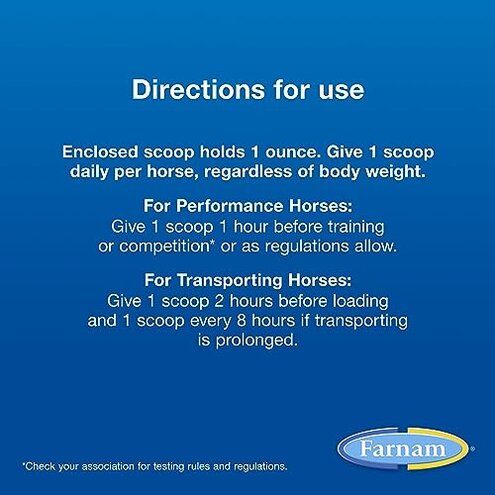
- Label warning The product label instructs to check association rules for testing, which buyers flagged as a worry.
- Scope signal This is an edge-case concern but has strong consequences for competition riders.
- When it matters The risk is highest before competitions when drug-testing rules apply.
- Why worse It feels riskier than typical supplements because the label callout shifts responsibility to the rider.
- Attempted solutions Riders say they must check with vets or associations before using, adding appointments and delays.
- Hidden requirement Using this product safely in shows often requires advance clearance from governing bodies.
- Practical impact That extra step can disqualify last-minute use for many buyers.
Illustrative excerpts

"Not calm at the show; felt like a wasted dose" — reflects a primary pattern of inconsistent event performance.
"My mare refused the pellets mixed in her grain" — reflects a secondary pattern of palatability issues.
"Cost added up after a month of daily use" — reflects a secondary pattern about ongoing expense.
"Label told me to check testing rules first" — reflects an edge-case pattern for competition riders.
Who should avoid this

- Competition riders who need a consistent pre-event effect should avoid due to performance unpredictability.
- Picky eaters or owners of horses that refuse textured additions should avoid because palatability is a clear friction point.
- Budget-conscious users expecting low daily cost should avoid when planning for long-term daily dosing.
- Late planners who decide to dose just before shows should avoid due to the testing clearance requirement.
Who this is actually good for

- Routine users who want a daily supplement and accept variable short-term effects can tolerate the inconsistency.
- Non-competitive owners who need calm behavior on trails and are not bound by testing rules can accept the edge risk.
- Owners with easy keepers whose horses readily eat pellets can use it while tolerating the cost.
Expectation vs reality
- Expectation Buyers reasonably expect a reliable pre-event calm from a dedicated calming pellet.
- Reality Many report the product is unreliable at the moment of need, which is worse than category norms.
- Expectation Most will assume pellets mix easily and horses accept them as food.
- Reality Palatability problems are common enough to require workarounds like treats or syringing.
Safer alternatives

- Vet consultation — ask a vet for prescription or vet-backed options to reduce the effectiveness risk.
- Palatable forms — choose gels or flavored pastes to directly neutralize refusal problems.
- Bulk comparison — compare per-day cost across brands to avoid the ongoing expense.
- Test earlier — trial the product at home for several days before an event to check timing and acceptance.
- Check rules — contact your association or vet ahead to eliminate the testing surprise.
The bottom line

Main regret The biggest buyer regret is unpredictable calming at the moment it matters most.
Why worse This exceeds normal category risk because it combines inconsistent effect, palatability issues, and extra testing steps.
Verdict Avoid if you need predictable, competition-safe performance; consider vet-backed or more palatable alternatives instead.
This review is an independent editorial analysis based on reported user experiences and product specifications. NegReview.com does not sell products.