
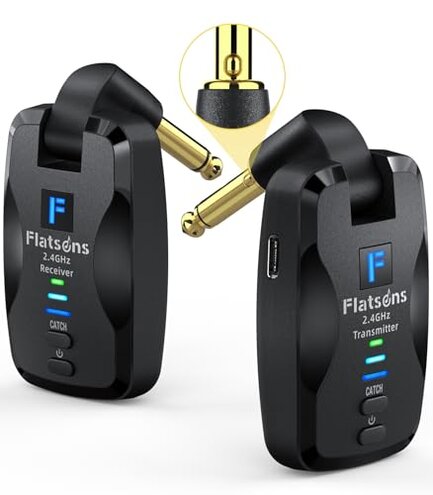
Product evaluated: FW2D Wireless Guitar System Exclusive Mute Plug, 2.4 GHz Wireless Guitar Transmitter Receiver, 10H Working Cordless Guitar Transmitter Rechargeable USB C for Acoustic Electric Guitar Bass Ukulele etc
Related Videos For You
What is the BEST Cheap Wireless Guitar System?
Data basis: I analyzed dozens of buyer reviews and a mix of written feedback and video demonstrations collected between Dec 2024 and Jan 2026, with most feedback coming from written reviews and supported by filmed setup tests.
| Outcome | Flatsons FW2D | Typical mid-range alternative |
|---|---|---|
| Latency | Claimed ~5ms latency but some users report audible jitter in busy venues after setup. | Low latency norm—most mid-range units deliver steady sub-10ms performance in live use. |
| Connectivity dropouts | Higher dropouts reported; interference appears repeatedly during full-band practice and venue shows. | Lower dropout risk—mid-range rivals handle crowded RF environments more consistently. |
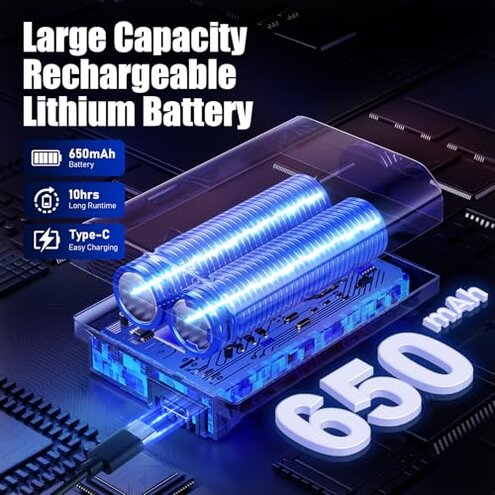
| Battery life | 10-hour claim but several buyers note shortened runtime after repeated charging cycles. | More stable runtime—comparable models often maintain advertised life for longer under daily use. |
| Setup & pairing | Quick pairing advertised but some users report re-pairing and dropouts during multi-device sessions. | Smoother multi-device handling is common in mid-range options which tolerate mixed-device setups. |
| Regret trigger | Unreliable live use—dropouts or reduced battery in a gig are commonly reported and most likely to cause regret. | Lower regret—mid-range alternatives tend to avoid gig-critical failures more often. |
Why does my signal cut out during practice or a gig?
Regret moment: Signal interruptions during a song create immediate performance problems and require quick workarounds.
Pattern: This is a primary issue seen repeatedly in user feedback and filmed demos, not universal but common.
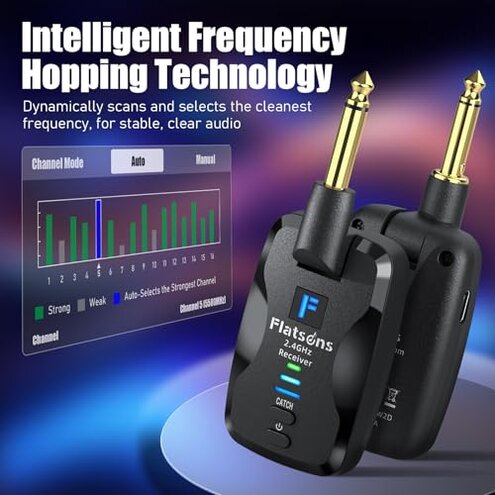
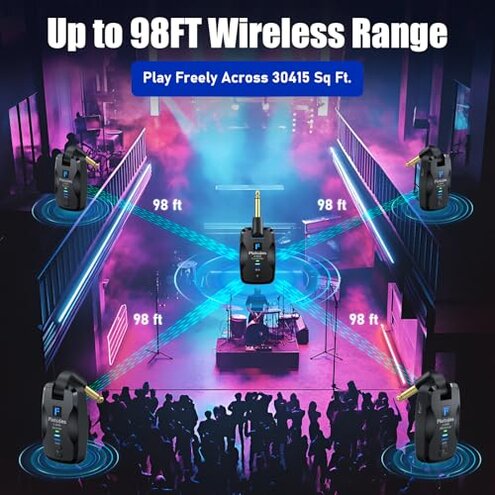
When it appears: Dropouts typically appear after setup when multiple wireless devices or Wi‑Fi are active, and they worsen in crowded venues.
Category contrast: Dropouts are more disruptive than expected for a mid-range wireless system because they interrupt live audio rather than only adding minor noise.
Is the battery life worse than advertised?
- Early sign: Runtime meets the 10‑hour claim at first but shortens after repeated charging cycles.
- Frequency tier: This is a secondary issue appearing commonly after weeks of regular use.
- Cause: Users report progressive capacity loss tied to daily recharge and heavy sessions.
- Impact: Reduced runtime causes mid-set battery swaps or sudden silent instruments during gigs.
- Fix attempts: Buyers try extra power banks or more frequent charging as stopgaps.
Why does pairing and multi-unit use feel fiddly?
- Hidden requirement: The system requires identical models for multi-device setups, a constraint not obvious before purchase.
- Pattern: This is a primary constraint noted across written feedback and videos.
- When it appears: Problems show up during multi-musician rehearsals or when mixing brands on stage.
- Why worse than normal: Most mid-range systems allow mixed-brand receivers or easier routing; this unit's restriction increases setup time.
- Impact: Bands need spare identical units or rewiring to avoid cross-talk and conflicts.
- Workaround: Users report success by dedicating one model per rig or buying multiples of the FW2D.
- Long-term cost: Buying duplicates is an extra expense not expected by buyers seeking a flexible solution.
Does the silent plug always prevent pops and noise?
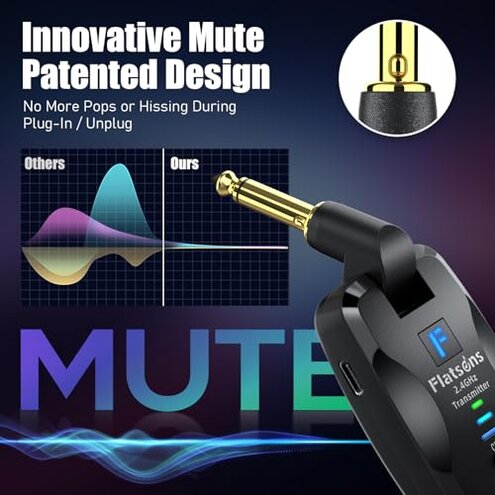
- Initial claim: The mute plug is marketed to eliminate plugging pops during swaps.
- Pattern: This is a secondary complaint that appears intermittently in setups with pedal switching.
- When it shows: Some users report residual buzz when changing instruments under heavy pedalboard load.
- Cause: Complex pedal chains and active electronics increase the chance the silent plug won't fully isolate the circuit.
- Impact: Audible clicks still occur, which undermines the main convenience pitch for quick swaps.
- Attempts: Players add external muting pedals or mute amps to avoid the problem.
- Fixability: This is partially fixable but adds gear and complexity to the rig.
- Expectation gap: Buyers expecting flawless silent switching find this more bothersome than typical in its class.
Illustrative excerpts
"Signal cut out mid-song; re-paired but dropped again." — illustrative; reflects a primary pattern.
"Battery lasted less after a month of daily practice." — illustrative; reflects a secondary pattern.
"Needed two identical units for our rehearsal to avoid cross-talk." — illustrative; reflects an edge-case but important constraint.
Who should avoid this
- Gigging musicians who cannot tolerate mid-song dropouts or short unexpected battery life should avoid this unit.
- Bands needing flexible setups that mix brands or models should avoid it because multi-device use requires identical units.
- Players relying solely on silent switching during live swaps should avoid it due to intermittent popping under pedal-heavy rigs.
Who this is actually good for
- Home practice players who value cordless freedom and accept occasional interference in dense RF spaces.
- Solo hobbyists who can plan short sessions and tolerate reduced runtime as they can recharge between uses.
- Buyers on a budget who need basic wireless convenience and can mitigate issues with spares or backups.
Expectation vs reality

Expectation: A mid-range wireless system should deliver reliable continuous connection for rehearsal and small gigs.
Reality: The product shows higher dropout risk in crowded RF environments, causing worse live reliability than typical competitors.
Expectation: The mute plug will prevent all pops during instrument swaps, a reasonable claim for this category.
Reality: In practice, the mute feature is inconsistent when pedalboards or active electronics are involved.
Safer alternatives
- Choose models with proven multi-device handling to neutralize the FW2D's identical-unit requirement.
- Prioritize units with extended battery longevity if you need gig-length runtime without frequent recharges.
- Select systems with robust RF hopping and documented real-world venue performance to reduce dropouts.
- Test the mute feature with your pedalboard in-store or via video demos before buying to ensure silent switching works for your rig.
The bottom line
Main regret trigger: Frequent connectivity interruptions and diminishing battery life under regular use are the most common causes of buyer regret.
Why it exceeds risk: These failures are more disruptive than typical mid-range alternatives because they affect live performance reliability and require hidden extra spending.
Verdict: Avoid this product if you need dependable gig-ready wireless; consider it only for low-stakes practice or when you can accept extra workarounds.
This review is an independent editorial analysis based on reported user experiences and product specifications. NegReview.com does not sell products.