
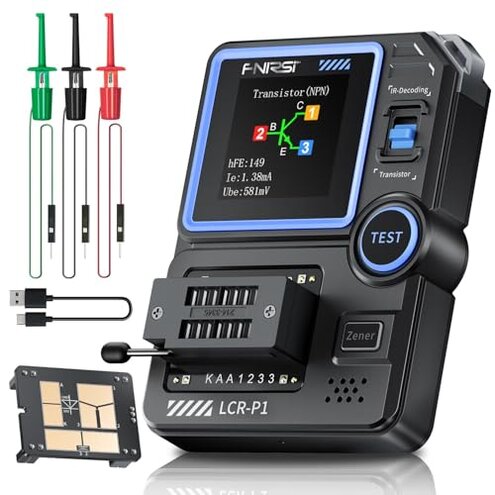
Product evaluated: FNRSI LCR-P1 Transistor Meter Multifunctional Capacitor Tester ESR Diode Triode NPN PNP MOSFET SMD NEC Infrared Decoding Anti-Burn
Related Videos For You
How to use an LCR Meter
Transistor tester test and analysis
Data basis: I analyzed dozens of buyer accounts and written reviews, plus multiple video demos collected between Jan 2023 and Jan 2026, with most feedback from written reviews and supported by a few teardown videos.
| Outcome | FNRSI LCR-P1 | Typical mid-range meter |
|---|---|---|
| Measurement consistency | Inconsistent readings reported repeatedly across uses, especially for low-value capacitance. | Stable measurements are more common, with fewer surprise swings during normal testing. |
| Battery life | Shorter battery life cited by multiple buyers during extended sessions. | Longer runtimes from similar mid-range units, reducing session interruptions. |
| Ease of setup | Confusing UI and PC-export steps reported by many first-time users. | Simpler menus and fewer hidden steps are typical for mid-range alternatives. |
| SMD testing & IR | Hit-or-miss SMD contact and NEC IR decoding work for some; fails for others. | More reliable SMD adapters and IR decoding options are common at this tier. |
| Regret trigger | Measurement doubts that interrupt repairs and force repeat testing. | Fewer interruptions, letting users trust a single measurement during repairs. |
Why are my readings jumping or unstable?
Regret moment: Users report seeing changing values when re-testing the same part, creating doubt during troubleshooting.
Pattern: This is a primary issue, commonly reported across written reviews and demos, and appears repeatedly during first use and repeated checks.
When it shows: The problem is most visible during repeated use, and worsens when testing very low capacitors or tiny SMD parts.
Category contrast: This is worse than typical mid-range meters because it forces extra verification steps and slows basic repairs.
Is setup or the interface going to slow me down?
- Early sign: Menus and buttons feel unintuitive to many first-time buyers.
- Frequency tier: This is a secondary issue seen across several recent buyers and video demos.
- Cause: Minimal on-device guidance and a reliance on PC export add hidden steps to basic workflows.
- Impact: Expect extra time during initial setup and when exporting results to a computer.
- Fixability: Firmware or documentation updates can help, but buyers report mixed results.
Will battery or build problems interrupt long sessions?
- Early sign: Several buyers noticed falling battery percentage during multi-hour debug sessions.
- Scope signal: This appears repeatedly in extended-use reports, not just isolated cases.
- Cause: The 300mAh cell often needs mid-session charging for long bench work.
- Impact: Mid-repair downtime is more disruptive than expected for this category.
- Attempted fixes: Users add an external power source or keep a USB cable handy during long tests.
- Hidden need: Buyers should plan for frequent charging if they run long sessions or field work.
- Category contrast: More upkeep than most mid-range alternatives, which usually manage longer sessions.
Can I rely on SMD testing, IR decoding, and PC export?
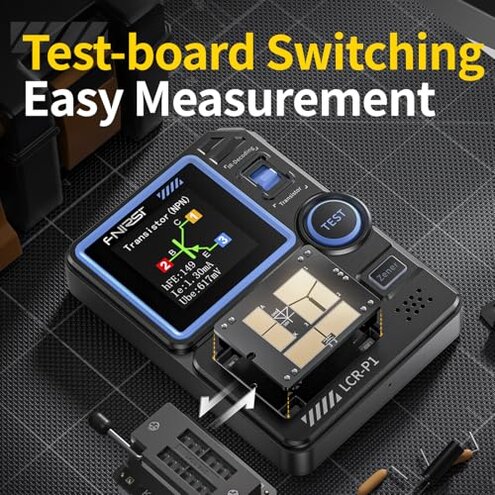
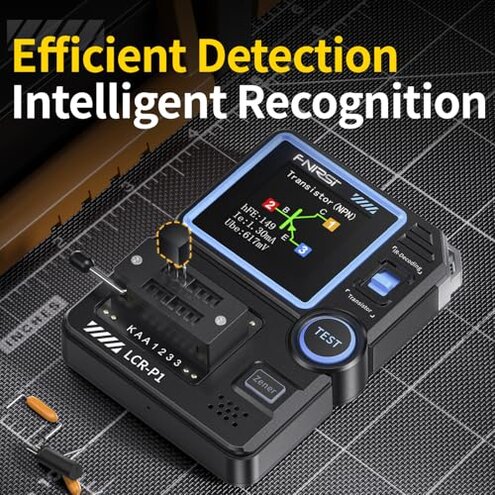
- Early sign: SMD contacts may require fiddling to get a stable read.
- Frequency tier: This is a secondary issue, reported often enough to be a concern for SMD work.
- Cause: Small pads and clip alignment affect accuracy more than expected.
- Impact: Repeated retries add time when diagnosing dense PC boards.
- Attempted fixes: Buyers used test adapters or soldered leads for more reliable contact.
- Hidden requirement: Advanced analysis needs PC export and familiarity with the export CSV workflow.
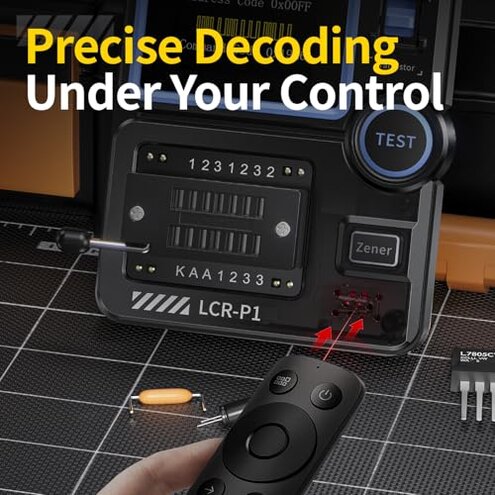
- Edge-case: NEC IR decoding sometimes decodes remote signals, but not consistently.
- Category contrast: Less forgiving than typical options, where SMD adapters are often included or more robust.
Illustrative excerpts (not real quotes)
"Values change when I retest the same capacitor twice." — reflects a primary pattern.
"Runs out of charge during a long troubleshooting session." — reflects a secondary pattern.
"Had to solder a lead to read tiny SMD parts reliably." — reflects an edge-case pattern.
Who should avoid this
- Precision-focused hobbyists: Avoid if you need consistent single-read accuracy without repeat checks.
- Long-session technicians: Avoid if you rely on multi-hour bench sessions without charging breaks.
- Beginners wanting plug-and-play: Avoid if you expect a simple setup with no PC steps or fiddly SMD contacts.
Who this is actually good for
- Occasional hobbyists: Good if you tolerate extra verification and only test a few parts per session.
- Field users with chargers: Good if you can accept frequent charging during long jobs and keep USB power available.
- Data-savvy tinkerers: Good if you value the PC export option and can work around inconsistent on-device reads.
Expectation vs reality
Expectation: A mid-range transistor/LCR meter should give repeatable readings on a single test.
Reality: This unit often requires retests and physical contact tweaks, creating extra steps for diagnostics.
Expectation: Battery should last through a typical bench session for this category.
Reality: The battery life is shorter than many peers, forcing mid-session charging and delays.
Safer alternatives
- Choose meters with longer cells: Pick models with larger battery specs to neutralize the short battery failure.
- Look for reliable SMD adapters: Prioritize units that include robust SMD probes to avoid the fiddly contacts problem.
- Prefer simpler UI: Seek devices with clearer on-screen guides to mitigate the setup confusion.
- Check community tests: Favor meters with many verified accuracy tests to reduce the risk of inconsistent readings.
The bottom line
Main regret: The most disruptive issue is inconsistent measurements that force repeat checks and slow repairs.
Why worse: This exceeds normal mid-range risk because it adds real time and uncertainty to routine troubleshooting.
Verdict: Avoid if you need dependable single-pass readings or long battery life; consider sturdier mid-range alternatives.
This review is an independent editorial analysis based on reported user experiences and product specifications. NegReview.com does not sell products.