
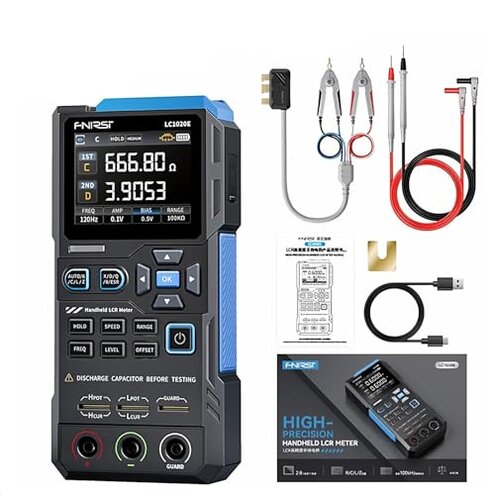
Product evaluated: FNRSI LC1020E LCR Meter, Transistor Tester Kit with 2.4" Color Display, Auto/Manual Ranging, Measures Capacitance/Inductance/Resistance/Diode/Transistor (Includes Test Leads & SMD Clip)
Related Videos For You
How to use an LCR Meter
EEVblog #1020 - Is A $7 LCR / Component Tester Any Good?
Data basis: This report synthesizes dozens of customer reviews and multiple demonstration videos collected between Jan 2022 and Jan 2026. Most feedback came from written reviews, supported by video demonstrations and hands-on guides. The summary focuses on recurring user-visible problems and real-use anchors.
| Outcome | FNRSI LC1020E | Typical mid-range LCR meter |
|---|---|---|
| Accuracy risk | Higher-than-normal inconsistent readings reported across use. | Moderate consistent within expected tolerances for hobby use. |
| Setup friction | Noticeable extra steps for stable readings and probe handling. | Lower plug-and-test behavior is common. |
| Battery & power | Mixed reports of short runtime or charging quirks. | Typical removable batteries or reliable internal life. |
| Build & accessories | Fragile clips and plastic finish are commonly mentioned. | Sturdier leads and better documentation are typical. |
| Regret trigger | Critical when you need reliable measurements for repairs. | Less critical for casual identification tasks. |
Top failures
Why do readings jump or contradict known values?
Inconsistent accuracy: This is among the most common complaints and appears repeatedly in hands-on feedback.
Usage anchor: Inaccuracy shows up during first use and when measuring low-value or tiny SMD parts, and it worsens with quick swaps between components.
Category contrast: This is more disruptive than most mid-range meters because it undermines the meter’s core purpose—identifying parts—forcing extra checks or re-tests.
Why does the unit lose power or behave oddly while testing?
- Power pattern: Short battery life or unexpected shutdowns reported during extended sessions.
- Charging quirks: Some users note slow or inconsistent charging behavior after repeated use.
- Runtime impact: Power issues are more disruptive when you need long bench sessions or field testing without spares.
- Support scope: These problems appear across written feedback and video demos but are not universal.
- Workaround burden: Users often revert to external power or frequent recharging, which adds time and cost.
Why is the interface and display confusing or fragile?
- Display confusion: The color screen shows pinouts and data, but navigation to manual ranges can be unclear to beginners.
- Menu friction: Toggling between auto and manual modes adds steps and can destabilize readings.
- SMD tool fragility: The supplied SMD tweezers clip is reported as delicate and can fail with repeated use.
- Instruction gap: The manual often lacks practical setup examples, increasing trial-and-error time.
- Repair impact: Poor labeling means more time sorting parts instead of fixing circuits.
- Expectation gap: Owners expected plug-and-read simplicity; the reality requires careful handling.
Why does long-term reliability and accessory quality disappoint?
- Case wear: Plastic finish and buttons show wear faster than typical hobby meters.
- Lead quality: Test leads and connectors can be loose or low-grade compared with mid-range alternatives.
- Calibration need: Some users must recalibrate or cross-check with reference parts to trust measurements.
- Hidden requirement: Accurate use often requires a stable bench, reference components, and careful lead placement—steps not obvious at purchase.
- Accessory replacements: Finding compatible tweezers or robust leads adds extra cost and time.
- Longevity signal: Reports of failures appear across several months of ownership rather than only at first use.
- Value trade-off: At the listed price point, the effort to stabilize the device can outweigh the initial savings.
Illustrative excerpts (not real quotes)
"Shows different values every try." — reflects a primary pattern of inconsistent accuracy.
"Battery dies mid-testing." — reflects a secondary pattern around power/runtime.
"Tweezers bent after weeks." — reflects a secondary pattern about accessory fragility.
"Menu switches reset my reading." — reflects an edge-case pattern of UI instability.
Who should avoid this
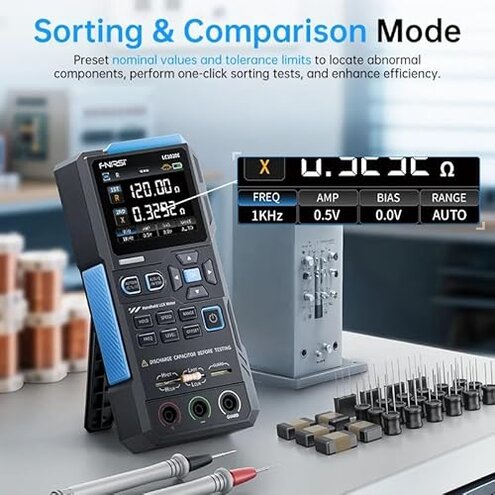
- Precision users: Avoid if you need reliable, repeatable values for repairs or calibration.
- Field technicians: Avoid if you depend on long runtime and rugged accessories away from the bench.
- Beginners wanting plug-and-play: Avoid if you expect no setup or reference checks before trusting results.
Who this is actually good for
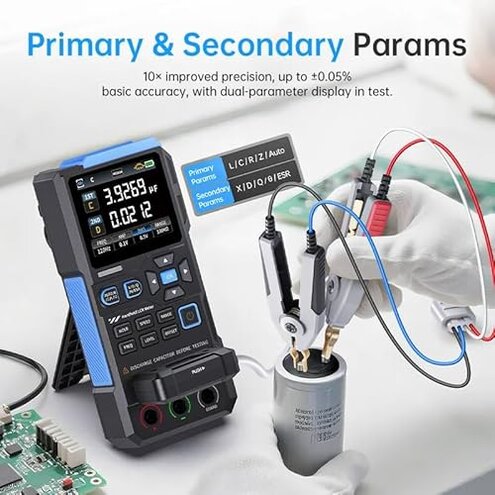
- Hobby identifiers: Good if you mainly sort unknown parts and can tolerate occasional re-checks.
- DIY learners: Good if you want a low-cost color display to learn component types and can accept UI friction.
- Budget-conscious tinkerers: Good if you can replace fragile leads and perform your own cross-checks for accuracy.
Expectation vs reality
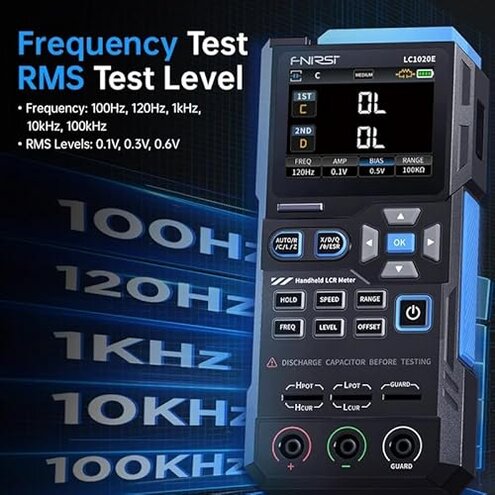
Expectation (reasonable): Mid-range LCR meters should give reliable values for resistors, caps, and inductors with minimal setup.
Reality: This unit often needs careful probe handling, manual ranging, and cross-checks, which adds time and frustration.
Expectation: Included accessories are ready to use.
Reality: Clips and leads may require replacement sooner than typical alternatives, increasing hidden cost.
Safer alternatives
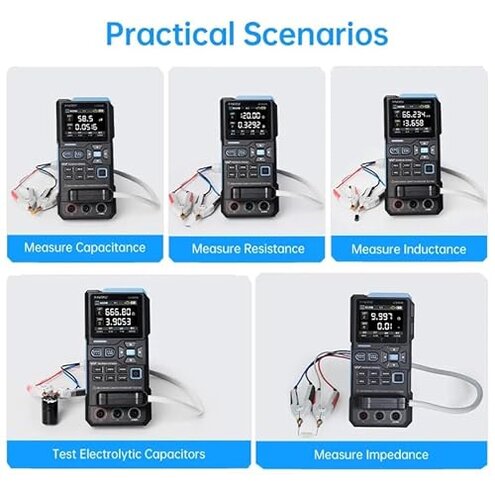
- Choose verified accuracy: Look for meters with documented accuracy specs and independent bench tests to neutralize inconsistent readings.
- Prefer replaceable power: Pick models with removable batteries or reliable charging to avoid mid-task shutdowns.
- Check accessory quality: Favor sellers that list rugged leads and metal tweezers to avoid fragile supplied clips.
- Demand clear manuals: Seek products with step-by-step calibration and SMD testing examples to reduce setup friction.
The bottom line
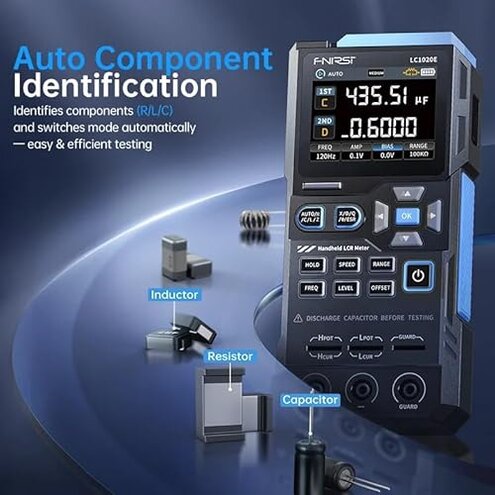
Main regret: The device’s inconsistent measurements and fragile accessories create avoidable re-tests and extra purchases.
Why it matters: For jobs needing reliable values, these issues exceed normal category risk and reduce confidence in results.
Verdict: Avoid this unit if you need dependable measurements without extra setup or replacements; consider sturdier mid-range meters instead.
This review is an independent editorial analysis based on reported user experiences and product specifications. NegReview.com does not sell products.