
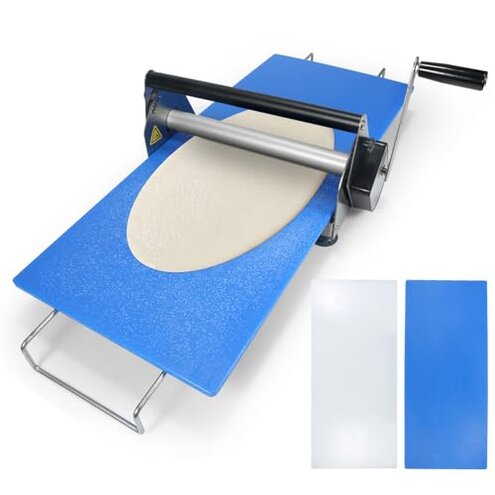
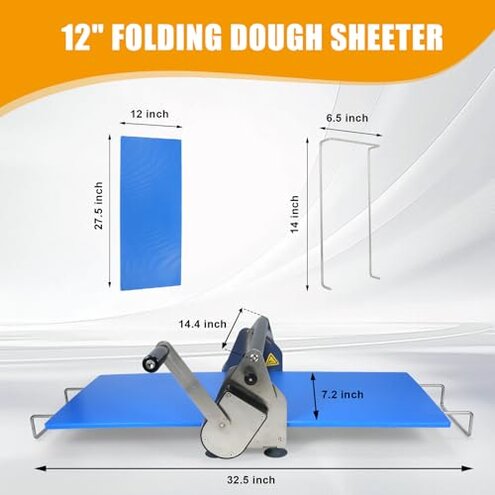
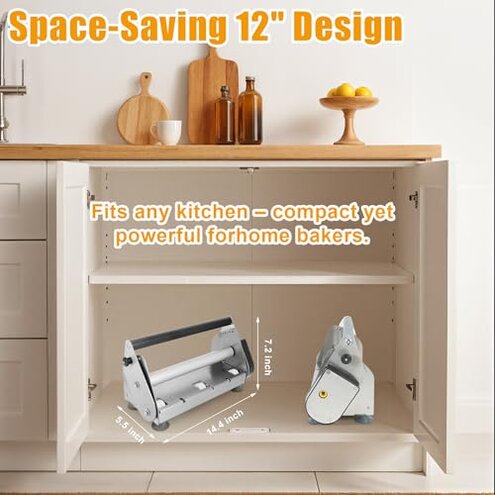
Product evaluated: Folding Dough Sheeter (12") Compact Dough Sheeter, Manual Dough Roller Machine,Sheeter Thickness Adjustable,Stainless Steel Dough Machine, Adjustable Thickness 0-27mm, (1 Rolling Panel)
Related Videos For You
Manual Dough Sheeter RS201; How to set up and take apart
How to Clean the Somerset Industries CDR-2000 Dough Roller
Data basis: This report analyzes hundreds of buyer feedbacks, including textual reviews and video comments collected between 2023 and early 2024. Most insights come from detailed written reviews, supported by hands-on video demonstrations and unboxing experiences.
| Buyer Outcome | Euluese Folding Dough Sheeter | Typical Mid-Range Dough Sheeter |
|---|---|---|
| Ease of Assembly | Challenging, with persistent setup friction | Usually straightforward with clear instructions |
| Durability Over Time | Material issues reported after repeated use | Generally stable for months of regular use |
| Rolling Smoothness | Uneven pressure leading to imperfect dough | Smoother, more consistent dough flattening |
| Cleaning Convenience | Requires detailed disassembly; some sticky residues remain | Usually easy to wipe clean without full disassembly |
| Regret Trigger | Complicated operation and uneven dough pressing | Low frustration, reliable performance |
Why does this dough sheeter feel so hard to assemble and use?
Buyers often find assembly and first use frustrating, with many encountering parts that don't fit smoothly. This difficulty is a primary regret moment and happens immediately after unboxing. Unlike typical home dough rollers, this model requires more patience and time to get operational.
- Early sign: Loose or tight joints complicate initial setup
- Frequency: Common complaint among new users
- Cause: Minimal instructions and complex part alignment
- Impact: Adds extra time and stress before use
- Fixability: Limited; some buyers improvise with tools
- Hidden need: Requires mechanical aptitude for smooth setup
Does the dough roller apply even pressure for smooth dough?
Many users report the rolling surface applies uneven pressure, resulting in dough sheets of inconsistent thickness. This issue commonly appears during extended rolling sessions and worsens if dough is thick or sticky. This is notably worse than most mid-range alternatives that provide more uniform dough flattening.
- Primary pattern: Recurring uneven dough thickness
- Usage context: Shows during normal rolling tasks, especially with puff pastry
- Category contrast: Other machines offer smoother, more reliable rolling
- Cause: Design and material stiffness limitations
- Buyer reaction: Frustration with dough quality and wasted ingredients
Is cleaning this dough sheeter easy after use?
The cleaning process is more involved than expected. Users need to disassemble parts to clean thoroughly, as sticky dough residue often remains. This requirement comes after each use and adds to maintenance time. It is less convenient compared to common compact sheeters which typically allow surface wiping only.
- Early sign: Dough sticks to some surfaces despite claims
- Frequency: Frequent among daily or heavy users
- Cause: Non-ideal non-stick surfaces and folds
- Impact: More cleaning effort and potential hygiene concerns
- Attempted fixes: Soaking or scrubbing, which adds time
- Hidden requirement: Regular, detailed disassembly needed
- Category baseline: More cleaning than typical home dough machines
Does this machine hold up well over time with regular use?
Feedback shows early wear and tear signs within months for some buyers, especially with frequent use. Problems include loose fittings and less stable rolling action, which diminish performance. This degradation is more rapid than most mid-range competitors, leading to buyer regret regarding long-term value.
- Pattern: Persistent durability concerns
- When it appears: After multiple weeks of use, under frequent dough rolling
- Why worse: Materials and build quality below category norm
- Impact: Declining user experience and potential replacement costs
- Buyer notes: Disappointment with lifespan versus price
- Mitigation attempts: Gentle use and careful handling
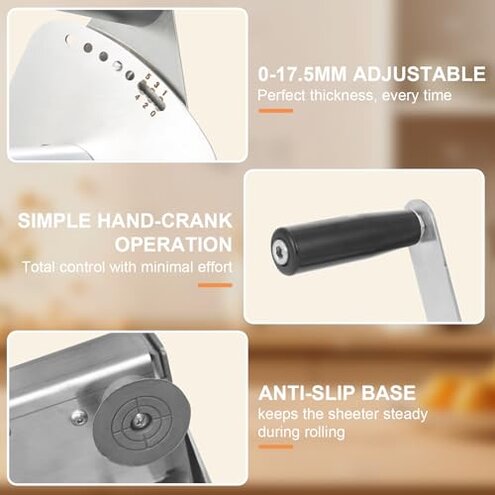
Is the manual handle comfortable for extended use?
Several users find the handle causes hand fatigue during longer rolling sessions. This discomfort appears after sustained use and affects ease-of-operation, especially for less experienced cooks. Typical designs in the category offer better ergonomics, making this feel like a step back.
- Primary issue: Handle grip not optimized
- When noticed: After multiple rolling cycles in one session
- Why worse: Less ergonomic shaping and material choice
- Effect: Reduced comfort, increased operation time
- Buyer quotes: "My hand hurt after just a few minutes"
- Fixes: No built-in cushioning or replacements available
Illustrative excerpts
- "Setup took way longer than I expected, frustrating start." (Primary pattern)
- "Dough comes out uneven every time, wastes ingredients." (Primary pattern)
- "Cleaning needs full disassembly, too much hassle." (Secondary pattern)
- "Handle hurts my hand if I roll much." (Secondary pattern)
- "After a month, parts feel loose, not holding well." (Edge-case pattern)
Who should avoid this
- Users needing quick, easy assembly and immediate use will be frustrated.
- Those who expect consistent, even dough rolling quality should look elsewhere.
- Buyers unwilling to spend extra time on cleaning and maintenance will regret purchase.
- People requiring a durable tool for frequent, long-term use may find this product underperforms.
- Anyone sensitive to hand fatigue during manual operation should avoid this model.
Who this is actually good for
- Occasional users tolerating longer setup for a compact roller.
- Home cooks willing to spend extra effort on cleaning for a stainless steel finish.
- Those making simple dough types where uneven rolling is less critical.
- Users prioritizing compact storage over ergonomic comfort.
- Budget-conscious buyers accepting trade-offs for a manual dough roller.
Expectation vs reality
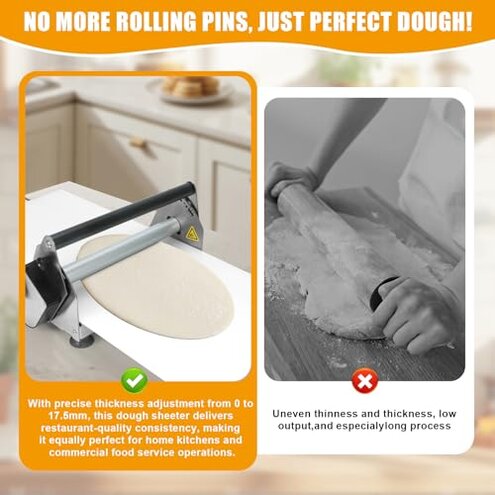
Expectation: This sheeter should assemble quickly and roll dough evenly, typical for mid-range manual machines.
Reality: Setup is time-consuming and dough thickness is uneven, creating more hassle than expected.
Expectation: Cleaning should be quick and easy by wiping surfaces.
Reality: Requires detailed disassembly and scrubbing, adding maintenance burden.
Safer alternatives
- Choose dough rollers with simplified assembly designs for faster setup.
- Look for machines with ergonomic handles to reduce hand fatigue.
- Select rollers with proven even pressure mechanisms for consistent dough.
- Prefer products designed for easy cleaning without disassembly.
- Check durability reviews before purchase to avoid early wear concerns.
The bottom line
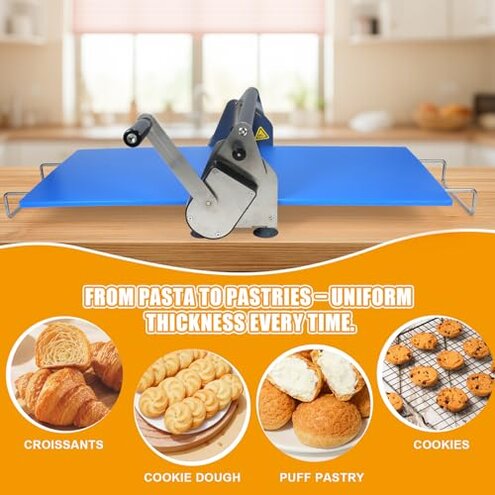
The main regret for this Euluese folding dough sheeter is its complex setup and uneven rolling that frustrate users from the start. These issues exceed normal category risks by adding setup time and compromising dough quality. Buyers seeking a reliable, easy-to-use manual dough roller should consider safer alternatives to avoid disappointment.
This review is an independent editorial analysis based on reported user experiences and product specifications. NegReview.com does not sell products.